

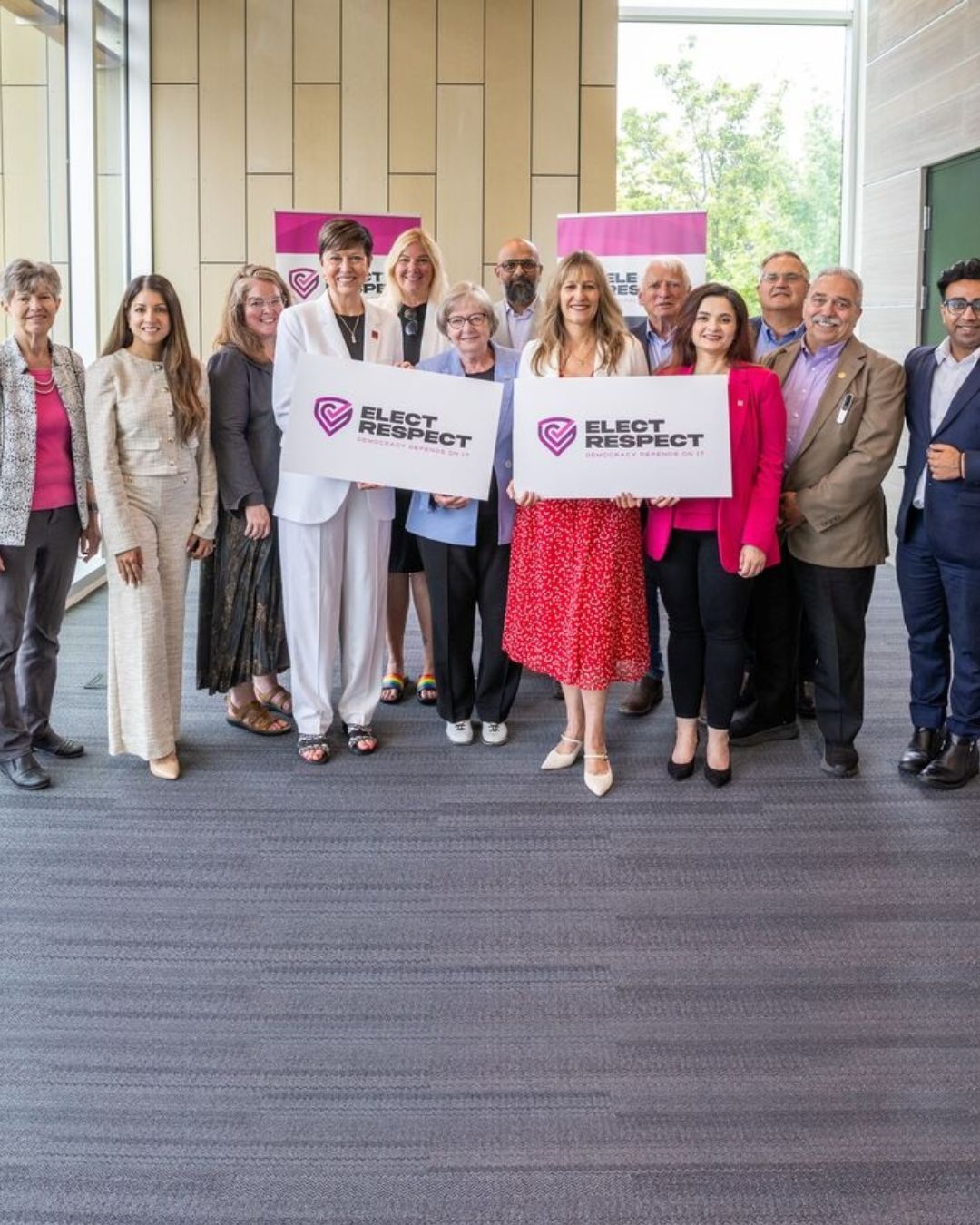
When Burlington Mayor Marianne Meed Ward attended meetings with several other female elected representatives in 2024, they discovered that they shared one disturbing thing in common: every one of those women had experienced harassment and abuse on the job.
It turns out that toxic behaviour toward people trying to serve the public is widespread. While both women and men are subject to threats and abuse, women get a particular kind of threat that is based on their identity as women and can be sexualized – with threats of rape, or harm to family. Racialized communities get a specific kind of abuse related to their identity and race or religion. “It makes it that much harder for underrepresented candidates to step forward,” Meed Ward says.
Hate is not OK
People don’t always agree with their elected officials, but there are civilized ways to express an opinion and be heard.
“If you disagree, don’t threaten,” says Marianne Meed Ward, Mayor of Burlington. “Advocate, and vote… Or run for office!”By Michelle Morra
Last June, Meed Ward and her peers launched Elect Respect to promote the right to work without threats, abuse or intimidation. The campaign has snowballed into a national movement, from Newfoundland to Victoria. Elected leaders, candidates, municipalities, boards, and citizens across Canada have signed the Elect Respect pledge, formally declaring that toxic behaviour is not acceptable.

NO EXCUSE
No one should be bullied out of a career or vocation, yet the risk has increased for government workers and elected officials. Here are a few reasons why:
COVID – The pandemic was a time of great anxiety and isolation for many people. That’s when the trouble started for Burlington Mayor Marianne Meed Ward. “My first death threat came during COVID – that I was going to be hung from the rafters at City Hall, that people were going to exercise a ‘citizen’s arrest,’ people protesting in front of my home,” Meed Ward says.
Social media – The internet makes it much easier for armchair activists to spread threats and misinformation about a person, using anonymous or fake accounts. Posts are very difficult to get taken down and affect a person’s reputation.
Leaders behaving badly – Political campaigns and tenures weren’t always so unfriendly. When the general public sees national or international politicians engaging in name-calling, taunts, and other nastiness, some get the idea that it’s okay to bully their own elected officials.
The threat is often extreme. Meed Ward says that someone once threatened to set her on fire if she attended a meeting on a development proposal they didn’t support. A city’s Mayor has important work to do — yet twice in the past year, she has been advised not to attend public meetings because of threats.
Despite strong support from the Mayor’s team at the office, from health and safety staff, and among law enforcement, even one death threat is unsettling. “You don’t know what is waiting for you when you leave the office,” she says.
STRENGTH IN NUMBERS

Fortunately, by shedding light on the issue and giving it national attention, Meed Ward and her grassroots group of female elected representatives have ignited optimism. It also helps that Canadians have their back.
Citizens, including people in politics, can sign the online pledge at electrespect.ca. It promotes respectful conversations, issue-focused debate, and an end to personal attacks, whether online or face-to-face. When a local council endorses Elect Respect, it shows a commitment to creating a safer, more respectful community for everyone.
“Elect Respect has been an incredibly powerful and galvanizing movement,” Meed Ward says. “It has shown that none of us are alone, that we don’t have to suffer these threats in silence, that collectively we are stronger and can say ‘enough.’ Every public servant and elected official deserves a safe workplace.”
For more information or to sign the pledge, visit electrespect.ca.
By Michelle Morra
Comments are closed.