

Modern life can make it hard to imagine that war has ever disrupted our comfortable communities. This Remembrance Day, you can make the memory more vivid by visiting two key spots: a local beach, and the George’s Square Cenotaph in Oakville. Here’s why:
Oakville and Burlington Beaches: The Burlington Races
There was a moment in history when American forces almost seized control of Lake Ontario (and not just in name). In fact, the action that took place was pivotal to how the War of 1812 played out.
From sailboats dancing on sparkling waters to ten-foot waves in a storm, the promenades of Oakville’s Coronation Park and Burlington’s Spencer Smith Park offer beautiful, ever-changing views of the lake. The view was altogether different, however, on September 28, 1813.
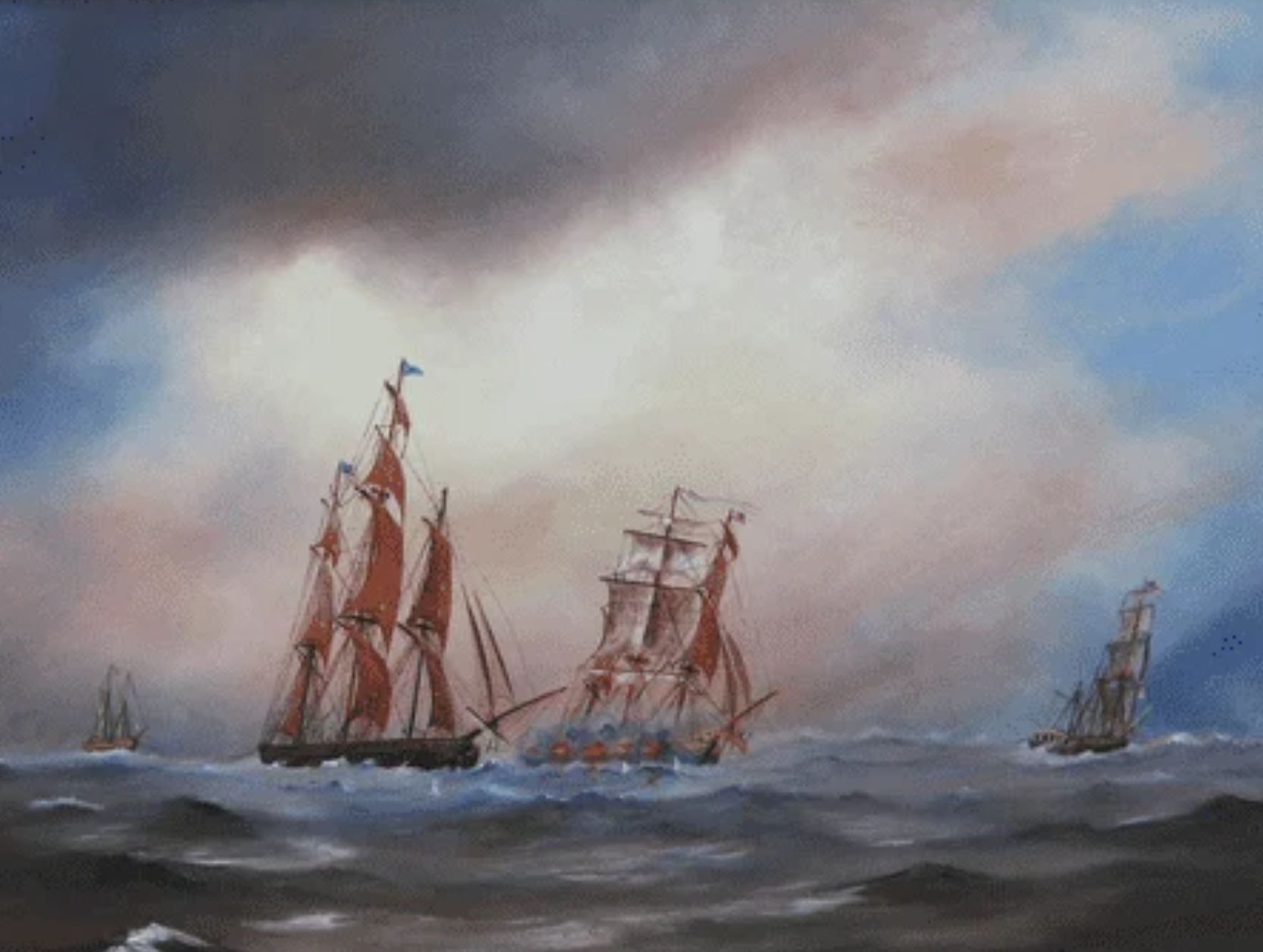
On that morning during the War of 1812, a powerfully armed United States fleet of ten ships appeared from York (Toronto), led by Commodore Isaac Chauncey. These were schooners mounted with long guns, but they were slow and prone to capsize, compared to the more agile British naval ships. Even so, the Americans had the advantage in numbers and firepower compared to the smaller, British fleet they were about to fight.
Commanded by Commodore Sir James L. Yeo, the British fleet of six vessels was anchored in the Burlington Bay harbour. When Yeo spotted the approaching enemy ships, the fleet set sail to attack.
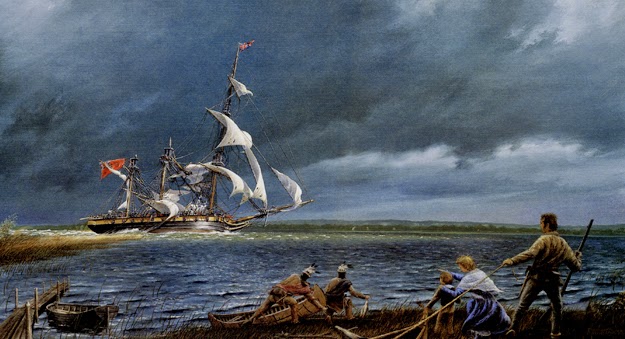
A close chase ensued. The British and American squadrons exchanged cannon fire while sailing westward. Yeo’s flagship, HMS Wolfe, suffered sail and mast damage, leading him to seek safe anchorage in Burlington Bay. There he could take refuge under the batteries that were stationed at Burlington Heights (near today’s Dundurn Castle in Hamilton).
At this point, there are conflicting accounts of what happened. Legend has it that Yeo performed a dramatic maneuver over a precarious sandbar in Burlington Bay, but historians have debunked that legend, saying his ships couldn’t possibly have navigated such shallow water. The more accepted story is that the British ships secured close to shore, ready to deliver a broadside with their deadly short-range cannons. Chauncey, who was unfamiliar with local water depths, retreated.
Meanwhile, spectators had witnessed the action from a safe distance on shore. Military and civilian onlookers could clearly see the tall-sailed warships manoeuvre and fire. They would have heard cannon fire and seen the smoke. Someone said the spectacle resembled a yacht race, which is how the battle was nicknamed “Burlington Races.”
George’s Square Cenotaph (Oakville): Where Soldiers Said Goodbye
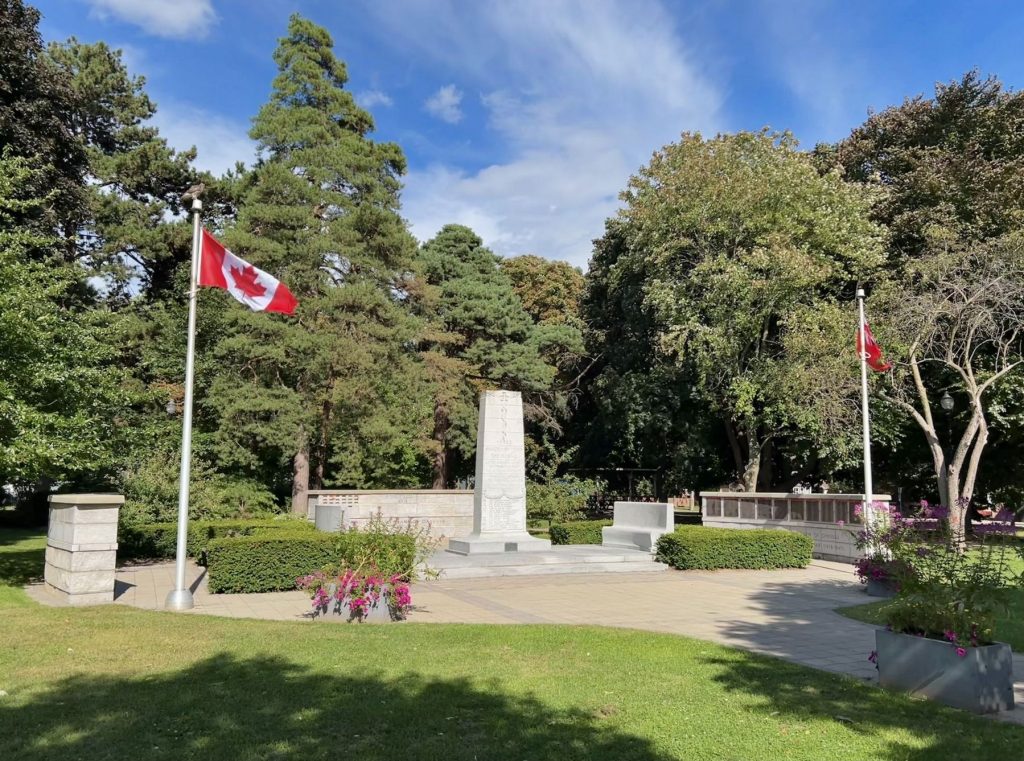
At Trafalgar Road and Palmer Avenue in Downtown Oakville, a large cenotaph carries memories almost too sad to bear. This very spot was once a town square where countless emotional goodbyes took place.
During the First World War, when local residents enlisted to serve overseas, George’s Square served as a central point for the community where families walked with their loved ones, held farewell gatherings, and said their final goodbyes. From 1914 onward, soldiers gathered in the square before marching down Trafalgar Road to catch the Hamilton Radial Electric Railway or to the main Grand Trunk Railway station to be transported to training camps or deployment ports.
The town erected a cenotaph in the square to honour those who died in this conflict, carving the names of iconic battles like Vimy Ridge, Passchendaele, and Ypres.
These poignant farewells continued during the Second World War. Between 1939 and 1945, the square was once again a major point of departure for a new generation of local recruits.
The Town of Oakville would later build the Veterans’ Memorial Walls directly surrounding the original cenotaph. These walls specifically engrave the names of the hundreds of local residents who enlisted and departed from Oakville during WWI and WWII, while an adjacent wall extends this recognition to veterans of the Korean War and subsequent post-WWII active global conflicts.
This Remembrance Day, and whenever you pass George’s Square Cenotaph or gaze at a freighter on Lake Ontario, pause to reflect. Not so long ago, our own community was deeply affected by the devastation of war.
By Michelle Morra
Comments are closed.