

Category

Home & Garden

Category

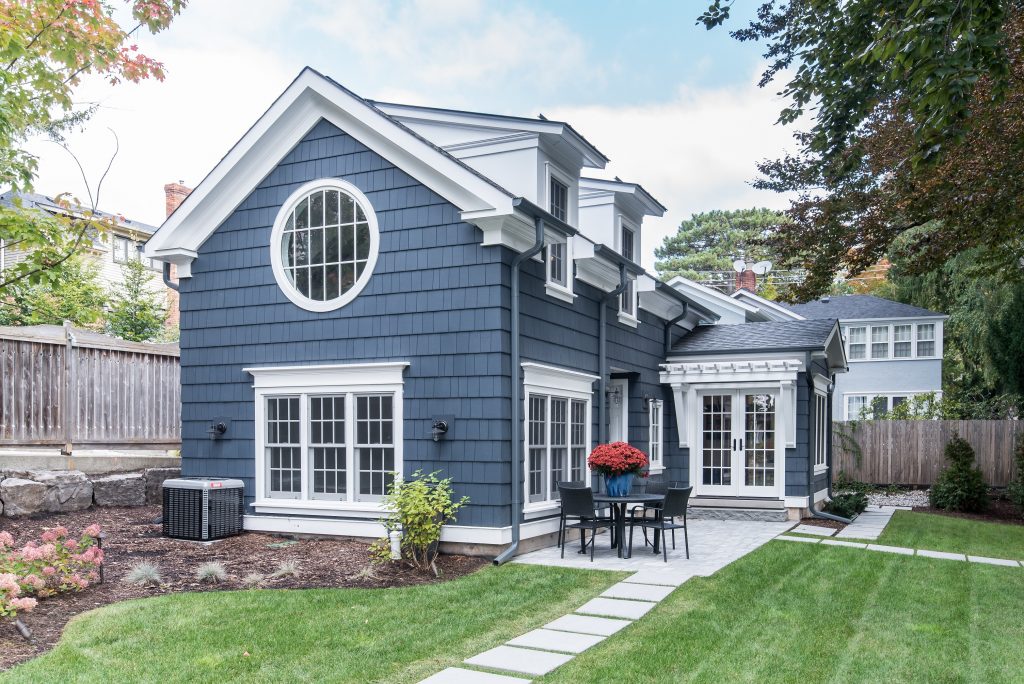
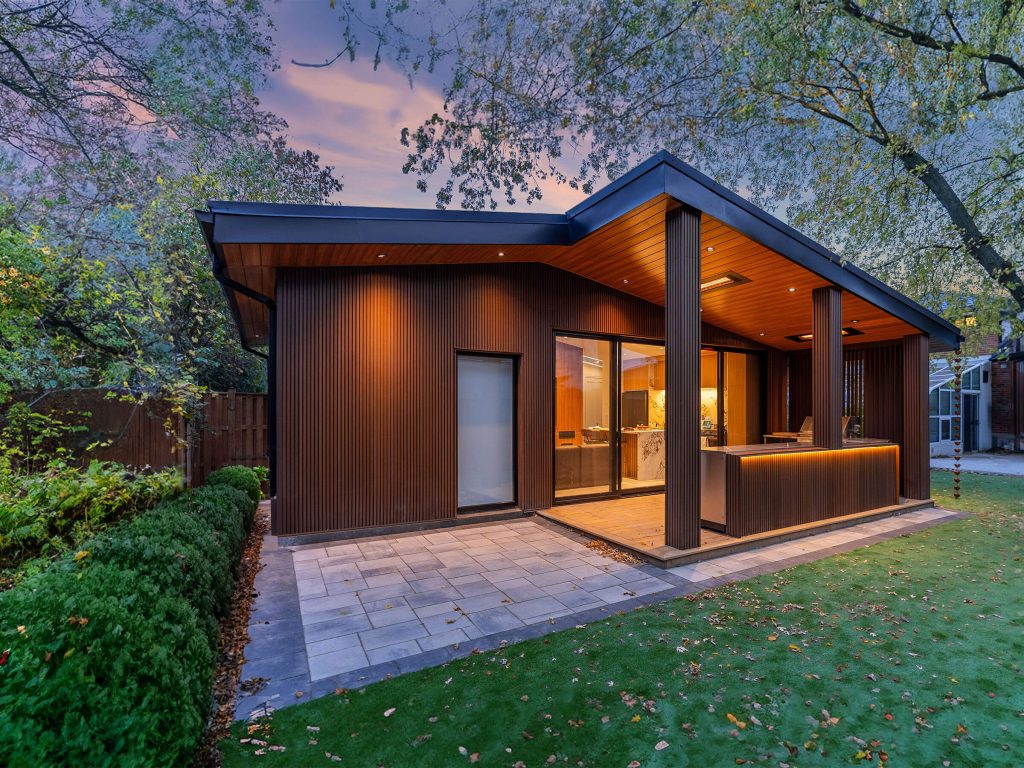
With housing prices remaining high across the GTA and beyond, more homeowners are turning to garden suites as a smart solution to generate rental income, create space for multi-generational living, or boost long-term resale value. Designed with independence and privacy in mind, a secondary dwelling can adapt to changing needs, adding long-term flexibility to your home. It may sound like a big undertaking, but with a solid plan, the right approvals, and a skilled builder, creating a secondary suite is more achievable than you think.

What is a Garden Suite?

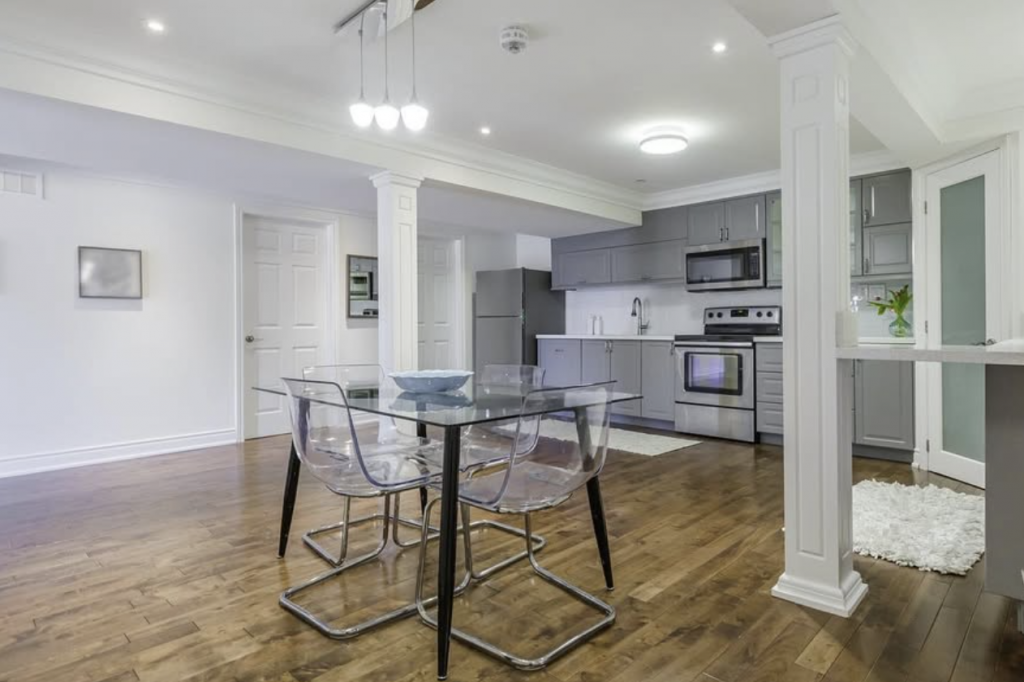
Municipalities officially classify garden suites as Additional Residential Units (ARUs). In plain terms, that means a self-contained living space with its own kitchen, bathroom, and sleeping areas, located on the same property as a primary home. Brian DosRamos, President of Ever After Custom Homes, notes the clear shift toward spaces that emphasize family and sustainability.

Planning Makes Perfect

Getting started on a garden suite, or any secondary dwelling, begins with laying solid groundwork. First, hire an architect or designer to draft a plan that aligns with both your vision and municipal zoning rules. Professionals will help ensure your suite is functional and compliant with relevant codes.“We are seeing an increase in families wanting multi-generational homes and investment options included in their new homes,” he says. “It’s important to find ways to create more housing options within our established neighbourhoods.”

“Care must be taken to provide space and patterns of access that establish boundaries for each inhabitant’s respectful use of the exterior.” JOHN WILLMOTT

John Willmott, Principal Architect at Willmott & Strickland, explains that every project starts with context. “I first consider the scale, massing, compatibility, and relationship it has with the existing house,” he says. “Zoning by-laws determine the size, setbacks, height, and other regulations. And while municipalities are encouraging garden suites, having someone living in your backyard will potentially impact the homeowner’s enjoyment, so care must be taken to provide space and patterns of access that establish boundaries for each inhabitant’s respectful use of the exterior.”

Architects are also invaluable when adapting existing structures. Beyond design, they can help source contractors and oversee construction to make sure the vision is carried out as conceived.

Next, you’ll need to secure the necessary permits, a step that varies depending on local regulations but is critical for avoiding delays or penalties. Several municipalities now offer financial support to encourage this type of project.

Small Space, Big Design

WILLMOTT & STRICKLAND Designing a garden suite is all about balancing comfort, privacy, and long-term value. Working closely with a builder allows you to make the most of a compact footprint — maximizing usable space, building in smart storage solutions, and incorporating multifunctional designs that adapt to different needs.

“The space needs to be curated for the intended user from phase one of design,” DosRamos says. “That may mean barrier-free access for an aging family member, a larger kitchen for someone who loves to cook, or even a dedicated office space if the suite is meant to be a rental for a remote worker.” He also stresses maximizing natural light and airflow, noting that “sunlight and cross breezes are critical to creating healthy, happy spaces.”

BEFORE YOU BUILD

Garden Suites

Talk to a local real estate agent to learn current market trends. They can help you:

  • Determine the demand for rental units in your area
  • Assess property value to optimize your investment
  • Connect you to knowledgeable professionals

Future value should also guide decision-making. “Thoughtful design will ensure that the suite fits with the home, property, and community,” says DosRamos. He points to energy-efficient choices like triple-glazed windows, in-floor radiant heating, and upgraded insulation, as well as smart home features. Building to high standards now, he explains, creates long-term value and minimizes costly upgrades later.

With the right combination of intention, efficiency, and details, a secondary dwelling becomes more than an extra unit. It’s a flexible, valuable extension of your home.

Local Links

Ever After Custom Homes
everafterhomes.ca

Wilmott & Strickland
willmottstrickland.ca

BY NICOLE HILTON

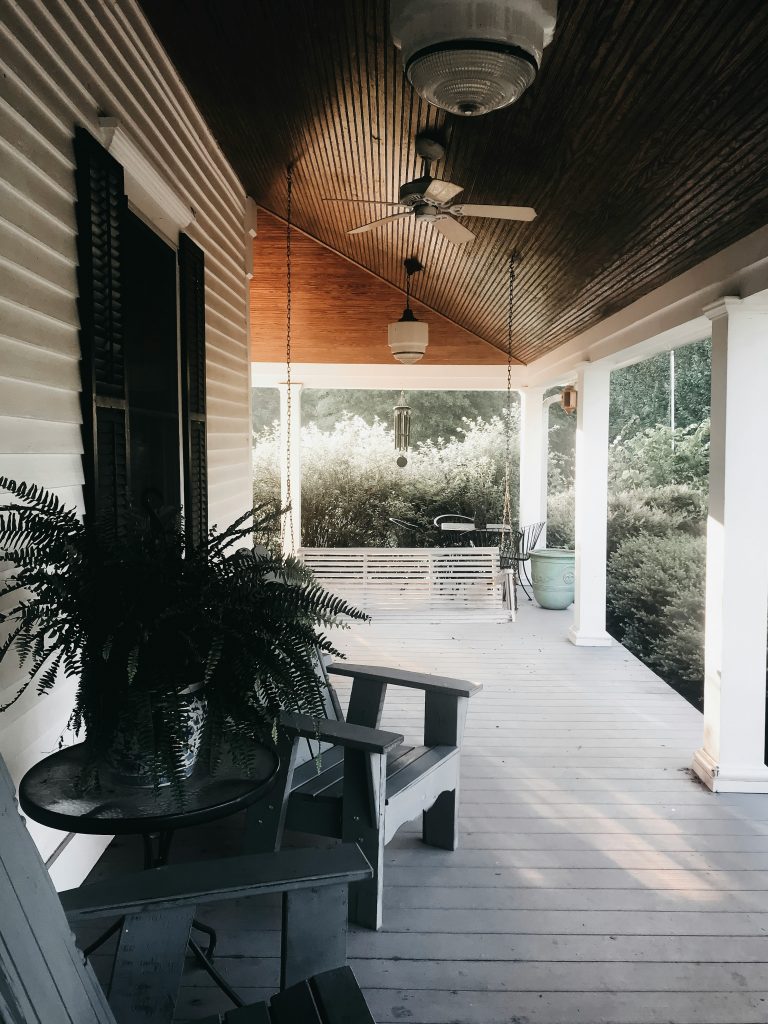
The front porch often takes a back seat to the back deck, but in reality, it’s the first impression visitors have of your home. Whether you have a big, beautiful wraparound, a small covered entryway, or a vision for the future front porch of your dreams, simple changes can make a bold statement.

Renovate and recreate

Planning a front porch renovation starts with the basics: design, permits, and hiring the right professionals. “Budget, building code compliance, contractor warranty, and using the proper products for the right application are important to all components of a renovation involving stonework, decking, lighting, and railings,” says Wes Allan of Ridge Rock.

Current trends lean toward durable, low-maintenance materials with a refined look — natural stone in soft greys, composite decking, sleek railings, and oversized lighting for impact. Upgrades like deeper stairs or new railings can enhance function.

Porches

Paint also plays a role in transforming a porch. “Colour is often determined by existing elements like stonework or siding,” says Michelle L. Adams of Burlington Paint. “We are seeing a palette of more neutral tones, soft grays, beiges and warm taupes, as well as earthy greens and neutral wood tones.” Suggested paint choices include HC-172 Revere Pewter and HC-110 Wethersfield Moss.

The front door is your chance to add personality. Bold colours like navy or black make a strong statement. “This is how you welcome people to the house,” says Adams. “This is a focal point. Matching the trim to the door looks more substantial, and a rich black door always commands attention.”

For lasting results, start with proper prep and use quality products designed for exterior surfaces.

Stay awhile

Seasonal Planters

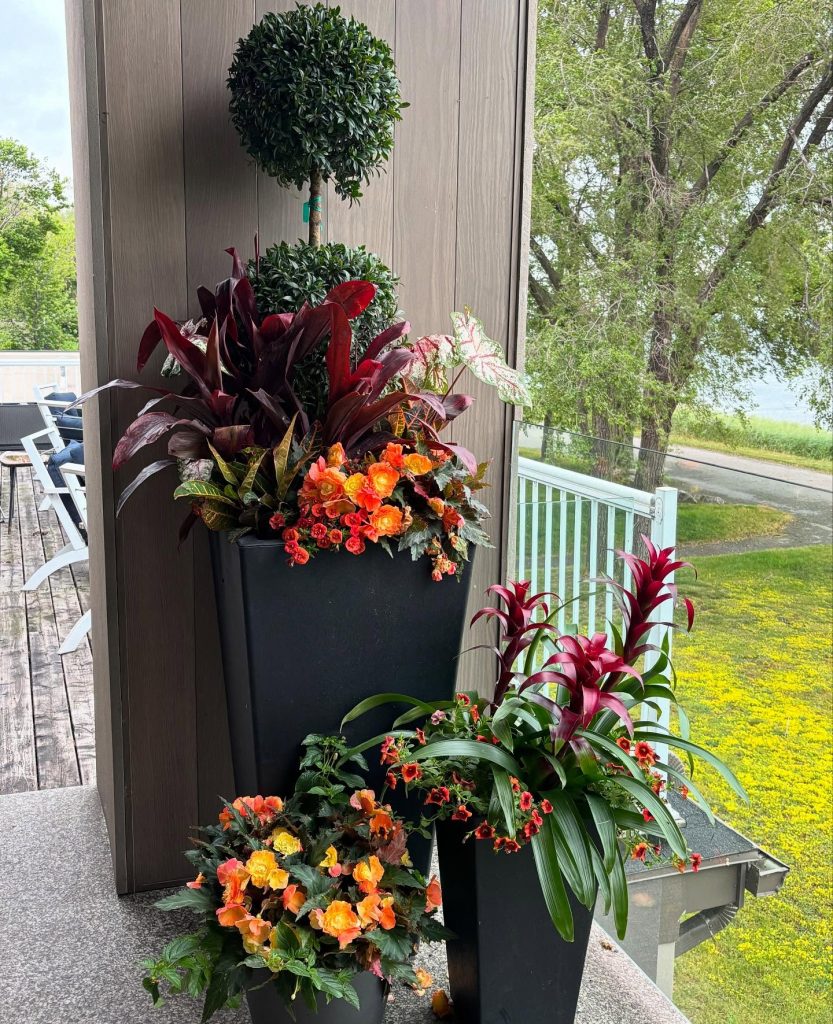
Greenery and urns can make your front porch feel more like home. “Seasonal planters elevate your style, draw attention to your entryway, and add colour and texture,” says Michelle Varlese-Fox of Yearn to Urn. She recommends investing in large containers that match your home’s aesthetic. “Update urns seasonally, water low and slow, and don’t rely on rain alone. Nothing can make your entryway look more tired than expired plants and flowers.”

If you’re starting from scratch, container size is a consideration. Varlese-Fox says bigger is always better for boosting curb appeal. She recommends investing in quality containers to avoid replacing them every couple of years and incorporating seasonal plants and flowers that thrive in your lighting conditions.

With proper prep, soil, and maintenance, urns become key design elements, not afterthoughts, all year long. 

Oakville Home and Leisure

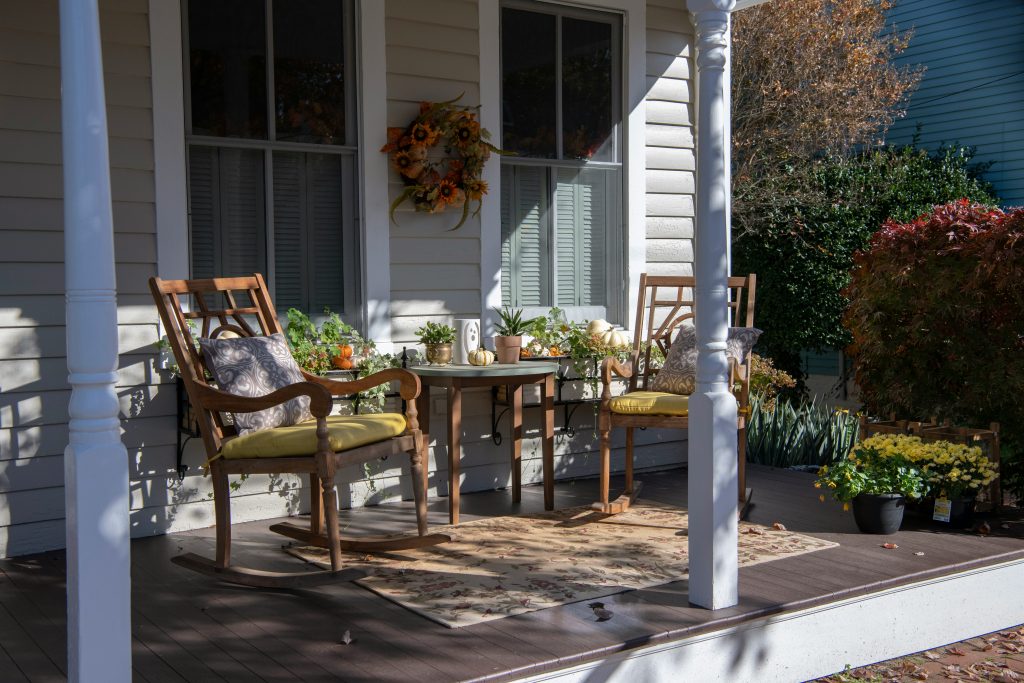
To complete the look, layer in outdoor furniture and accessories that blend style with comfort. A set of chairs with cushions, a porch swing, or a small bench creates a welcoming place to relax, while a weather-resistant rug or doormat helps define the space. Add lanterns, decorative pillows, or seasonal accents to extend your home’s personality right to the street. If space allows, a small bistro set can turn your front porch into a cozy spot for morning coffee or casual dining al fresco.

From the warm days of spring through summer and well into autumn, a front porch is a beloved extension of your living space. It’s the face of your home and merits the occasional facelift, a few cosmetic tweaks or, at the very least, quality time with you.

front_entrance

Local Links:

Burlington Paint
3300 Fairview Street, Burlington
905-631-7575
burlingtonpaint.com

Oakville Home Leisure
1318 Speers Rd, Oakville
905-847-8551
oakvillehomeleisure.ca


Ridge Rock
Burlington
905-741-9741
ridge-rock.ca


Yearn to Urn
335 Kerr Street, Oakville
905-808-8319
Y2U@YearnToUrn.com

By Nicole Hilton
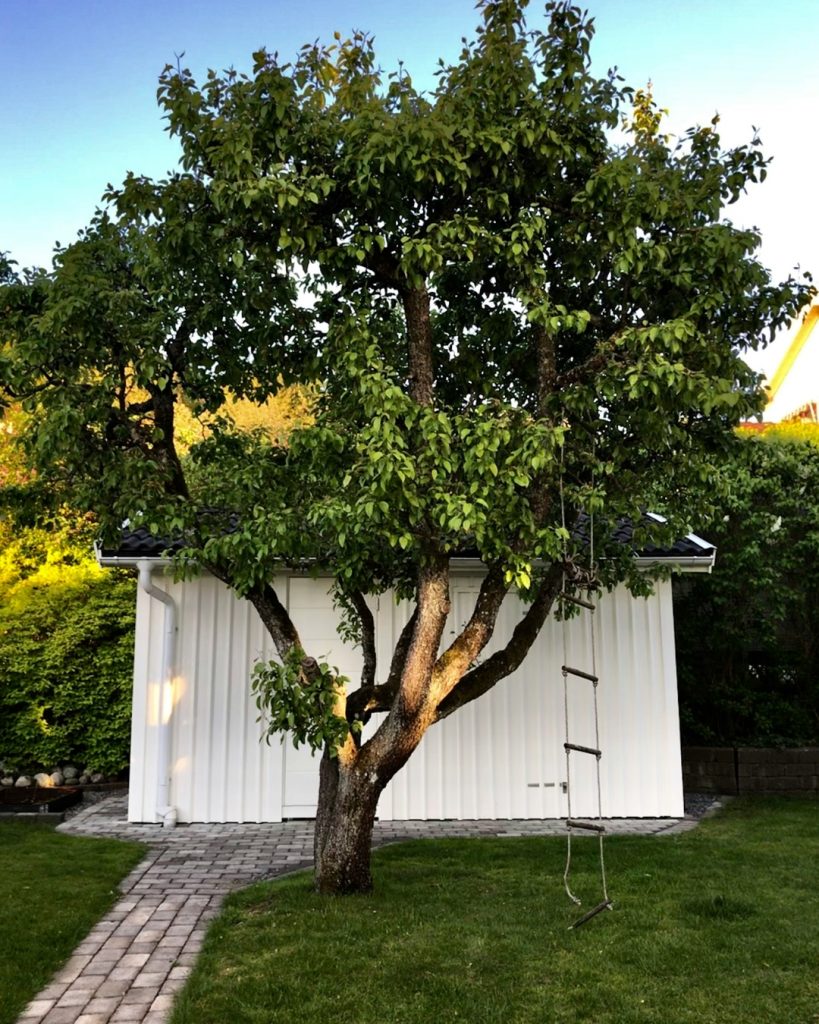
A tree can be the start of a beautiful garden story. While it’s fun to plan a deck, garden beds, and even patio furniture, set those aside for a moment and think long term. For an outdoor space you will enjoy for years to come, the blueprint starts with a well-placed tree.

The right trees and shrubsnwill visually anchor a yard, cast cool shade on hot summer days, and grow into providing natural privacy. Awe-inspiring gifts from nature, they provide comfort, beauty, and value, whether you’re designing a yard from scratch or refreshing an established space.

NOT JUST ANY TREE

When selecting a tree or shrub, there’s much to consider besides how pretty it looks in the greenhouse. Think beyond aesthetics and ask your landscape pro for recommendations to suit local climate and soil conditions. You’ll also need to know how fast the sapling will grow, its resistance to diseases and pests, and how wide and tall it will get (a majestic 70-footer too close to the house could eventually wreak havoc with pipes, cables, roof, and foundation).

DARLA’S GARDEN GIRLS PICK

Eastern Redbud Tree
Easterburn Tree
  • Ideal for a smaller yard
  • Stunning spring blossoms and heart-shaped leaves
  • Provides partial-canopy shade
  • Adaptable to various soil types
  • Thrives in urban conditions

EDITOR MICHELLE’S PICK

Serviceberry tree or bush
Service berry Tree
  • Native to Ontario and highly attractive to pollinators, birds, and small mammals
  • Showy white flowers in early spring
  • Green foliage and red berries in summer
  • Fiery display of reds and golds in autumn

… and if the birds leave you some serviceberries (also known as saskatoonberries), fill a bowl and bake a pie. They are spectacularly delicious. Know your growing zone, and do your research. “In Ontario, selecting trees that are hardy and can really withstand our four distinct seasons while providing good shade is crucial for long-term success,” says Tom Henderson, President of ProScape Land Design.

Darla Malcolm-Hauraney, Chief Garden Guru at TheGarden Girls, encourages taking a broad environmental perspective when making your selection. “Consider a keystone plant that is native to your region,” she explains. “These are critical to the food web and necessary for many wildlife species to complete their lifecycle. Without keystone plants in the landscape, butterflies, native bees, and birds will not thrive.”

What types of trees are best for landscaping a yard? Henderson recommends RiverBirch, Linden, Hornbeam, Serviceberry, Dogwood, and several varieties of Maple. Malcolm-Hauraney adds White Oak to the list, noting that it supports hundreds of caterpillar species, a vital food source for birds.

LOCATION IS KEY

Place trees strategically within your overall landscape plan, especially since some varieties are known to be a little messy — dropping keys, leaves, or sap at certain times of the year. You’ll also want to consider the view from your home’s windows, framing key sightlines with greenery that adds to the visual appeal both inside and out.

“Remember to choose a mix of trees and shrubs that offer visual interest throughout the seasons, like flowering trees in the spring and vibrant foliage in the fall,” she adds.

If your goal is to create distinct zones like patios, with built-in natural shade, Henderson recommends working with a professional. “Hiring a professional landscape designer or landscape architect can help determine the best lasting many years of enjoyment out of the space,” he says.

SMALL SPACE, BIG SHADE

Even in compact yards or urban patios, it’s still possible to create a perfectly breezy retreat where you can relax with a good book or enjoy summer sips in comfort. exceptional collection of prints, sculpture & more by Canada’s Inuit and First Nations artists ESTABLISHED IN 1995 “Pergolas, umbrellas, or cabanas are great ways to add shade,” says Henderson. “You can achieve shade without planting trees or enhance these structures with well-placed trees or shrubs for a blended effect.”

MALCOLM- HAURANEY SAYS SMART PLANNING INVOLVES THREE KEY PRINCIPLES:

LAYERING

Placing taller trees at the back or centre of your yard, with medium-sized shrubs and shorter plants in front to create depth.

GROUPING

Planting trees in clusters to achieve a more natural look and provide more effective shade and privacy

FUNCTIONALITY

Using trees to define spaces, create natural barriers, or block unsightly views

Dogwood tree

Malcolm-Hauraney agrees, adding that manmade structures can work together with nature. “Incorporating shade structures can provide immediate relief while allowing you to plant climbing vines or shade-loving perennials around them.”

Even something as simple as a trellis with a clematis or climbing hydrangea can offer filtered shade and a sense of privacy. Combined with planters of tall grasses, strategically placed shrubs, or even a small ornamental tree in a container, small spaces can feel lush, private, and inviting.

Local Links

THE GARDEN GIRLS
thegardengirls.ca

CONNON NURSERIES
WATERDOWN
shopconnon.ca

TERRA BURLINGTON
BURLINGTON
terragreenhouses.com

SHERIDAN NURSERIES
MISSISSAUGA
sheridannurseries.com

By Nicole Hilton

The good weather is finally here, and that means soaking up every moment outdoors. As people are investing more in their at-home spaces, a landscape plan that includes purposeful outdoor lighting can make a difference.

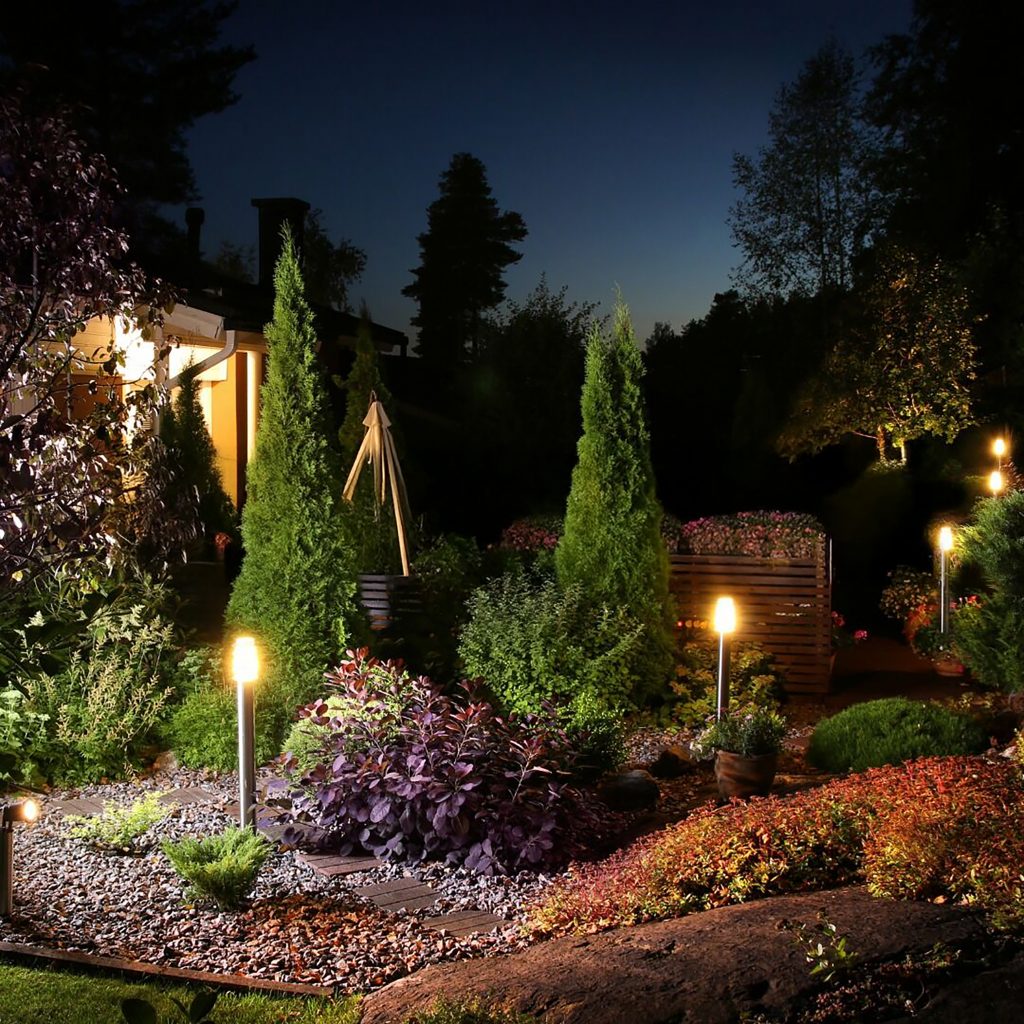
Lighting adds both function and ambiance to your outdoor space by setting the mood for a cozy evening on the patio, adding a warm glow for dining al fresco, and ensuring safety along walkways. The first step to designing a beautifully lit space is understanding the types of lighting that will dazzle year-round.

LED leads the way

Lighting has evolved into smarter, more efficient, and customizable systems. “For anyone with an outdated halogen system, we recommend considering LED retrofits,” explains Dave Colborne from Turf Pro. “With MR16 LED lamps, you can typically get 30,000 to 40,000 hours of light, while halogen bulbs might only last around 5,000 hours, depending on the manufacturer. That means far less maintenance and fewer bulb changes.”

Devon Kleinjan from LandArt Home & Landscape agrees, emphasizing the long-term benefits. “For durability and control, low- voltage LED systems are ideal,” he says. “They offer a wide range of fixture styles, remote control options, and long-lasting bulbs, plus they can be installed without needing a licensed electrician.”

LED bulbs aren’t only about efficiency and longevity; they also align with the modern design trends this season. “We’re seeing a shift toward warm white and shielded LED lights,” says Sarah Love from PM WYRE Ltd. “Home automation systems allow homeowners to adjust the brightness levels, reducing unwanted glares at night while still keeping sidewalks and paths illuminated.”

Turn up the tech

Today’s outdoor lighting blends atmosphere with convenience. With smart technology, lighting systems can be fully automated or manually controlled with the tap of a button. “An app allows you to create a home or away schedule,” says Colborne. “Landscape lighting has become a lot more user-friendly.

“We’re seeing clients want to access their smart home without switching between multiple apps,” adds Love. “They want to be able to launch custom scenes like ‘Patio Party’ or ‘After-Hours Path’ from their keypad, touchscreen or mobile device. The convenience of a single access point mirrors what they already have in the way of technology in their home, making the indoor-outdoor experience seamless.”

Dimming has also become an indispensable tool for fine-tuning outdoor ambiance. “When I’m installing lighting on large trees, it’s typically comprised of fixtures that uplight and downlight the tree,” explains Colborne. “In the winter, it’s nice to be able to dim the downlights a bit because the reflection from the snow makes it appear brighter to the eye.” Love agrees, adding that dimming can also create distinct zones. “For example, homeowners can lower ambient lighting to 30
percent brightness after dinner while keeping the pathway lights at full brightness for safety.”

Let there be light

With creative planning, any backyard can be transformed into a welcoming retreat. “In the winter, bare branches cast striking shadows, and in the summer the light filters beautifully through foliage,” says Kleinjan. “A strategic, classic approach works across all seasons and stands the test of time.”

The key to a well-lit space is understanding the role each light plays. Love explains, “It’s crucial to define the purpose of a space before deciding where functional lights are needed for safety, like steps, locks, and grill areas, and where to add decorative lights for ambiance.” “I look at a whole composition and come up with a complete plan,” adds Colborne. “This is what produces the most dramatic effects because lighting is both an art and a science. Life is too short to have
bad lighting.”

Instant outdoor ambiance

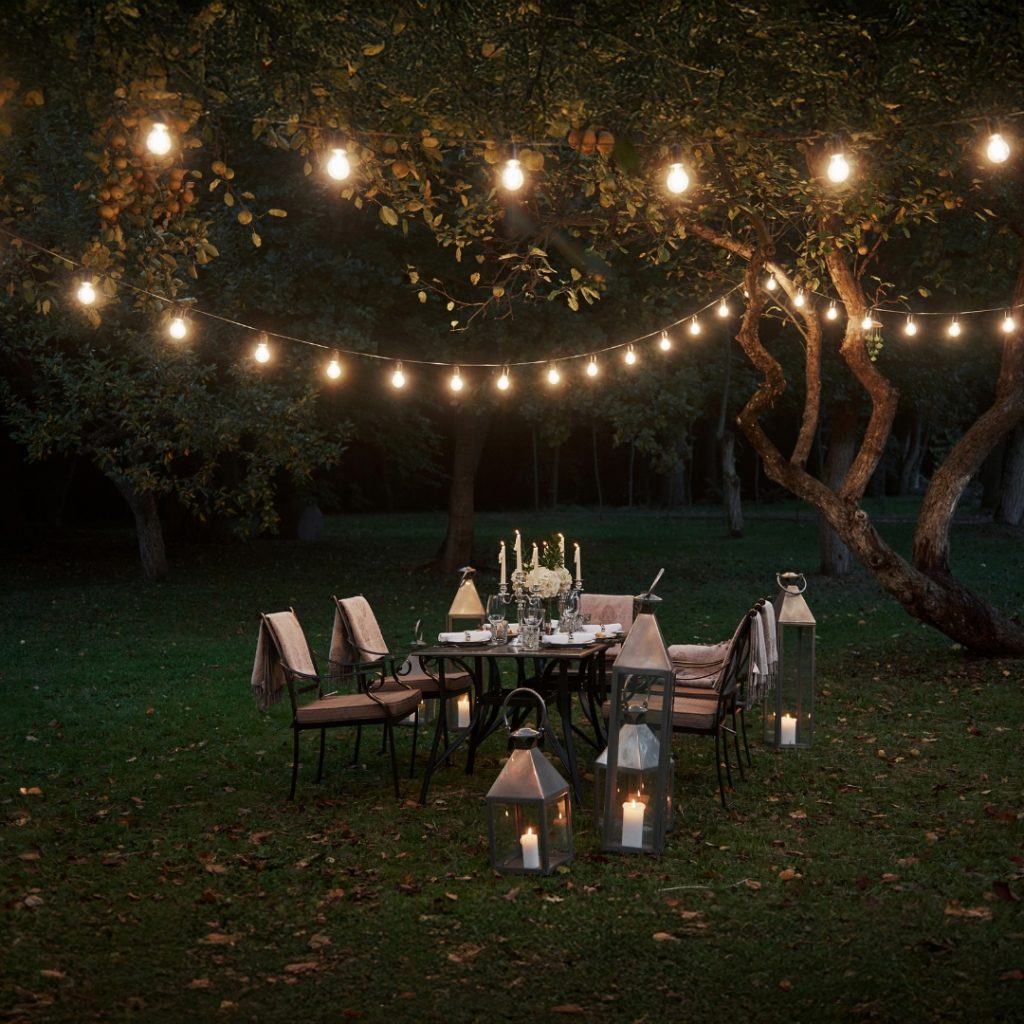
1. Layered café string lights: Add a soft glow to any space with this essential accessory for cozy evening gatherings.

2. Portable lanterns: A décor staple used for centre pieces, along pathways, or hanging from trees – candle or LED lit.

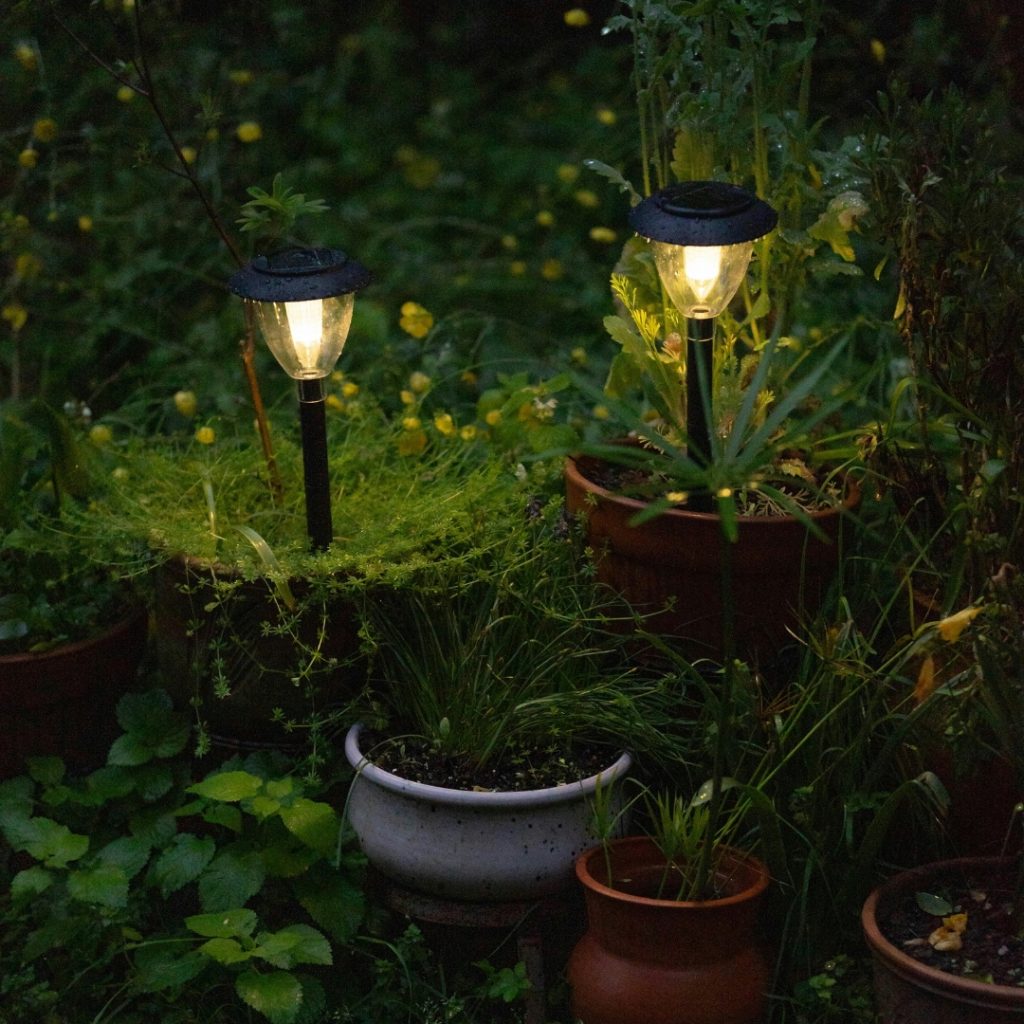
3. Solar lights: No power, no problem! An environmentally conscious way to brighten your backyard on a budget.

By Nicole Hilton
In the first three months of this year in Oakville and Burlington, more than 3,000 people listed their homes. But the number of homes sold declined by about 40% compared to the first quarter of last year. As the number of new listings continues to exceed the number of sales, inventory is rising. Average selling prices, meanwhile, are flat or declining slightly (see the summary statistics on page 34).

Why these market changes? The reasons are mostly national or global. Current influences on real estate include higher interest rates compared to five years ago, economic uncertainty, tariff anxiety and the affordability issue, not to mention that buyers are more cautious than they were in the over-heated COVID-19 housing market.

This year started fairly smoothly until geopolitics (and the weather!) suddenly caused hesitation among buyers. “We quickly ran into uncertainty with a call for both a federal and provincial election, as well as well- documented issues in the U.S., including new tariffs,” says Duncan Harvey, Branch Partner & Broker at Every Avenue Real Estate in Oakville. “On top of that, we experienced more snow than we’ve seen in several years.”

All of these factors caused home sales to slow down. With more homes to choose from and less pressure to decide fast, buyers are taking their time and making sure not to overpay. “That said, as we move into better weather and with elections behind us, the only major uncertainty that remains is with the U.S.,” Harvey says. He expects sales volume to increase over the remainder of 2025.

If you’re considering selling your home this year or already have it on the market, we’ve got your back! Read on for some great tips and advice from local experts on how to achieve a successful sale.

Price It Right

“Market shifts can happen virtually overnight, and pricing strategy is crucial in ensuring sellers get the most money possible,” says Greg Kuchma, a Broker with RE/MAX Escarpment Realty in Burlington. Kuchma explains that pricing very much depends on some obvious factors, such as competitive listings and recent sales in your area, but sellers must also consider things like the uniqueness of a property, and what timeframe they’re comfortable having the property listed for.

“People are approaching the process with caution – and rightfully so,” Kuchma says. “Properties at all price points are selling, and buyers are more likely to include conditions and negotiate.”

Harvey stresses that in today’s market, buyers want to feel like they’re getting a deal. “Pricing sharply has never been more important,” he says. “When sellers price their homes competitively, it gives buyers the confidence to make an offer right away, instead of sitting back and waiting for a price reduction.”

Set the Stage


Sellers need to show off their home’s best attributes – because there’s only one first impression. A real estate agent will advise on lighting, paint, landscaping, cleaning, handyman touch-ups, small staging and decorating changes (yes, prospective buyers notice these details).

Rather than go it alone, “Engage a real estate professional early on!” Kuchma says. “There are so many moving parts, and things to be aware of.” Although you know your home best, your agent offers valuable and objective insights on how to get it “show ready.”

According to Andrea Fefekos, Owner of Shelf Care Organizing in Milton, a home that’s on the market “needs to shine like a new pin from top to bottom, inside and out.” That might sound like a big ask if you’ve lived in the same house for many years. Inevitably junk collects in the basement, closets, and garage. Kitchens show their age. Walls thirst for a lick of paint. “But don’t despair,” Fefekos says. “There are plenty of people who can help you with the work required to show your home in the best possible light.”

As part of her company’s decluttering services, Fefekos’ team can help sellers decide what to keep or donate, arrange for same-day donation removal, and organize kept items to minimize visual clutter. It’s not just about tidying up. It’s about showcasing a home’s best features with minimal distractions. As a seller, you want potential buyers to picture themselves in the space – and they can’t do that if they’re focusing on your belongings.

Renovate…Only where necessary

Sometimes a home needs more than a cleaning and decluttering to appeal to a buyer. In some cases, for a home to fetch a good price, a realtor might suggest investing in renovations. It can result in a quicker sale, at a price that both the buyer and the seller are happy with.

Keep in mind, though, that the goal is to get back far more than you spend. This is probably not the time to undertake major work such as a new kitchen or bathroom.

“Prior to a sale, focus on the visual presentation of the home,” says Peter Glaw, Owner of Premier Quality Renovations. “Touch up the hardwoods, fix scuffs in the drywall, check the caulking and the grouting in the bathrooms and kitchens, and paint wherever necessary.”

Glaw has 41 years of experience in every type of reno, from superficial to a complete rebuild. He can either have his tradespeople do the work and manage the job, or take on a consulting role and teach you how to be your own general contractor. He has even written a book about it – How to Be Your Own General Contractor: Everything You Need to Know to Take Control and Save Thousands on Your Renovation or New Construction.

Harvey recommends starting with the surface changes and then reassessing. “The best return on investment typically comes from fresh paint and making sure the home is extremely clean,” he says. “From there, sellers should work with their agent to decide if additional investments — such as minor updates or repairs — could further improve the home’s value and marketability.”

Dot every ‘i” with a real estate lawyer


Once a successful offer to purchase is concluded, there is one final (often under-appreciated) step in the process: working with a professional real estate lawyer to ensure closing day happens without a hitch. This step is critical whether you’re a first-time buyer, a seasoned investor, or a seller expecting to close a deal.

Owen Duguid, Partner at O’Connor MacLeod Hanna LLP in Oakville, explains how it works. “When most people think about buying or selling a home, they picture open houses, mortgage meetings, and real estate agents,” he says. “But behind the scenes, there’s a quiet powerhouse making sure everything runs smoothly – and legally. That’s where the real estate lawyer comes in.”

The lawyer’s job is to spot red flags and issues early before they become costly problems. They can also translate legal jargon into plain English, and make sure you are in a position to complete the transaction on closing day. Whether it’s reviewing contracts, dealing with title issues, negotiating terms, or resolving disputes, real estate lawyers ensure that both the buyer’s and the seller’s rights are protected.

Think of real estate lawyers as the safeguard in a high-stakes game,” Duguid says, “because when it comes to real property, one misstep can cost more than just peace of mind.”

You’ve got this


Markets will forever fluctuate. World events will always cause supply and demand to ebb and flow. If you plan to sell your home in the coming months, know that it’s in your best interest to make sure that all elements are in place for an attractive listing. Once your home has the right price and the right look, and once your valuable asset is in good physical and legal shape, you’re primed for a mutually rewarding transaction.

If you are thinking of selling your home this year, here are some local companies who would love to help you prepare for the move.

Clutter Relief Services, Hamilton
clutterreliefservices.com

Daphne Freill, Oakville
daphnefreill.com

Downsizing Diva, Burlington
downsizingdiva.com

Every Avenue Real Estate, Oakville
everyavenue.ca

Halton Handyman, Burlington
haltonhandyman.ca

Invidiata Team, Oakville
invidiata.com

Jason Woods, Mortgage Broker
jason-woods.com

Kleen Rite Carpet & Duct Cleaning, Burlington
kleenrite.ca

The Kuchma Team, Burlington
thekuchmateam.ca

O’Connor MacLeod Hanna, Oakville
omh.ca

Premier Quality Renovations, Etobicoke
premier-renovations.com

Shelf Care Organizing, Milton
shelfcareorganizing.com

Ultra Stor, Burlington
ultrastor.ca

By Tim Root and Michelle Morra

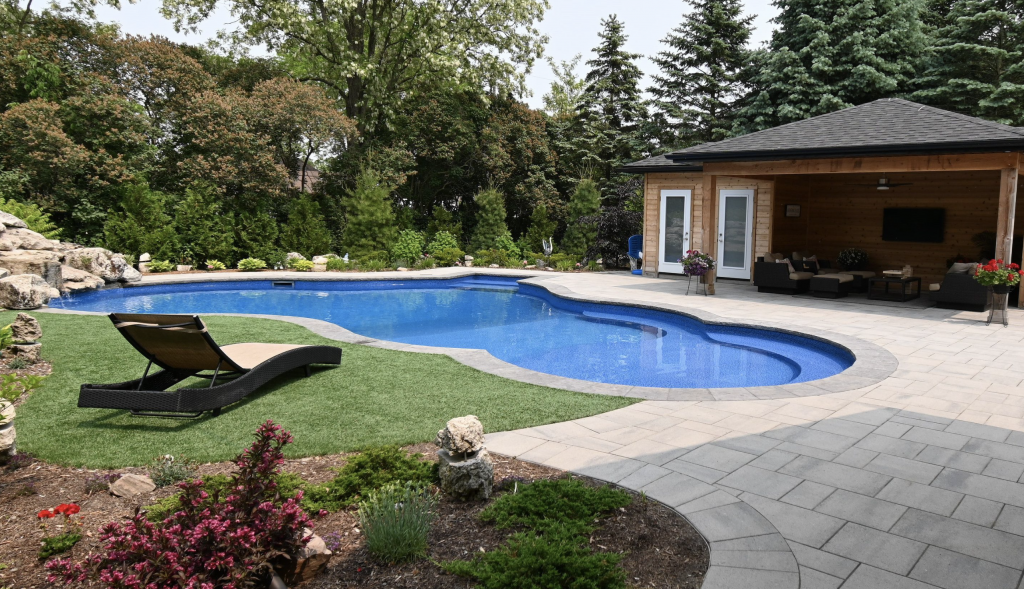
Pool planning is always in season. Whether you’re dreaming of the serenity that comes with a refreshing morning dip or a lively spot for weekend entertaining, the right pool can completely transform your outdoor living space. From layout and landscaping to features and finishes, here’s what to consider when turning your project ideas into a reality.

With the arrival of consistently good weather, it’s tempting to think you can have a pool installed and be swimming by summer’s end. While that might still be possible depending on the scope of your project, careful planning is the key to achieving a high-quality result that will last for years.

“The best way to get started is to book an expert consultation to discuss your ideas and project in detail,” says Andrew Majury of Let’s Landscape (Together). Terence O’Brien of Shoreline Pools and Landscapes agrees: “If you build a backyard similar to how you build a house and take your time, you’ll have the best experience. All the planning and design work is what makes a project run smoothly.”

Dive in

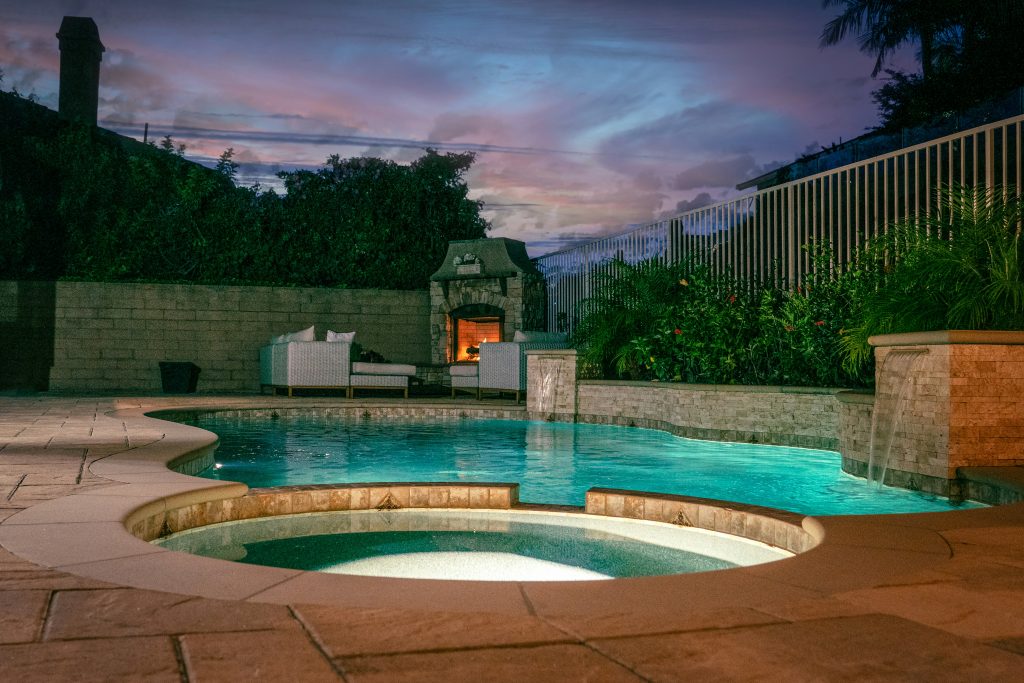
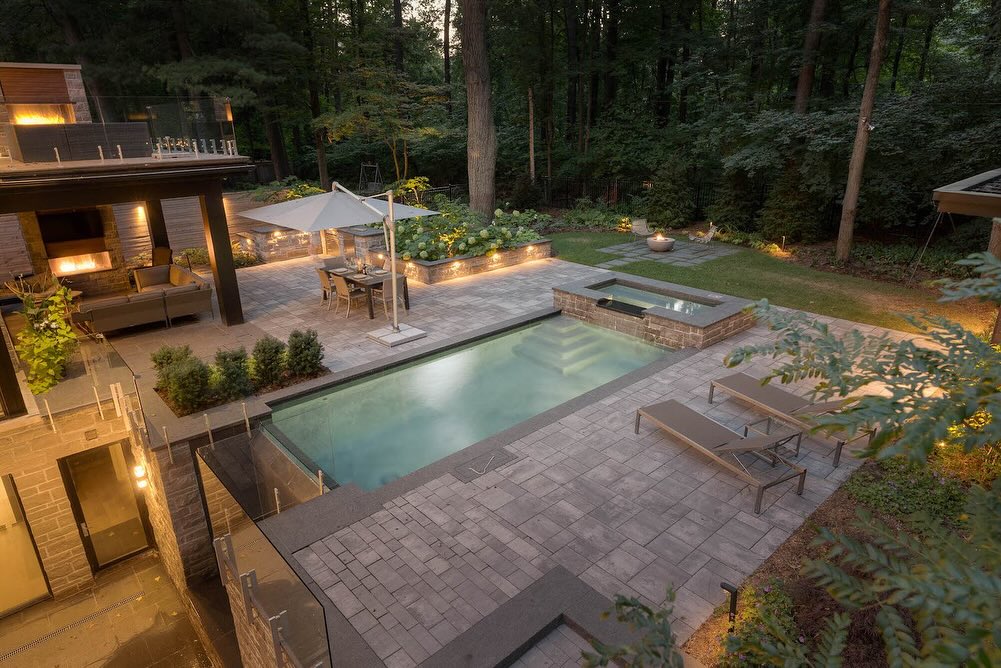
Custom pool designs offer the freedom to incorporate luxurious, resort- inspired features that elevate your entire backyard. “Integrated spas, sun benches, and full-width staircases are trending,” says Ian McClelland of McClelland Landscape Design. “The shallow end is often the go-to hangout spot, so expanding the stairs into a larger lounging area creates a more social atmosphere. Hot tubs with therapeutic jets and spillover spas are also in high demand.”

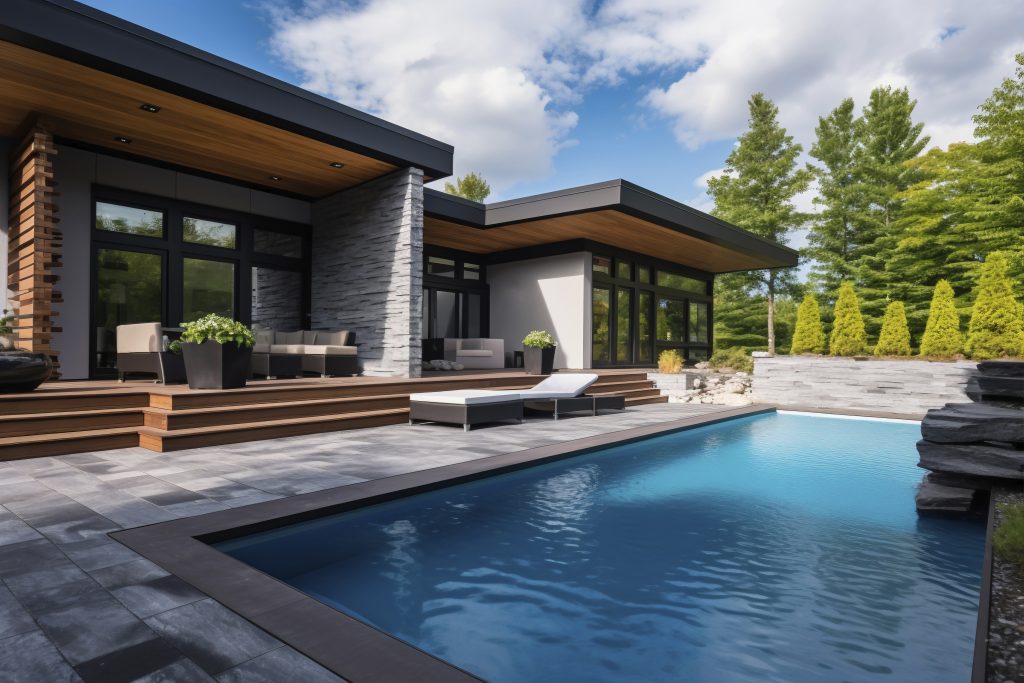
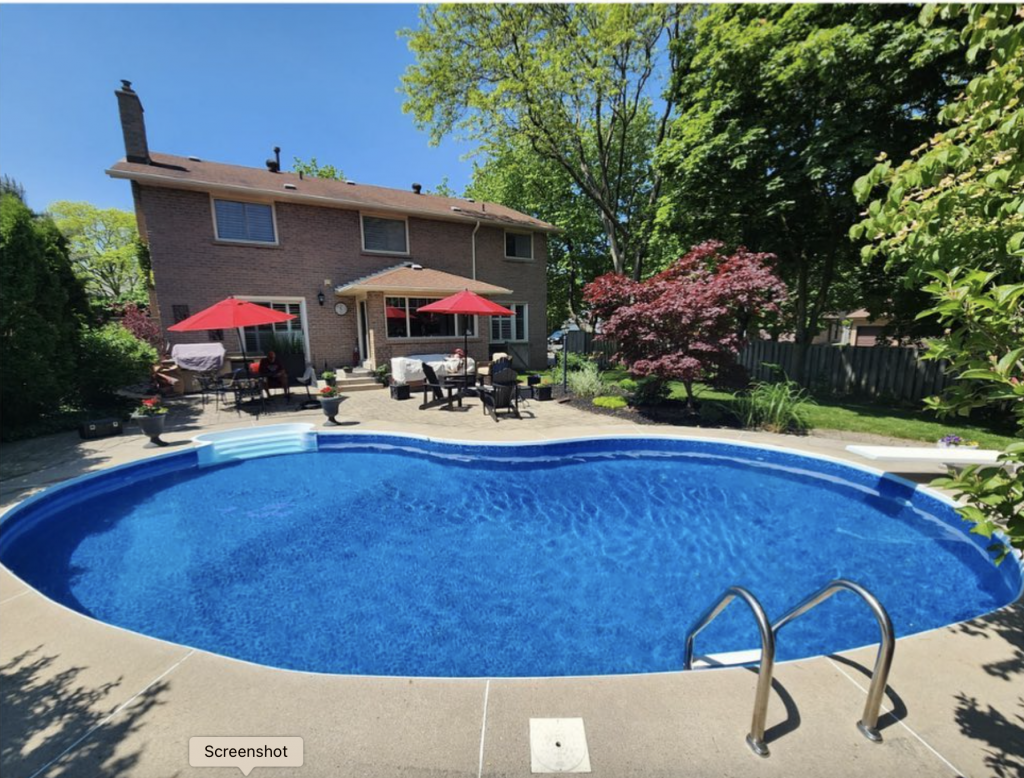
Materials and shapes are evolving, too. “We’re seeing increased interest in outdoor-rated porcelain tile and natural stone,” O’Brien says. “I’m also trying to bring back curvy pools. Most of the industry leans toward modern, rectangular styles, but freeform shapes help define outdoor areas – like dining areas, fire tables, and conversation sets.”

Backyard blueprint

Beyond the trending features everyone wants, there are a few practical must-haves that every well-designed pool should include. “A control panel system allows you to simply manage, monitor, and adjust all pool functions remotely from an app,” says Majury. “A variable speed pump will save on operating costs and is more energy-efficient compared to single-speed pumps, making it a smart investment for long-term savings.”

Striking the right balance between water features, hardscape (like patios and stonework), and softscape (like garden beds and greenery) is equally essential. “You don’t want one element to overpower the others,” explains McClelland. “You want to create a sense of comfort and relaxation.”

O’Brien encourages homeowners to invest in a full backyard design. “When you’re working with the kinds of budgets these projects require, it’s crucial to have someone you trust who understands your vision,” he says. “We take elevation shots and plan every inch so when you receive a quote, there are no surprises.”

As for the cost of creating a private paradise? Expect to spend $80,000 to $100,000 on a custom pool with high-end features plus the cost of landscaping. But a total teardown isn’t always necessary. “For customers with existing pools, it’s amazing how a renovation can completely transform your yard,” Majury says.

Top 5 Pool Accessories for Summer Fun

  1. LOUNGE CHAIRS Create resort-style comfort with loungers for the sun deck or floating chairs for lazy afternoons in the pool.
  2. INFLATABLES Flamingos, unicorns, and even floating cabanas add a playful touch while keeping you cool.
  3. LED LIGHTS Colour-changing lights bring ambiance to evening swims and backyard parties.
  4. BLUETOOTH SPEAKERS Keep the tunes going with waterproof speakers that can handle splashes or float alongside you.
  5. POOL GAMES From hoops and volleyball to dive rings and floating poker, pool games make a splash with all ages.

Local Links

Let’s Landscape (Together)
Burlington
letslandscape.ca

McClelland
Landscape Design
Oakville
mcclellandlandscapedesign.com

Shoreline Pools and
Landscapes
Oakville
shorelinepl.ca

By Nilcole Hilton

When my daughter was a toddler, she had a habit of waking at 5:45 a.m. To avoid disrupting the rest of the house, she and I would head to our back porch to play. The chirping of birds was our soundtrack. 

After I finally decided to buy a bird feeder, suddenly our mornings brought sightings of goldfinches, chickadees, and cardinals that flocked to our yard. We learned their names and distinctive calls, and I began to actually enjoy waking up at dawn just to see which feathered friends would visit us.

I know I’m not alone in my love of backyard birding. The hobby is rapidly growing in North America. “(It’s) one of the easiest and most rewarding ways to connect with nature,” says Paul Oliver, Founder of Urban Nature Store. Watching and listening to birds can be incredibly calming, and for many enthusiasts, attracting more birds becomes an obsession. “The beauty of the birds, along with their songs, has a naturally relaxing effect,” adds David Wood, Store Manager at Wild Birds Unlimited in Burlington. 

If you’ve ever wanted to attract birds to your yard, here’s how to get started. 

Choose the Right Feeder

Walk into a specialty bird store like Wild Birds Unlimited in Burlington or Urban Nature in Ancaster, and you’ll find an overwhelming variety of feeders. Where to start? Oliver suggests a tube feeder. “It’s easy to use, attracts a wide variety of birds like finches, chickadees, and cardinals, and helps keep seed fresh and dry,” he says. If squirrels are a concern, squirrel-proof feeders can help ensure more seed goes to the birds rather than to pesky backyard thieves.

Placement is key when setting up your feeder. Wood recommends a pole system. “You can position it wherever you want in your yard,” he explains. To prevent squirrels from eating from feeders, place them 10 to 12 feet away from anything a squirrel could jump from, like a fence or tree. Birds also need to feel safe, so placing feeders near shrubs gives them natural cover to escape to. Keep the feeder about five to six feet off the ground to protect birds from predators. And don’t forget about convenience — make sure your feeder is easy to access for refilling and cleaning, as clean feeders help keep birds healthy. 

Select the Best Seed

Not all bird seed is created equal, and choosing the right one truly matters. “The quality of bird seed makes a huge difference in what birds you attract and how much waste you end up with,” Oliver explains. Many big-box store seed blends contain fillers like milo and wheat, which birds simply discard. Specialty stores like Urban Nature and Wild Birds Unlimited carry high-quality, fresh seed blends designed to attract the birds you want to see while reducing waste.

Wood recommends starting with sunflower hearts, a no-mess seed that attracts a variety of birds. “Over time, you can expand your offerings with suet for woodpeckers or nectar for hummingbirds,” says Oliver. A pole system allows you to easily add more feeders and specialized seed to attract different species.

Creating a bird-friendly backyard is a fun and rewarding way to connect with nature. With the right feeder, high-quality seed, and a few thoughtful additions to your yard, you’ll soon find yourself enjoying the sights and sounds of several beautiful local species. 

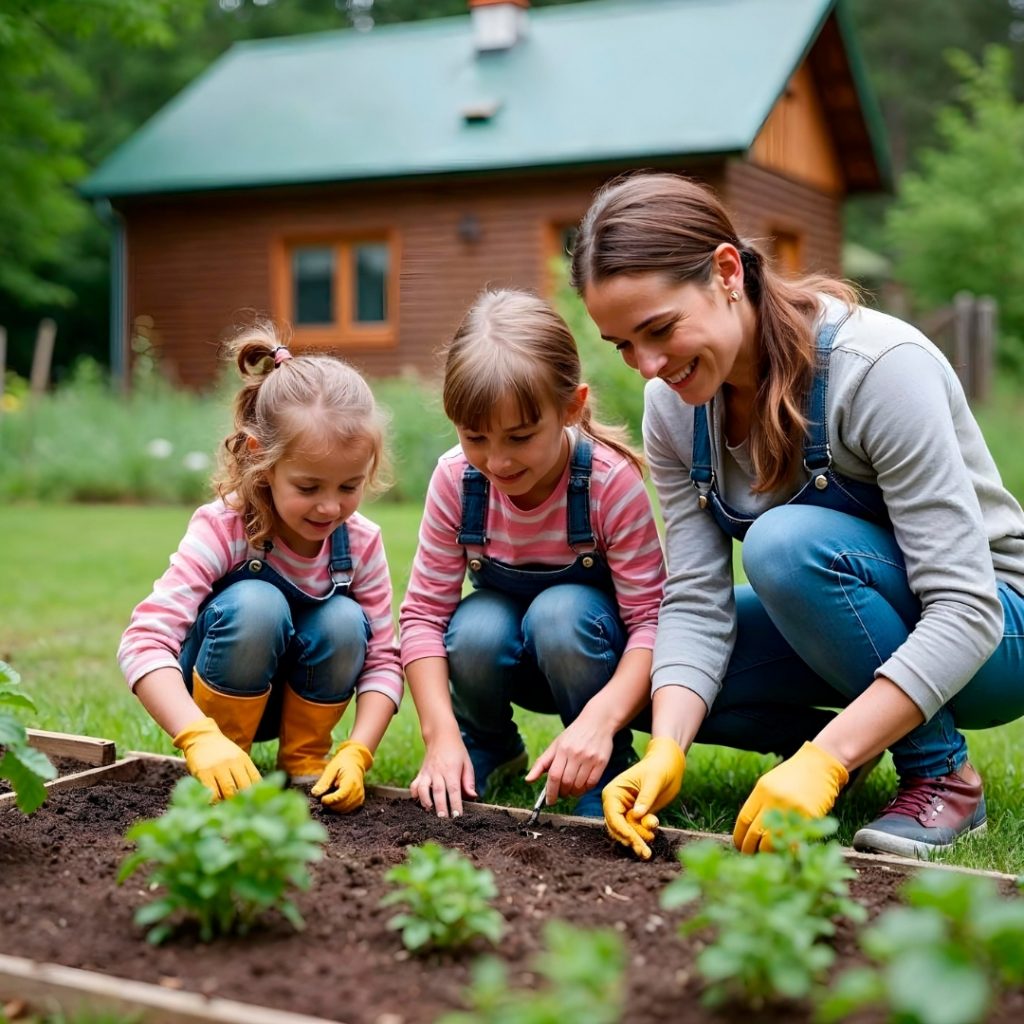
There’s something magical about planting a tiny seed and watching it grow into something you can actually eat. And for families, an edible garden is more than just a source of fresh food — it’s quality time outside, a science lesson, and a lot of fun.

Planting season is upon us, so consider reserving space for tomatoes, zucchini, beans, lettuce, herbs, and even some berry bushes. Whether you have a backyard, a small patio, or a cozy condo balcony, there are plenty of ways to create a garden that is easy to maintain, eco-friendly, and deliciously rewarding.

If the idea of a full-fledged veggie patch feels overwhelming, consider starting small with a herb garden. A few pots of basil, parsley, or mint can provide fresh flavour for your meals and is a simple way for kids to get involved by snipping a handful of herbs for dinner. If space is tight, consider a vertical garden. Wall mounted planters or stackable pots make the most of a small area. They look great, too.

When they’ve planted, watered, and picked it themselves, even the pickiest eaters may be willing to try a fresh snap pea or red pepper.

For people with yards, raised garden beds or a dedicated vegetable patch can yield an impressive harvest. Just be sure to plan your space wisely. Some plants, like zucchini, can take over if given the chance. Trust me, it’s all fun and games until your zucchini ends up wrapped around your neighbour’s pool pump. If you’re short on space, containers along a fence line or placed on a patio are a great option. Tomatoes, peppers, and even strawberries can thrive in pots.

“Good soil is the foundation of a great garden,” says Catherine Bulow, Store Manager at Bulow Garden Centre, Oakville. “If you’re planting in the ground, enrich your soil with compost or aged manure before digging in,” she says. “In containers, use a high-quality organic potting
mix. Don’t forget to space plants according to their needs.”

Bulow stresses the importance of giving seedlings enough room to thrive. While they’re not happy when crowded, giving seedlings too much space can waste valuable growing room. “As a general rule of thumb, try to plant leafy greens closer together, while sprawling plants like cucumbers need space to spread,” she says. To keep your garden as low-maintenance and sustainable as possible, consider using self-watering containers.

Savvy gardeners have learned through trial and error that, just as humans thrive when surrounded by others we get along with, companion plants support each other. For example, tomatoes and basil thrive together, and marigolds help keep pests away.

One final tip

Don’t forget to water your garden, especially during the hot months. Add mulch to retain moisture — it does double duty by keeping pesky weeds down. Your local garden centre sells a variety of mulches, including cedar and pine, that can play a big role in protecting your garden from drought.

Watching plants grow from a seedling to a full-grown edible plant is very satisfying. If you give kids a basket or bowl for ripe veggies and berries, they’ll definitely sample sun-warmed cherry tomatoes fresh off the vine. My daughter claims she must taste the raspberries she picks for “quality control” purposes.

One of the best parts of growing your own food is watching kids connect with what’s on their plate. When they’ve planted, watered, and picked it themselves, even the pickiest eaters may be willing to try a fresh snap pea or red pepper. Gardening teaches children about the ecosystem, the privilege of fresh and nutritious food, and how patience can lead to yummy rewards.

LOCAL LINKS

Agram Garden Centre
2018 Dundas Street East,
Oakville

Bulow Garden Centre
370 South Service Road West,
Oakville

Connon Nurseries
656 Robson Road,
Waterdown
connon.ca

Terra Greenhouses
2273 Halton Regional Road 5,
Burlington
terragreenhouses.com

Sheridan Nurseries
606 Southdown Road,
Mississauga
sheridannurseries.com

By Lisa Thornbury

A well-selected carpet or rug can completely transform a space – adding warmth, texture, and personality without the need for a full home renovation. Whether you’re looking for a timeless colour or a bold statement piece, understanding what’s trending can help you make the right choice.

Rug Revolution:

Colour, Patterns, and Texture After years of seeing an abundance of grey in- home décor, trends are shifting toward warmer hues like taupe, which bridges grey with brown, beige, and tan. These earthy tones create a cozier feel while maintaining a versatile foundation for any space.

“Trending in rugs and carpets this year are warm neutrals and warm whites,” says Jim Anderson of Andersons Interiors. “We are also seeing a movement back to patterned jewel tones like emerald green.” Beyond these warming tones, Samantha Hobbs of Joshua Creek Furniture notes a growing preference for organic, fluid designs. “Customers are drawn to rugs with water-like ripples, designs with soft and curvy waves, cloud- like abstracts, and irregular patterns that evoke a connection to natural beauty.”

Joshua Creek Furniture

Vintage-inspired rugs are also making a strong comeback, blending traditional craftsmanship with modern aesthetics. “There’s a noticeable shift toward vibrant hues and intricate designs,” says Cara Almeida of House Warmings. “Jewel tones like rich blues, burgundy, and deep greens are in demand, while natural fibre rugs such as jute, sisal, and wool remain popular for their texture and eco-friendly appeal.”

Texture itself is playing a bigger role in rug selection. From plush carpeting to woven patterns, a textured rug adds depth and dimension to a space. “We can feel texture not only by touch but with our eyes as well,” explains Fraz Khan of Woven Concept Rug Gallery. “It adds softness to hard surface flooring, making the space more inviting.”

Woven Concept Rug Gallery

“Practicality is also a key consideration, with washable and stain-resistant rugs becoming increasingly popular – especially in homes with children or pets. These options provide convenience without compromising style,” adds Almeida.

Size Matters: Visually Maximize Your Space

Choosing the right rug size is essential – not just for aesthetics, but for creating a balanced and well-proportioned space. “The size of the rug determines the visual size of the room, so be careful not to go too small,” says Anderson. “A rug should ground your furniture to create the space. The only place a rug should have wood showing all around it is in a dining room or foyer.”

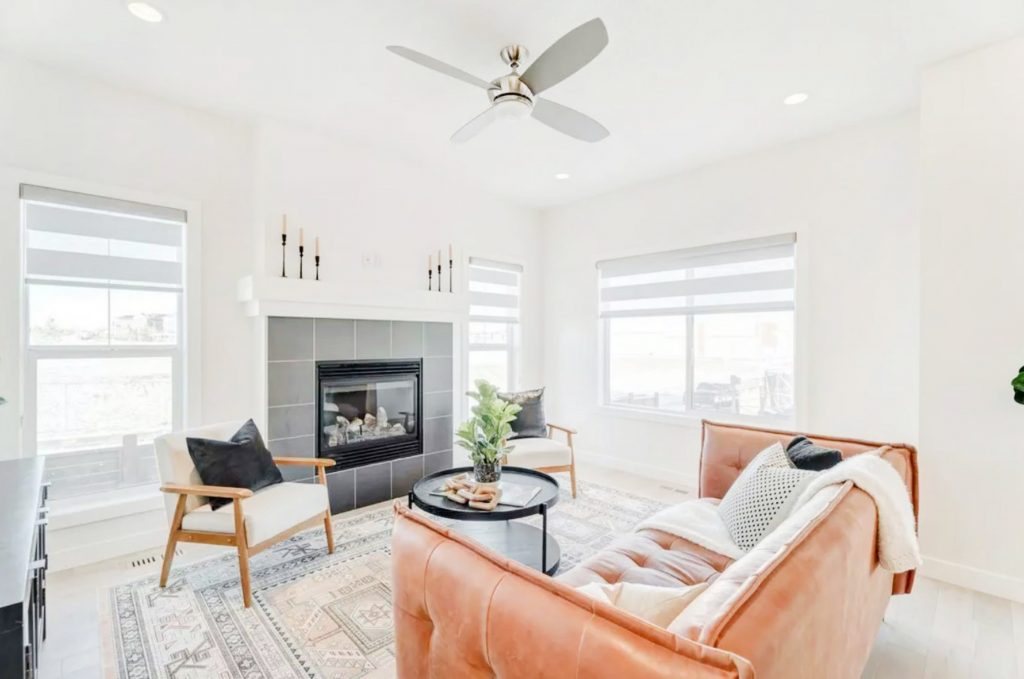
In living and family rooms, area rugs should be large enough to cover the main seating area. “At a minimum, the front legs of sofas and accent chairs should rest on the rug, but a rug that extends fully beneath the furniture is even better,” explains Hobbs.

House Warmings

In bedrooms, she recommends a rug that spans the width of the bed and nightstands, extending 18 inches to three feet beyond the sides and foot of the bed.

For dining rooms, she advises, “Your rug should extend at least two feet beyond the dining table, so chairs remain on the rug, even when pulled out.” Maintaining a minimum of 18 inches of exposed flooring around the perimeter ensures the rug enhances the space without overwhelming it.

Signature Style: Infuse Personality

A curated rug for your space is more than just a decorative piece – it’s a reflection of your personality and style. “A rug is a great way to inject your personality into a room,” says Anderson. “Remember, it’s your sanctuary after a long day, so choose a rug that reflects you and the feeling you want to have while in that space.”

Andersons Interiors

“If you have a love for a particular culture, history, or art style, a rug with any of those influences can really showcase your personality,” says Almeida
of House Warmings. “Whether it’s a handwoven rug from Morocco, a vintage rug from Turkey, or a bold statement piece with modern art influences, you can inject your passions and interests into your home décor.”

LOCAL LINKS:

Andersons Interiors
686 Guelph Line, Burlington
andersonsinteriors.ca

Joshua Creek Furniture
1029 Speers Road, Oakville
joshuacreekfurniture.com

House Warmings
550 Speers Road,
Unit #3, Oakville
housewarmings.ca

Woven Concept Rug Gallery
1200 Brant Street, Burlington
wovenconcept.com

By Nicole Hilton

Let your child’s personality shine by embracing décor trends and prioritizing multifunctional design. By incorporating elements that reflect your child’s individuality, you can create a space they’ll love to spend time in – one that sparks imagination and grows with them. From botanical prints and accent walls to functional furniture and personalized touches, here’s how to craft an unforgettable, safe, and inspiring room your child can truly call their own.

Keep it simple

Creating a lasting space your little one will love for years can feel challenging, especially when kids change their minds as often as they change their favourite breakfast! Andrea Sarlo, Owner and Founder of Rooms to Grow, suggests starting with a soft, neutral palette. “The neutral nursery trend is here to stay,” she explains. “Neutral spaces are soothing, sophisticated, and timeless.”

Neutral palettes are the perfect place to start. To complete an organic look, “you can always add lush details such as gold accents and warm browns or taupe and dove-coloured furniture pieces,” says Cindy Abu Zeid, General Manager of Nestled. “[Designs] are moving away from grey tones and the farmhouse look.” Beyond colour, include essentials like convertible cribs that adapt from infancy to toddlerhood, cozy chairs that glide, swivel and recline, and portable changers.

NESTLED BY SNUGGLE BUGZ

Arley Coffin, Design Director at FOR Living | Design, emphasizes investing in versatile furniture. “Your biggest pieces, like a quality dresser, rocking chair, or chandelier, should grow with your child,” she advises. “Let the space evolve with smaller updates like artwork, textiles, and the crib or bed.” Her key takeaway: “Invest once in high-quality pieces that will stand the test of time.”

Walk on the wild side

As babies and toddlers grow up, parents are embracing vibrant tones and taking risks with colour in kids’ rooms. The popular décor mantra “more is more” continues into 2025 with statement-making wallpaper, art, bedding, rugs, and furniture. “Textiles and wallpaper are incredibly inspiring when it comes to personalizing a space while also serving a function,” says Coffin. “Patterns, embroidery, and embellishments like fringe or piping add personal design touches.”

To incorporate pops of colour, start with your child’s input to ensure they feel connected to the space. Draw inspiration from a favourite toy or standout piece and consider the mood you want to create when selecting shades. “We love to include colour in kids’ rooms,” Coffin adds. “Colour- drenching or contrast trim is a cost-effective and impactful way to set the tone with paint.”

FOR LIVING DESIGN

“We’re seeing more complex patterns and more detail instead of simplistic designs,” says Abu Zeid. “Patterns such as vintage floral and floral fields are popular.”

Curious about trending hues? Sarlo predicts, “Sage green, crimson, and yellow furniture will define 2025.”

Balancing fun and functionality can transform a kids’ room into a space for play, study, and good sleeping habits. “Many kids’ rooms now serve as a combination bedroom, play, and study area,” says Sarlo. “Our bunk bed selection offers multiple configurations with desks and dressers underneath to maximize space.”

Lighting is another key element for both functionality and ambiance. “We love incorporating accessible task and accent lighting for independent play and reading areas as kids grow,” Coffin explains. “A simple plug- in or hardwired wall sconce, or a cordless table lamp, can provide easy-to-control lighting separate from an overhead fixture.”

ROOMS TO GROW

Coffin’s must-have item: artful pieces that infuse a playful or whimsical vibe into a child’s space. “Opt for soft, cozy rugs because kids spend so much time on the floor, as well as accessible storage so kids can have a designated place to play within their rooms.”

Designing a kids’ room is an exciting opportunity to create a space that reflects their personality, supports growth, and inspires imagination. From neutral palettes and bold pops of colour to multifunctional furniture and thoughtful lighting, the possibilities are endless. But as kids’ tastes evolve, so should their rooms.

By starting with timeless, high-quality pieces and adding flexible, interchangeable elements like artwork, textiles, and accessories, you can keep the space fresh and adaptable.

LOCAL LINKS

FOR Living | Design
75 Navy Street
Oakville
www.for-living.ca
www.for-design.ca


Nestled by Snuggle Bugz
3245 Fairview Street, Unit #2
Burlington
www.nestled.ca


Rooms to Grow
1200 Speers Road #35
Oakville
www.roomstogrow.ca

By Nicole Hilton