Dove+Arrow specializes in local gifts, unique decor and bespoke furniture. They carry five different furniture paint brands and love teaching their customers how to use them to transform their homes on a budget.
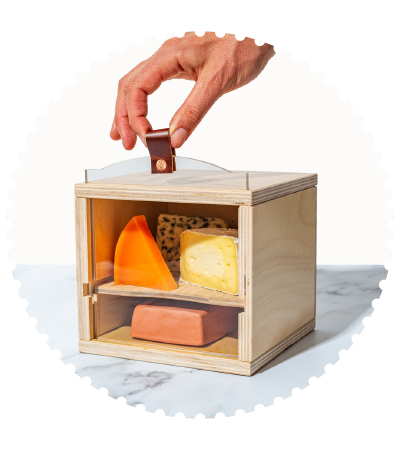
Never worry about wrapping cheese again with your own personal cheese cave from Farmhouse Artisan Cheese. This is the best way to store the delicious cheese you’ll surely want to pick up when visiting their shop in Kerr Village.
At Vereda Central you’ll find outstanding Colombian coffee that is roasted on-site in their Kerr Village café. Try their Coffee + Bourbon beans, which have been aged in oak bourbon barrels, with some dark chocolate or a piece of stinky cheese.
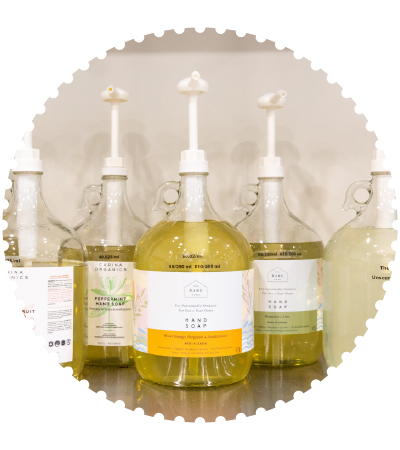
The Kind Matter Company is a local refillery spot with beautiful soaps, shampoos and other eco-friendly products, featuring hand-made kitchen, bath and laundry home goods.
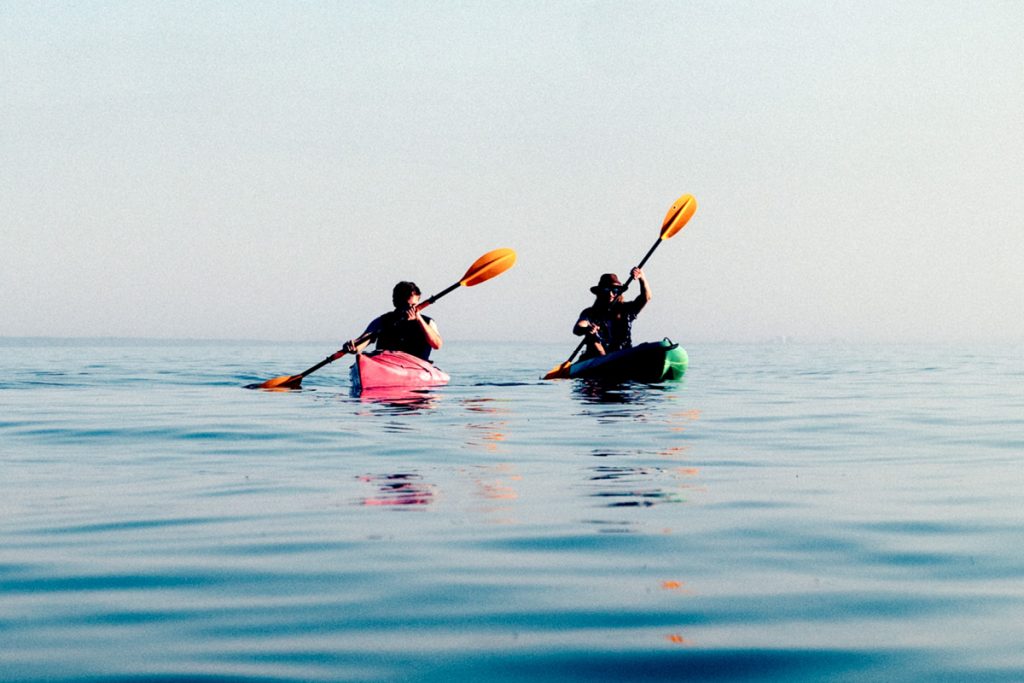
When it comes to getting out on the water this summer, two popular water sports stand out: kayaking and stand-up paddle boarding (SUP).
I took up kayaking when my kids were young. At the time, it was less “sport” and more “escape.” Never underestimate the paddle power of a mom looking for an hour of solitude.
More recently I tried stand-up paddle boarding. After a few spectacular backflips (to the delight of those watching from the beach), I eventually got the hang of it. However, even if you feel like a pro, never brag about how easy it is. If you do, an unexpected wave will come for you. Your sunglasses will end up at the bottom of Lake Ontario and your husband will mutter, “I told you so,” under his breath.
A friend asked me if I had to choose SUP or kayaking, which would it be? First of all, what kind of question is that? That’s the Sophie’s Choice of water sports. I adore them both equally. Each has unique characteristics and are the perfect way to explore nature and move your body.
Fortunately, we don’t need to make such a difficult choice. There are plenty of opportunities to try both. So let’s dive into the exhilarating world of SUP and kayaking and compare their level of exercise, speed, learning curve, cost and a few local paddling spots.
Exercise level
SUP engages your entire body, especially your core (and muscles you never even knew existed). The constant balancing act on the board adds an element of stability training. Kayaking provides an excellent upper body workout, focusing on your arms, back and shoulders. Exertion levels for both sports can vary from intense, depending on how hard you paddle, to downright leisurely. FYI… it’s easier to pack (and conceal) a book and a bag of chips in a kayak versus a SUP.
Speed
Kayaks are designed for efficient gliding through the water, allowing you to cover more distance in less time. Stand-up paddle boarding, though not generally as quick, allows for a pace that’s perfect for taking in the surrounding scenery and enjoying a more relaxed experience on the water.
Learning Curve
Both SUP and kayaking have relatively easy entry points, but do require some degree of technique. You may need a bit more practice to find your balance (tell me about it) and develop a comfortable stance on your SUP.
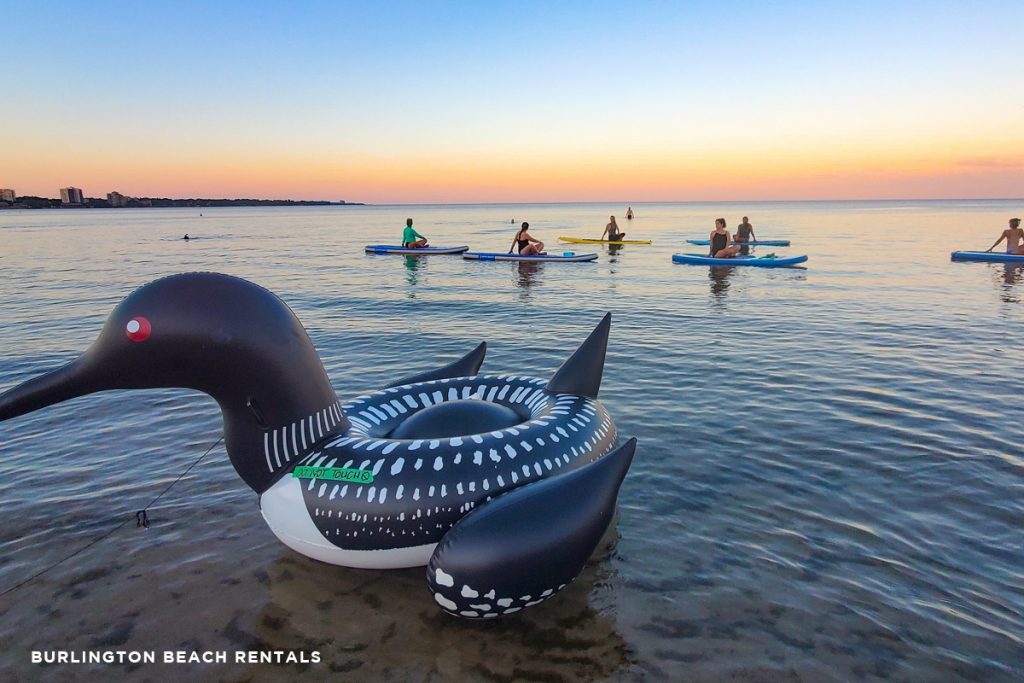
“SUP has taken the world by storm for very good reason,” says Maria Gerow from Burlington Beach Rentals. “It offers a unique vantage point to see into the waters below you and allows you to explore almost any waterway with ease.”
Balance is less of a concern when kayaking, making it more accessible for beginners. Inflatable kayaks, though more affordable and easier to store and transport, can be more sluggish in the water and trickier to handle than hard kayaks.
Cost
SUPs and kayaks can vary in price, depending on the quality and features. Both sports offer rental options, which can be a more affordable way to “test the waters” before purchasing your own equipment.
“With all things water, have fun, but be safe,” says AJ Leeming, senior manager, programs & services Conservation Halton. “Have a plan, always tell someone you’re going out, and have the proper equipment to do so safely so you can do it all again another day.”
Note to self:
Order one of those buoyant sunglass holder neck-straps and a waterproof phone pouch.
Local Spots
Oakville Coronation Park, Busby Park, Bronte Public Boat Launch and Shipyard Park Boat Ramp are popular launching locations, with SUP rentals available nearby at Oakville-based Paddle Sport Performance.
Burlington Launch from Spencer Smith or Lasalle Park, or join the local paddle club and take out a high quality SUP on Burlington Beach.
Port Credit Port Credit Marina and the waterfront parks along Lakeshore Road are popular, with SUP and kayak rentals at Paddle On and Port Credit Adventure Rentals nearby.
Halton Conservation Areas Kelso offers kayak and SUP rentals. Area 8 offers canoe and kayak rentals that include a life jacket and safety kit. Bring your own kayak or SUP to launch at Mountsberg Dam.
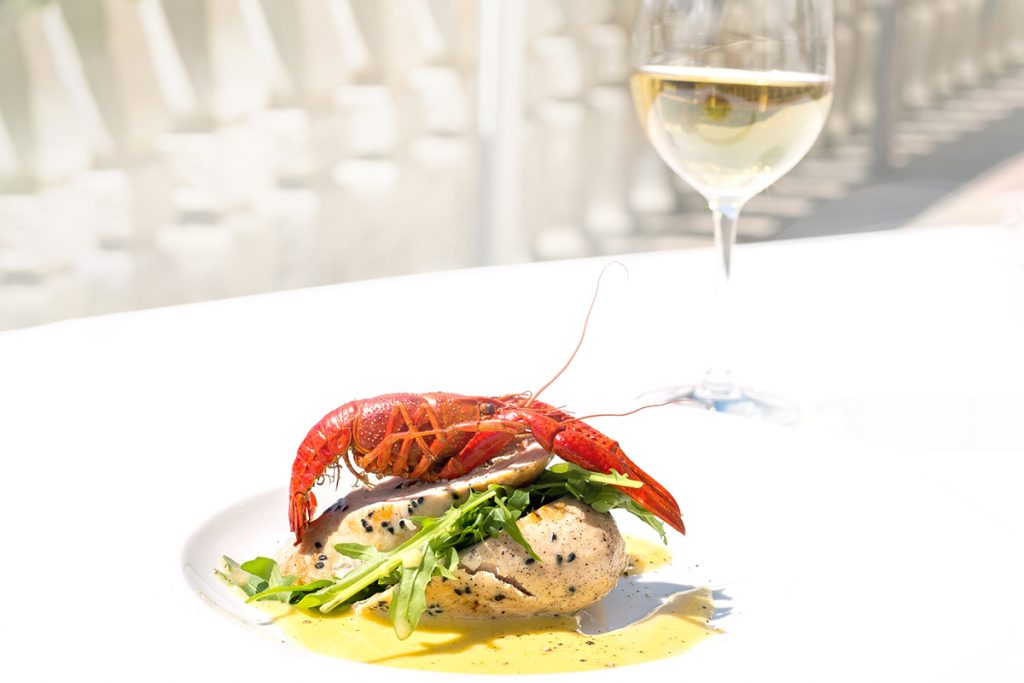
Struggling to figure out what wine to open with your seafood dish? Although white wine does pair very well with fish, it’s a little more complicated than that. Not all white wines taste the same, and “fish” could mean anything from salmon to scallops.
It’s a good idea to consider the texture and flavour of the fish you’re eating when choosing a wine. However, if the sauce is the most prominent flavour on the plate, then use the sauce as your guide. Some types of fish are delicate, light, and flaky while others are practically steak. Therefore, the intensity of the wine should match the texture of the fish.
So, while whites generally rule, reds, rosés and sparkling do have their place. The below wine types (and their pairing ideas) should help you navigate your way through your next seafood and wine pairing.
Sparkling Wine
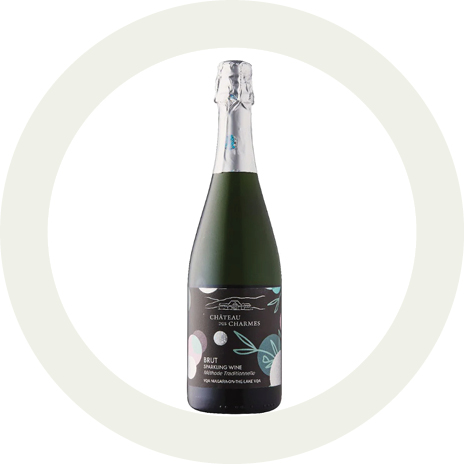
Any reasonably dry sparkling wine is spot-on perfect for fried food. Most wines lose something when you pair them with tempura or a thick beer batter. Not so with sparkling wine; its bubbles and crisp acids cut through the weight of fried food as if the wines were made for the dish. These wines also pair well with oysters, scallops and shrimp salad.
Chenin Blanc, Sauvignon Blanc, Pinot Gris
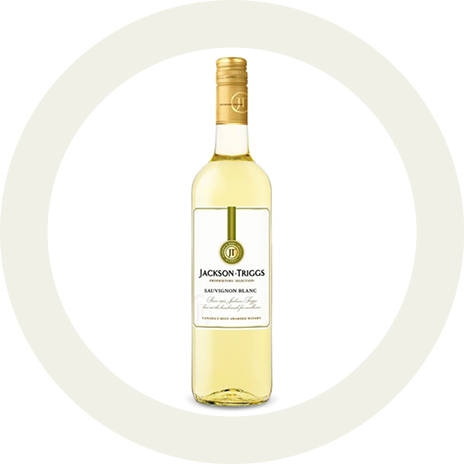
These are the aristocrats of white fish wines. Dry, austere and crisp, chenin blanc and pinot gris are the wines to reach for when serving lean, white fish cooked simply. Flounder, halibut, walleye, snapper, raw clams, or oysters all do well with these wines. Alternatively, you can use these wines to cut through the natural fat in some fish, such as striped bass, catfish, lobster or mussels.
Chardonnay, Fumé Blanc, Viognier
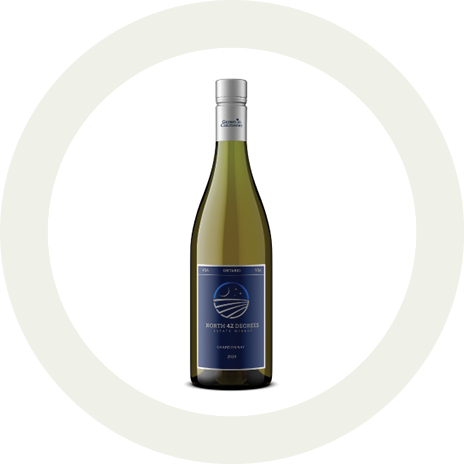
Chardonnay pairs well with salmon, bass, crab, raw oysters and lobster. The theory here is to match a full-bodied wine with a full-bodied dish. If you have a broth-based soup, chardonnay works wonderfully. If you have a fish that’s a little oilier, such as mackerel, try viognier.
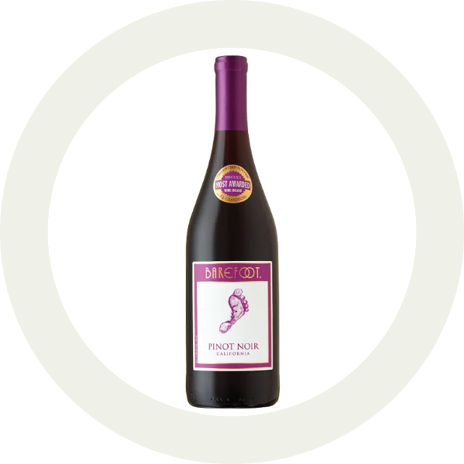
Pinot Noir, Gamay, Chianti
There are precious few instances where you’d want a big red with seafood, but light reds can pair quite well with salmon, tuna, marlin, swordfish, mackerel, bluefish, or other fatty, meaty, big-flavoured fish. Pro tip: avoid combining reds with spicy seafood, as you are likely to get a nasty metallic taste.
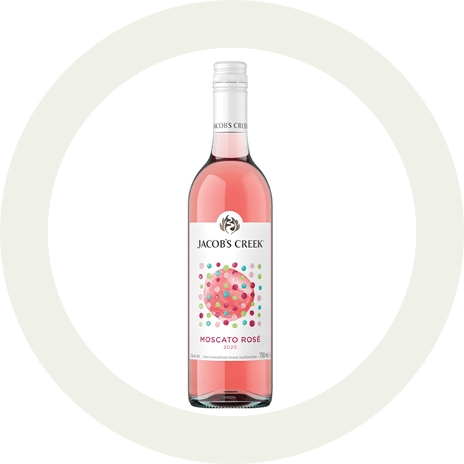
Rosé
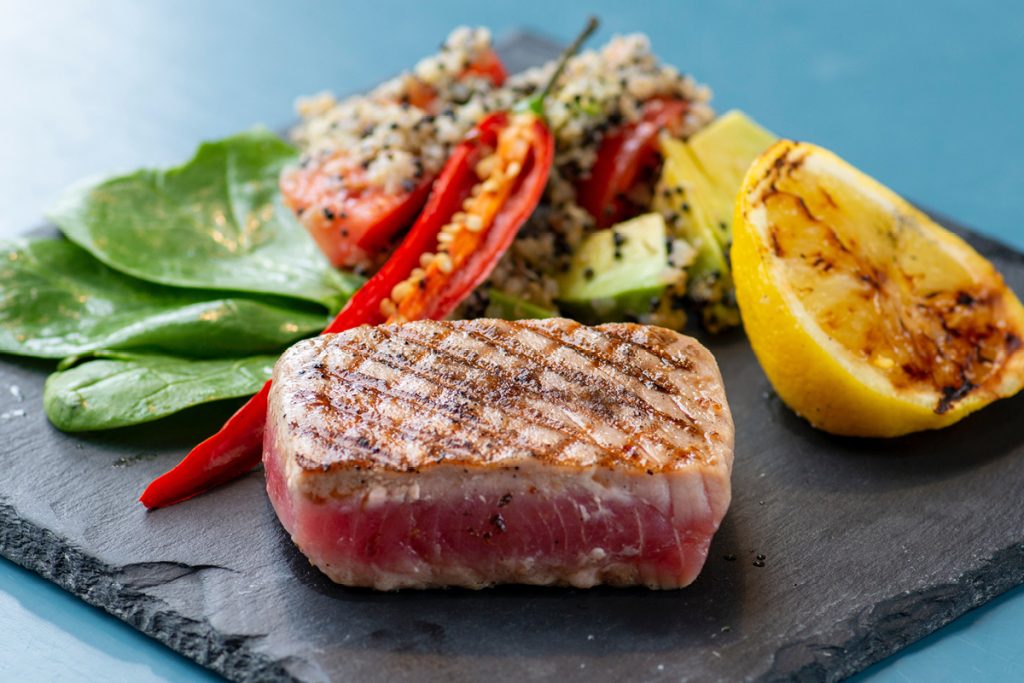
Rosé wines are great when a dish’s sauce is heavier than what a white would call for, but not quite right for a full-on red. Rosés can substitute for full-bodied whites such as chardonnay and fumé blanc. Consider them when grilling tuna steaks.
Summer is the perfect time to introduce more fish and seafood into your outdoor grilling lineup.As barbecues are primed and ready, you should be too.
Morsel for morsel, each bite of seafood offers tender, succulent flavours that satisfy your hunger as well as your nutritional needs. Not only do you gain the dietary benefits from noshing on fish and seafood, you also achieve the bonus of eating tasty proteins that go easy on the waistline.
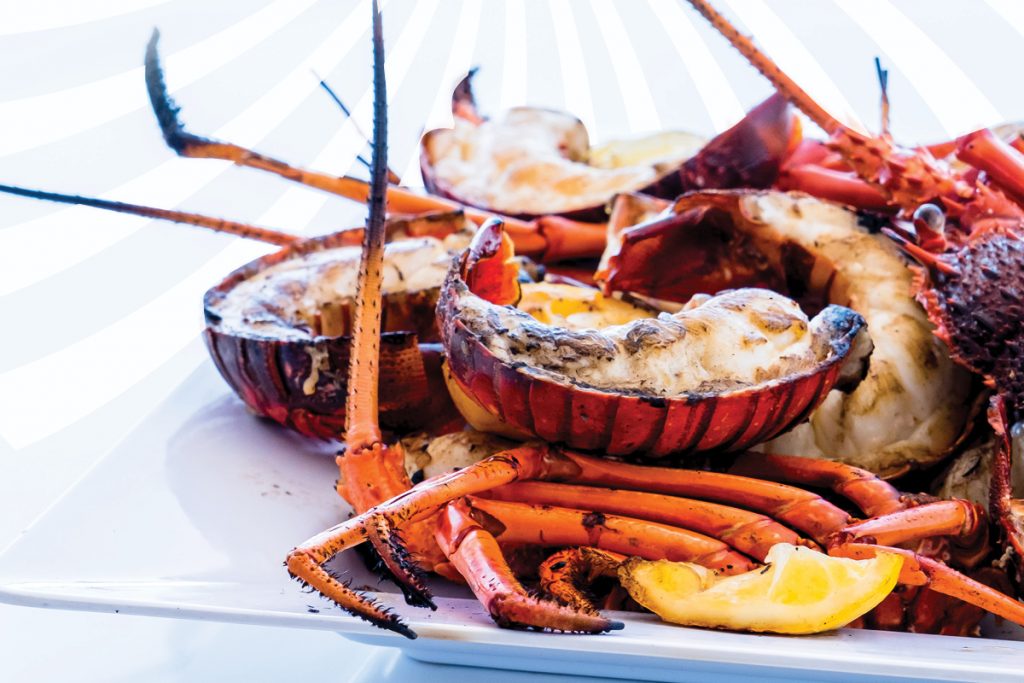
Generally, meatier fish and seafood is best on an outdoor grill as you don’t want flakes of fish falling onto your coals. Think shrimp, lobster, tuna, salmon and meatier white fish varieties such as cod, halibut or swordfish.
Look for fish that has its skin intact as that makes the grilling process easier and reduces the odds of the fish falling apart. Also, says Dave Rihbany of Dave’s Fish Market in Burlington, don’t forget to oil the grill before laying down your fish as that will prevent it from sticking. If the grill feels too intimidating, place the fish on foil and then on the barbecue. That will save it from falling in.
What makes summertime the key time to expand your protein repertoire is the simple matter of availability. Certain types of fish and seafood are only available now so if you want maximum freshness and flavour, summer is the time to try it. “Getting stuff in season like fresh halibut and fresh salmon is good now because it’s not always available all year round,” says Shane R., a fishmonger at Whole Foods in Oakville.
The Mermaid and the Oyster in Kerr Village is a long-time favourite for its daily selection of fresh seafood, as well as a mouth-watering menu of seafood dishes for dine-in or takeout. And, if you want to bring an east coast-inspired oyster bar to your backyard BBQ get together, this is the place.
When seasoning your fish and seafood, the experts often prefer simplicity. Shane suggests salt and pepper, fresh lemon juice and perhaps a dash of Cajun or blackening rub. “When it comes to white fish, you can use whatever seasoning you like as the fish is so mild it will take on the flavour profiles of what you use.”
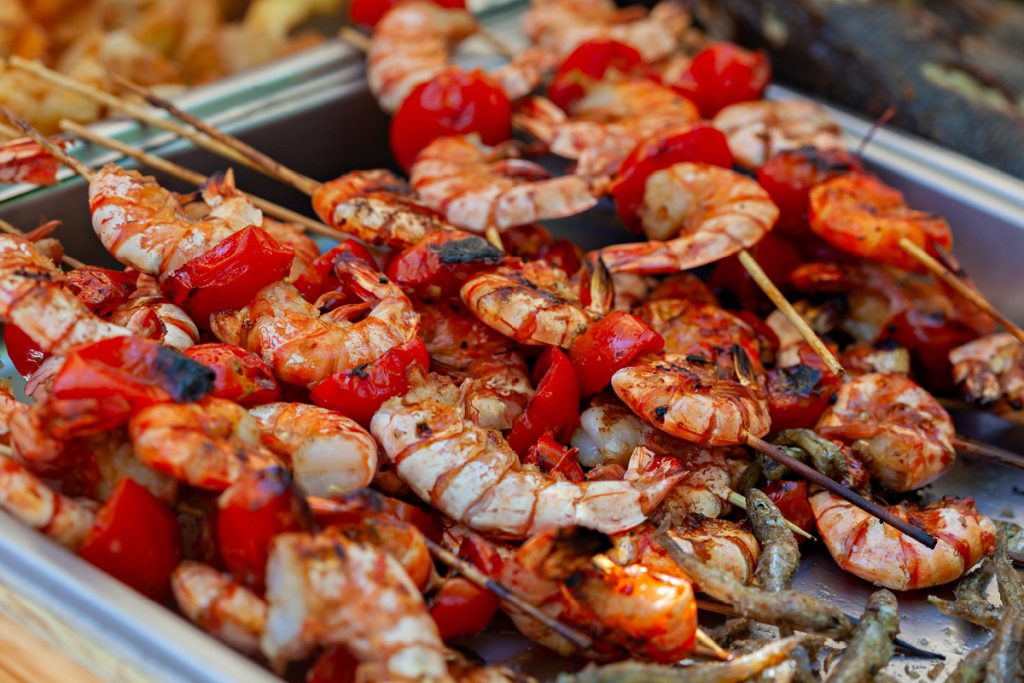
To widen your fish and seafood experience, Rihbany recommends trying multiple cooking methods in one go. “I like a mixed grill,” says Rihbany, who’s been a fishmonger for 40 years. “Pick a piece with sauce and try a piece with nothing on it. I like to make kebobs with tuna, swordfish and shrimp.”
When it comes to selecting fish and seafood, stay away from discoloured flesh, dried or dehydrated skin or meat. Disregard product that has black spots because that means it has aged before it was frozen. “You don’t want it sitting out in the open air all day,” says Rihbany. “And I don’t recommend discounted fish.”
Fish is a quick-cooking protein so engaging in a 15-minute chat with a neighbour while cooking may not be a good idea. Depending on your taste, fish does not need to be fully cooked and some people actually prefer it when it’s a little translucent in the centre. But Shane cautions against serving fish, especially wild fish, that is too underdone. “With wild varieties there’s a risk of parasites and bacteria if you eat it too raw. Any raw fish would run that risk, but typically wild varieties are more prone to it.”
One of the big draws of seafood is its perceived health benefits. It’s low in fat, high in protein and a great source of Omega-3 DHA essential fatty acids. Other health benefits in seafood are derived from vitamins A and D, which are found in fish liver oils, as well as high levels of the B complex vitamins, particularly niacin, B-12 and B-6.It’s also a perfect protein for gluten-free diners and those following reduced gluten diets.
So fire up the grill, give the traditional burgers and hot dogs a pass, and experiment with seafood this summer.You won’t be disappointed.
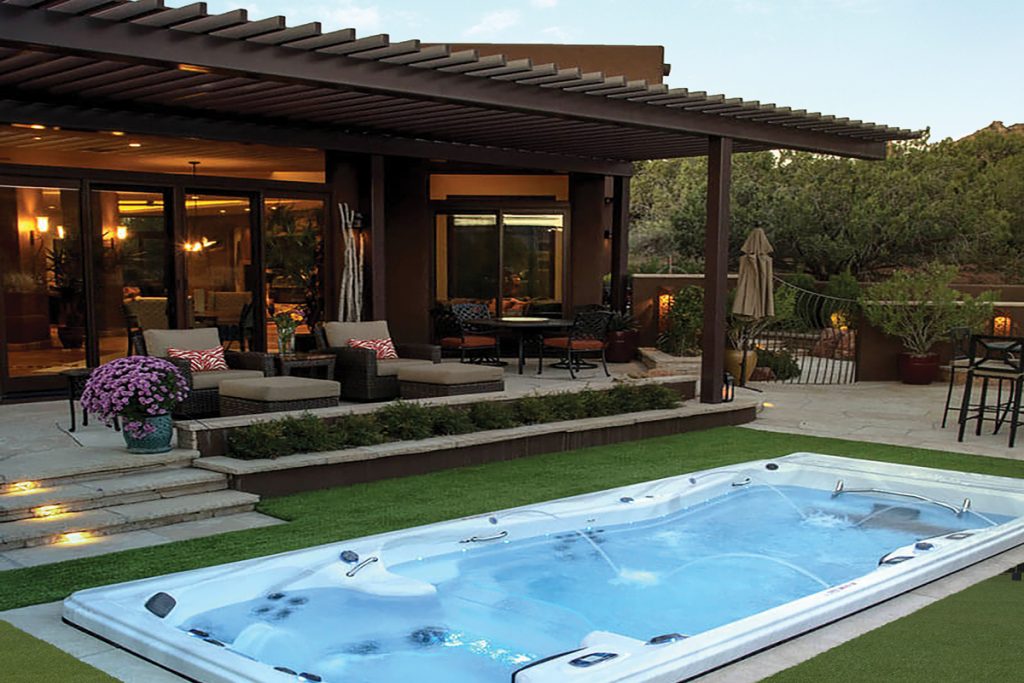
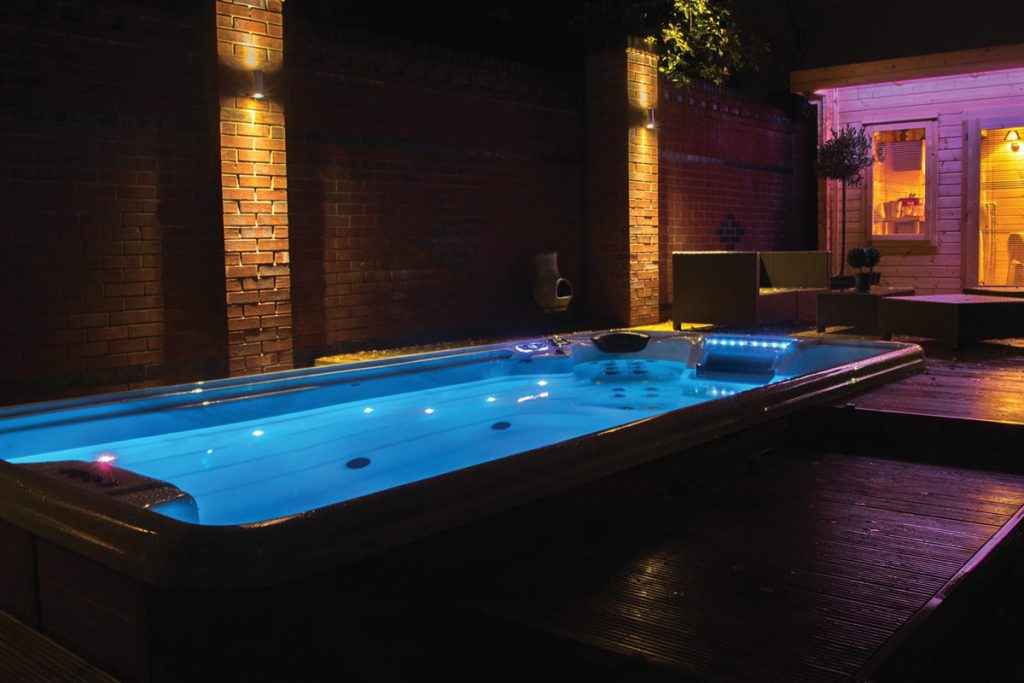
You may not be able to perform cannonballs or run around the deck screaming Marco Polo, but the swim spa may be the next best thing to the backyard swimming pool. It combines a swimming pool’s fitness benefits with a hot tub’s hydrotherapy. And while the swim spa may be perceived as a backyard luxury item, it is considerably less expensive than putting in an inground pool and can accommodate any size yard.
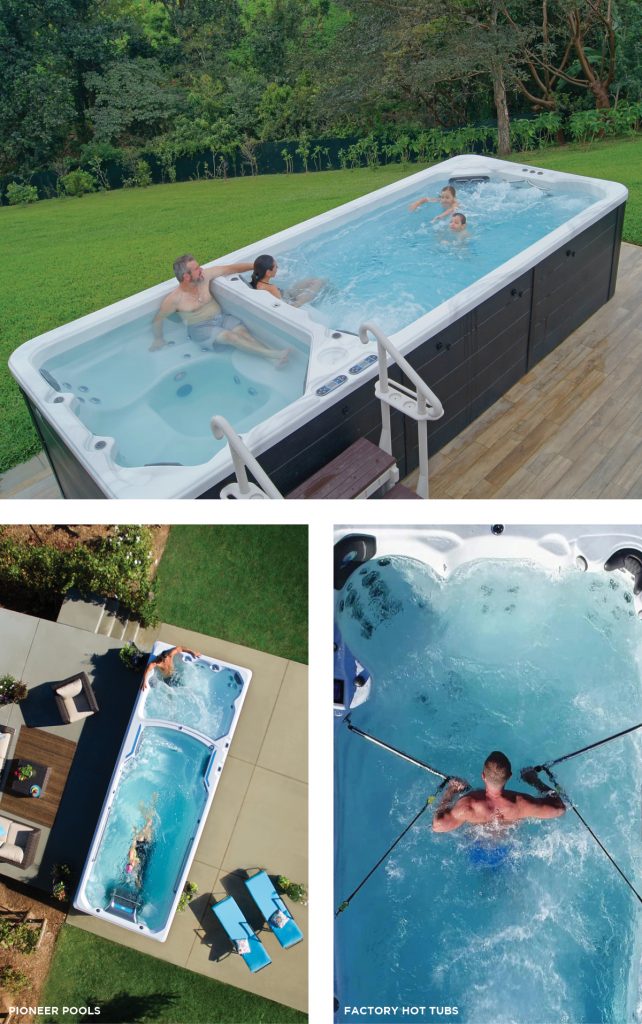
Swim spas contain a jet system allowing you to swim in place, eliminating the need to do laps in a full-size pool. The movement of the water creates a counter-current to mimic the sensation of swimming in the river or ocean so you can exercise within a much smaller area. The jet system also provides the relaxation and therapy of a hot tub with the ability to adjust the temperature within a few hours. Hydrotherapy delivers deep relaxation to muscles, promotes stress reduction, and helps reduce the symptoms of chronic pain conditions like arthritis and fibromyalgia. With a swim spa, you can improve your physical and mental well-being all in one system.
Not All Swim Spas are Created Equal
If you search “swim spa” on the internet, you will see a long list of options and styles, including their ability to be used year-round. “All-weather pools are designed and built for the Canadian climate. Not all swim spas are,” says Aaron Pilon, VP of sales and marketing at Arctic Spas. “Pools must be tested for long durations and consider fluctuating temperatures, not just extreme cold. Not all manufacturers understand the Canadian winter.”
It’s not unusual in Ontario to see -20 C one week and above zero the next. A pool system not designed and insulated properly will not protect against fluctuating temperatures, causing materials to expand and contract. Over time, this can damage the pool causing costly repairs.
The design and fit of the cover also play a critical role in maintaining the pool temperature in winter and help keep energy costs down.
Choosing Your Perfect Spa
Swim spas come in various sizes and styles, but choosing one can be complicated without some helpful guidelines. If you’re researching a swim spa for your family, consider these tips:
• Clarify what exercises you can do in the swim spa. Some models can install rowing bars or require a tether to keep you in place while swimming. Also, understand what can be adjusted, such as the resistance of the water current, the jets’ water pressure, and the pool’s jet arrangement.
• “Be sure to inquire about the pool’s construction and how it is designed for the Canadian climate,” says Pilon. “A good salesperson will walk you through the design of the pool, not just its features.” Also, ask about the heating system and how long you can expect the pool to take when heating to hot tub temperatures.
• Consider pool maintenance and whether there’s a self-regulating saltwater option. Traditional chemicals can cost both time and money. Do filters need to be changed, and how often? Ask where the swim spa is made and the manufacturer’s warranty, and check Google reviews.
A swim spa may be the perfect addition to your backyard offering unending outdoor family fun, a full-body workout and a therapeutic soak any time of year.
They might be known as man’s best friend, but there are many reasons dogs make great pets for all members of the family.
The Ultimate Playmate
Every child at some point probably begs for a dog. While parents may be worried about the added responsibility and expense, a dog can provide your child with endless hours of entertainment and companionship. Want to keep the kids away from screens? Taking their favourite playmate to the park for a game of fetch may just be the way.
Teach Responsibility
Taking care of a pet is a simple way to teach children the concept of responsibility – and it’s a lot more fun than washing dishes. Basic tasks, such as feeding the dog or giving the dog a bath, can help instill a sense of caring for another living being and reinforces the importance of being reliable.
Lower Stress
A dog can actually put your family in a better mood. Studies have shown dogs can have a calming effect on humans by reducing levels of cortisol (the hormone that makes us feel stressed) and by increasing oxytocin (the feel-good hormone). Dogs provide companionship to kids which can help lower anxiety. This is especially valuable to those who struggle socially with human peers.
Keep Your Family Active
Having a family pup helps improve your family’s health. All those walks around the block mean it’s not just your dog getting exercise, but you too! Just 30 minutes of walking every day can improve your cardiovascular fitness and reduce your risk of developing heart disease.
The best perk of all is the unconditional love and loyalty our dogs give us. Is it any wonder we consider them a part of the family?
Cool pups
“Dogs need to have access to shade and cool, fresh water when they are spending time outside in the summer,” says Dr. Dianna Stewart, DVM at Orchard Animal Hospital in Burlington. If your dog is panting excessively with a very wide, flat tongue hanging out that could be a sign of overheating. If overheating worsens, your dog could become weak or unsteady on their feet. Their gums may turn bright red or even bluish purple.
If your pet is exhibiting these symptoms, remove them from the heat and offer cool water immediately. “You do not want to cool too quickly, so avoid very cold water or ice,” says Stewart. For more serious symptoms of possible heat stroke such as collapse or loss of consciousness, see a veterinarian.
Prevention
Heartworm season is June to November, and preventing this potentially fatal disease is essential – especially if you spend a lot of time on trails and in fields. Flea and tick prevention is recommended year-round, but especially from spring to fall.
Hot Paws
Walking on hot pavement can cause paws to burn. If the sidewalk is hot to the touch, Stewart recommends walking on grass or trails. “If a dog’s paws are getting too hot, they often start ‘dancing’ and trying to pick their feet up as they walk,” she says. Check your pup’s feet for burns which usually look raw and may bleed.
Grooming
Certain breeds may require more grooming in the summer. “Shedding dogs may benefit from a thorough de-shedding groom at the beginning of the summer to fully remove that dense winter undercoat,” says Stewart. Dogs that are clipped regularly may enjoy being clipped short, but Stewart says not too short – skin exposure may increase the risk of sunburns.
Summer is an opportune time to volunteer as a family. The kids are off school, the weather is beautiful and it’s a great way to spend time together. Plus, there’s no better way to learn about charitable giving than through hands-on experience contributing to a healthy and caring community.
There are lots of groups in need of help throughout the summer, making it easy to find an experience that aligns with your family’s interests and time commitment. Although most charities and organizations require volunteers to be over 15 or 18, kids can still help out behind the scenes in a variety of ways. Not sure where to start? Here are some ideas to get you planning your first family volunteer experience.
BurlingtonGreen
Sue Alksnis from BurlingtonGreen says a great way for families to help out is to organize a clean-up either in their neighbourhood or at a park, stream, schoolyard or other area.
“You can include just your family or invite neighbours or friends to join as well,” says Alksnis, who is the volunteer and community engagement manager for BurlingtonGreen.
More than 12,000 people have taken part in clean-ups this year and the group’s goal is to register 15,000 people by the end of 2023. BurlingtonGreen provides free supplies, including bags and gloves. Find tips on how to organize a clean-up on their website.
Ribfest
There are two ribfests in Halton over the summer: Oakville Family Ribfest and Canada’s Largest Ribfest in Burlington. Both events are always in need of volunteers. Burlington’s event needs help collecting recyclables, litter and waste from around the festival venue, as well as assistance with set up and signage in and around the park.
Global Medic
Global Medic is a registered charity based in Oakville that provides disaster relief and lifesaving kits. Volunteers are needed to assemble and pack food kits, fundraise, load boxes, make local deliveries and staff booths at conferences. Children are welcome to help but may need adult supervision.
The Humane Society
For families with teens who love animals, the Burlington Humane Society is looking for reliable volunteers who can feed pets and clean the areas where pets live. There are shifts in the morning and afternoon, and they are open seven days a week. Volunteers must be able to read, write, follow instructions and work independently and must complete a three- to four-hour training session.
Helping Seniors
Do you have a well-behaved pet that loves people? Pets can be therapeutic, especially for seniors, which is why many retirement homes welcome visits from furry friends. Reach out to retirement homes in your area to find those open to pet visits. Some retirement homes are open to volunteers reading to residents, which may be a great opportunity for a parent and child to volunteer together.
Lions Foundation of Canada Dog Guides
Fostering a puppy is a fun way to get the family involved in a charity. The foundation provides trained dogs to people who have disabilities, but before being placed, each dog spends a year with a foster family to be taught house manners and basic obedience to prepare them for formal dog guide training.
Raising Funds
The majority of charities operate on shoestring budgets and appreciate any donations. Got a cause that’s close to your family’s heart? Pick a charity and organize a fundraiser! Think bake sales, lemonade stands and garage sales to earn money to give to your charity of choice.
There are so many ways parents and kids can volunteer in the community. Whether you choose to help an organization, or come up with your own way to make a difference, involving the entire family in charitable giving is a rewarding experience that develops empathy, compassion and a sense of duty toward others.
I think we can all agree that nothing tastes better on a hot summer day than a delicious cold ice cream. Yet, in Halton region, there’s another cool treat that’s tempting residents’ taste buds: gelato!
Gelato shops are popping up all over Oakville and Burlington. The latest is Il Gelato di Carlotta, that cut the ribbon on its new shop in Downtown Oakville on May 20. “People nowadays travel much more than in the past and have the opportunity to taste gelato in Europe and especially in Italy,” says Lolita Giannelli, retail and sales manager at Il Gelato Di Carlotta.
Isn’t gelato just Italian ice cream? While the literal translation for “ice cream” in Italian is “gelato”, when it comes to frozen treats, the differences between ice cream and gelato are more than just regional.
There are five main differences between gelato and ice cream.
A healthier treat
Gelato contains fewer calories, less sugar and lower fat per serving than ice cream, meaning your waistline might actually thank you for choosing gelato as your frozen treat. As its name implies, ice cream contains more cream than milk. Gelato, on the other hand, is made with a greater proportion of milk to cream. The other main differentiating factor is the fat content. “Compared to traditional American ice-cream, artisan Italian gelato has one-third the fat content and calories, as well as 70 per cent less air,” says Giannelli.
Smooth texture
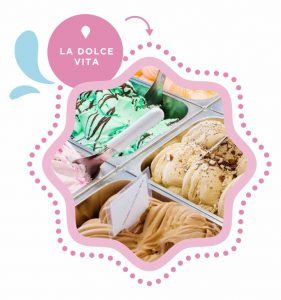
Gelato has a smooth and silky texture. This is due to less air added to the dessert during production. “Gelato is traditionally churned at a slower rate than ice cream, giving it a denser consistency,” says Chris Iannuzzi, owner/operator at La Dolce Vita, another popular gelato shop in Kerr Village in Oakville.
Hold the cold
While ice cream is served at -20 C, Italian gelato is served at a higher temperature, around -13 C. The warmer texture enhances the flavours as they melt in your mouth.
Freshly made
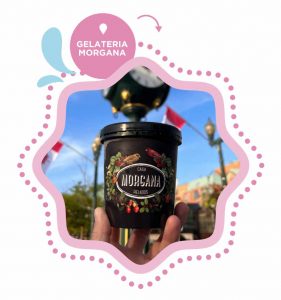
Perhaps the biggest difference you can taste in gelato is the freshness. “Ice cream is made with ingredients designed for lengthy storage. Artisanal Italian gelato, on the other hand, is produced fresh daily,” says Giannelli. At Gelateria Morgana in Downtown Oakville, they source the highest quality ingredients locally and from around the world. “Our pistachio comes from Piamonte in Italy, the hazelnuts also come from Italy, and our limes and tamarind come from Mexico,” explains Oscar ArgÜelles, one of the owners.
Robust flavours
Gelato’s production methods allow for a wider variety of flavours than traditional ice cream. La Dolce Vita has over 100 unique flavours such as maple cookies and cream, fire roasted marshmallow, Sicilian pistachio and ever sour lemon. “We can create pretty much any flavour with natural ingredients,” says Iannuzzi. La Dolce Vita’s most popular local flavour is strawberry rhubarb crumble gelato created with Niagara strawberries and rhubarb from Dundas. At Gelateria Morgana, Maestra Gelatera Kiren Miret has perfected the ever-popular classics as well as created innovative new flavours to delight her customers first in her original location of Mexico City, and now in Oakville.
If you want to experience a taste of Italy right here in Halton Region, check out any of the gelato shops below:
Summer is the season for day trips, and the charming town of Dundas should be on everyone’s bucket list. The picturesque town offers an array of activities for all ages and interests. Steeped in history, the downtown is filled with one-of-a-kind boutiques and eateries in a setting that combines old world charm and new world vibrancy. Situated on the west end of Hamilton, it’s a short scenic drive from Oakville and Burlington.
Planning your perfect outing is easy – whether you love nature, shopping, food, history, or all of the above! From hiking and cycling to downtown shopping and al fresco dining, there are so many ways to fill your summer afternoon, evening or entire day in this gem.
Explore oldworld charm
Dundas has a rich history that has been carefully preserved, giving the downtown and surrounding neighbourhoods their distinctive character. Incorporated as a town in 1847, many of its original heritage stone buildings and houses (built in the mid- to late-1800s) remain.
The Dundas Town Hall, built in 1849 is one of a few municipal buildings in Ontario built before 1850. It is said to have cost £2,500 to build! Interested in learning more local history? Visit the Dundas Museum, located at 139 Park Street West.
While strolling through downtown Dundas is a perfect way to appreciate the architecture of a bygone era, you may also wish to explore the surrounding neighbourhoods to spy the beautifully preserved heritage homes. Here’s a little trivia: the older buildings in Dundas were constructed using local stone sourced from the Niagara Escarpment surrounding the Dundas Valley. Do a self-guided tour by car or foot when you visit – the Dundas Heritage Association offers maps for both online.
Go for a hike or bike in nature
Dundas is a haven for outdoor enthusiasts, as it is surrounded by lush Carolinean forests, streams, waterfalls and of course the stunning escarpment. Within this beautiful setting is a network of trails for hikers, runners and cyclists of varying abilities (strollers are welcome!) Residents and visitors, alike, flock to Hamilton’s conservation areas in full bloom through the summer.
Hike the Dundas Valley Conservation Area
The Dundas Valley Conservation Area has more than 40 km of trails, including the Bruce Trail, that traverse forest, meadows and wetlands, and provide stunning panoramic views. You may also choose to walk, run, or ride the Brantford to Hamilton Rail Trail; the Hamilton section follows the scenic Dundas Valley for 18 km.
Get splashed by waterfalls
Drawing thousands of visitors every summer are the awe-inspiring waterfalls of Dundas. Webster’s Falls is one of Hamilton’s most iconic falls — a 22-metre curtain waterfall that spills over tiered rock. Within walking distance is Tew Falls. This ribbon waterfall is 41 metres high, making it the tallest one in Hamilton. It can be reached from Webster’s Falls via hiking trails.
Due to the popularity of some conservation areas, you may need to reserve your spot online beforehand at hcareservations.ca.
Shop and dine in Dundas
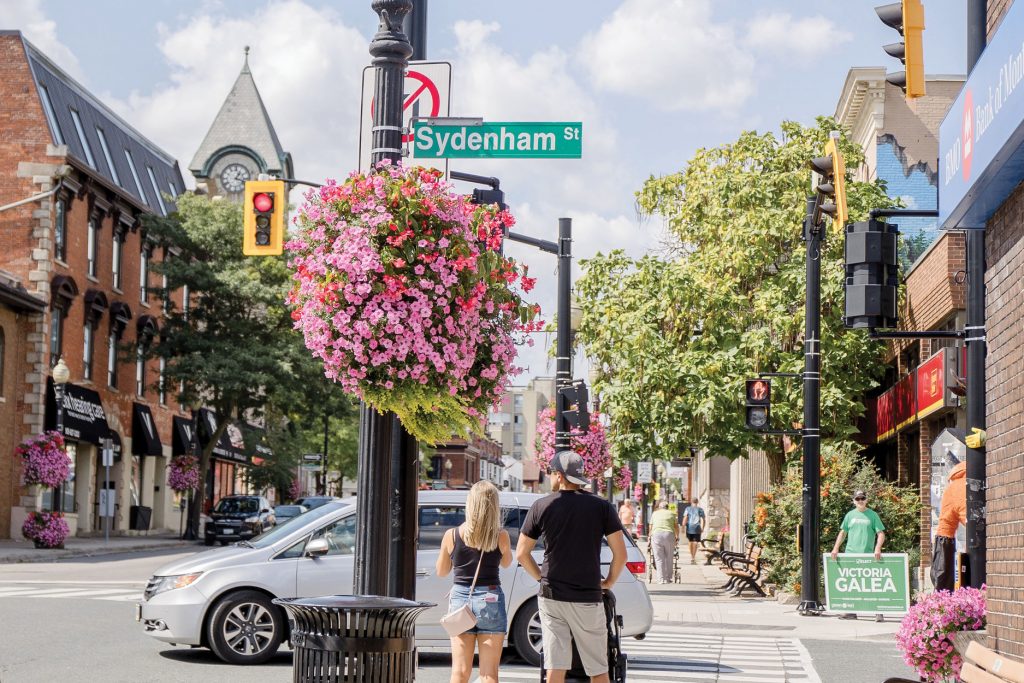
Make your way to King Street at the heart of downtown Dundas. This bustling thoroughfare is lined with locally-owned boutique shops, cafes and restaurants. Many businesses are housed in heritage buildings which creates a wonderful sense of nostalgia.
Stroll along the street and pop into the many specialty shops and clothing boutiques. Find fine arts and crafts, sporting goods and jewellery, as well as a selection of home, garden and kitchen goods. On a typical summer day or evening, patios buzz with people enjoying delicious fare, cool drinks and live music. Parking is free Saturdays and Sundays.
Be sure to consider these well-known shops and eateries when planning your visit to Dundas.
Food & Drink:
Beanermunky Chocolate is a locally-owned chocolatier tempting you with mouth-watering treats.
Micky McGuire’s Cheese offers a vast range of artisanal cheeses, sourced from around the world by its proprietor.
French Revolution Bakery & Creperie is owned by a French pastry chef (need we say more.)
The Cookie Doh Factory serves sweet edible cookie dough in its original factory and shop for a truly original experience.
The Urban Vine is Hamilton’s largest premium olive oil and aged balsamic tasting boutique with a vast assortment of fresh oils, blends and aged balsamic vinegar.
Detour Coffee is passionate about all things coffee, sourcing and roasting in small batches to ensure the perfect java.
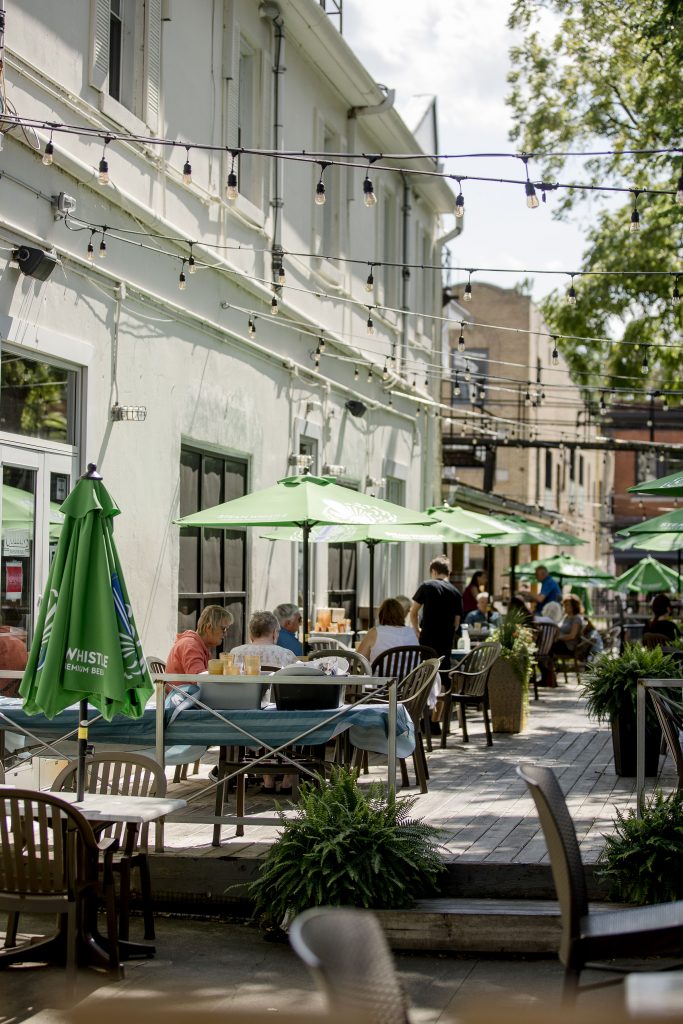
Collins Brewhouse is a local brew pub serving craft beers and pub food in an inviting atmosphere with a great patio for summer dining.
Quatrefoil offers French cuisine, wine and splendid service in a refined, yet relaxed, environment with a charming patio to enjoy lunch or dinner.
Colins Patio
Detour Coffee
Home & Garden, Décor & Gifts:
The Handmade House is a purveyor of one-of-a-kind goods handmade by creators who live within a two-hour drive of the shop.
The Keeping Room is a local favourite selling everything you can imagine related to eating and cooking.
Mrs. Greenway sells a wide assortment of green, eco-friendly products that are good for the environment and good for us too, plus you can bring in your containers and refill.
The Kitchen Witch is an entertaining little gift shop, perfect for finding hostess gifts, containers, linens, antiques and curiosities.
Graham & Brooks combines a selection of antiques, vintage pieces and home décor ideas with a unique treasure trove of architectural artifacts and salvaged items.
Fashion & Jewellery:
David William Shoes has been serving customers since 2008 with an extensive array of carefully chosen and unique collections of fine footwear, handbags and apparel.
Sell it 2 Wear it is a designer consignment store with a variety of clothes and accessories for women and men.
HV Creative Jewellery has been offering custom jewellery design and repair on site for over 30 years.
Kids ‘N Krafts carries 100% cotton casual wear for children of all ages, from babies through to teens.
Anglesea Home Accents & Apparel is your source for thoughtfully designed and curated new and vintage clothing and home décor items.
Dundas Cactus Festival
Summer events in Dundas
Before you plan your visit, be sure to check out the latest events happening in Dundas. Many restaurants have live music throughout the summer and downtown is always bustling with excitement on weekends.
Every Tuesday night in the summer, enjoy music under the stars when a concert band performs at the Dundas Driving Park amphitheatre. This historic site close to downtown includes playgrounds, a roller/ice rink, splash pads and public art.
The Dundas Cactus Festival takes place August 18-20. You won’t want to miss this family street festival that offers free local entertainment, vendors and family fun. Dundascactusfestival.ca
Check Downtowndundas.ca and @dwntwndundasbia for the most up-to-date offerings.
Top thingsto do in Dundas this summer
Take a hike in the Dundas Valley Conservation Area
Stroll and shop for locally made goods in Downtown Dundas
Learn the history behind Dundas’s oldest heritage buildings
Eat a freshly made chocolate or baked treat in Downtown
Think you’re powerless to help the environment? Think again. A patch of soil is all you need to support pollinating insects and birds. You can easily transform a garden bed, or even planters on a balcony, into a colourful habitat that’s brimming with life.
What’s all the buzz?
Over time, garden centres have introduced increasingly “showy” plants that are easy to grow. Unfortunately, these human-bred cultivars support only a fraction of the wildlife that native plants do. The good news is that any home gardener can help rebuild lost habitat and renew the ecosystem.
Pollinator gardens clean our air and filter our water. They require little, if any, watering once established and don’t need fertilizer. Their extensive root systems control erosion, heal soil and absorb storm water. Most importantly, they support life and give endangered pollinators a fighting chance.
How the magic happens
When pollinators search for food, they’re often directed by light patterns and scents that flowers give off. According to Charlie Briggs, director-at-large for Hamilton Naturalists’ Club, many insect pollinators only travel a few hundred feet from their nest to locate the native flowering plants they have co-evolved with.
“Many pollinator species have very specific relationships with certain families of plants, or even exact species that they require to continue their existence,” Briggs says.
When a pollinator recognizes its plant, it will feed on nectar, pick up pollen, drop pollen to the next plant… and essentially sustain life on this planet.
Getting started
Your pollinator garden should include various bloom colours, sizes, shapes and plant heights to attract a diversity of pollinators. More than just flowers, the best pollinator garden should also include host plants – where a pollinator lays eggs, eats and lives. Flowers are great for inviting pollinators to visit, but host plants are how you get them to stay! So include native forbs (wildflowers), grasses, shrubs and trees in your garden.
Keystone species in Ontario include asters, goldenrods, sunflowers and strawberry. Some beautiful native sedges and grasses are ebony sedge, fox sedge, switchgrass, Indian grass, and ‘big’ or ‘little’ bluestem.
“Pollinator-friendly gardens will support pollinators in every stage of their lives from larvae to adults,” says Apryl Lark, a volunteer with Butterflyway Hamilton. “This requires not only flowers that produce pollen and nectar but host plants that provide food for their larvae.”
What about balconies?
You can plant in containers if they’re large enough to support root systems and hold enough water. Containers require frequent watering. If your containers get full sun, consider planting black-eyed Susan, and a host plant such as wild strawberry or butterfly milkweed. For shade, you can plant Christmas ferns, Solomon’s seal, and wild columbine, wood asters or Pennsylvania sedge as host plants.
Where to find native pollinator plants
Mainstream garden centres don’t sell many of the true native plants that pollinators recognize. Try these sources instead:
• Nurseries that grow native species (see sidebar). Also, many gardeners order native plants from sources such as onplants.ca.
• Networking and events. Look for “Seedy Saturday” events in your area where people buy or trade seeds and plants and exchange gardening tips. Or join your local naturalists’ group, where members often sell or give away native plants.
• Harvest seeds. Many of the hardest working native flowering plants are overlooked by us on our forest and road side borders. This fall, take a paper bag and pick a few. “Common milkweed and New England aster can be easily found in southern Ontario,” Briggs says. “Ripe seeds, when sewn in your garden in the fall, will reward you with your own plants come spring time.”
Have fun creating your own little patch of paradise. Millions of life-sustaining microorganisms, insects and birds will thank you.