

Category

Features

Category

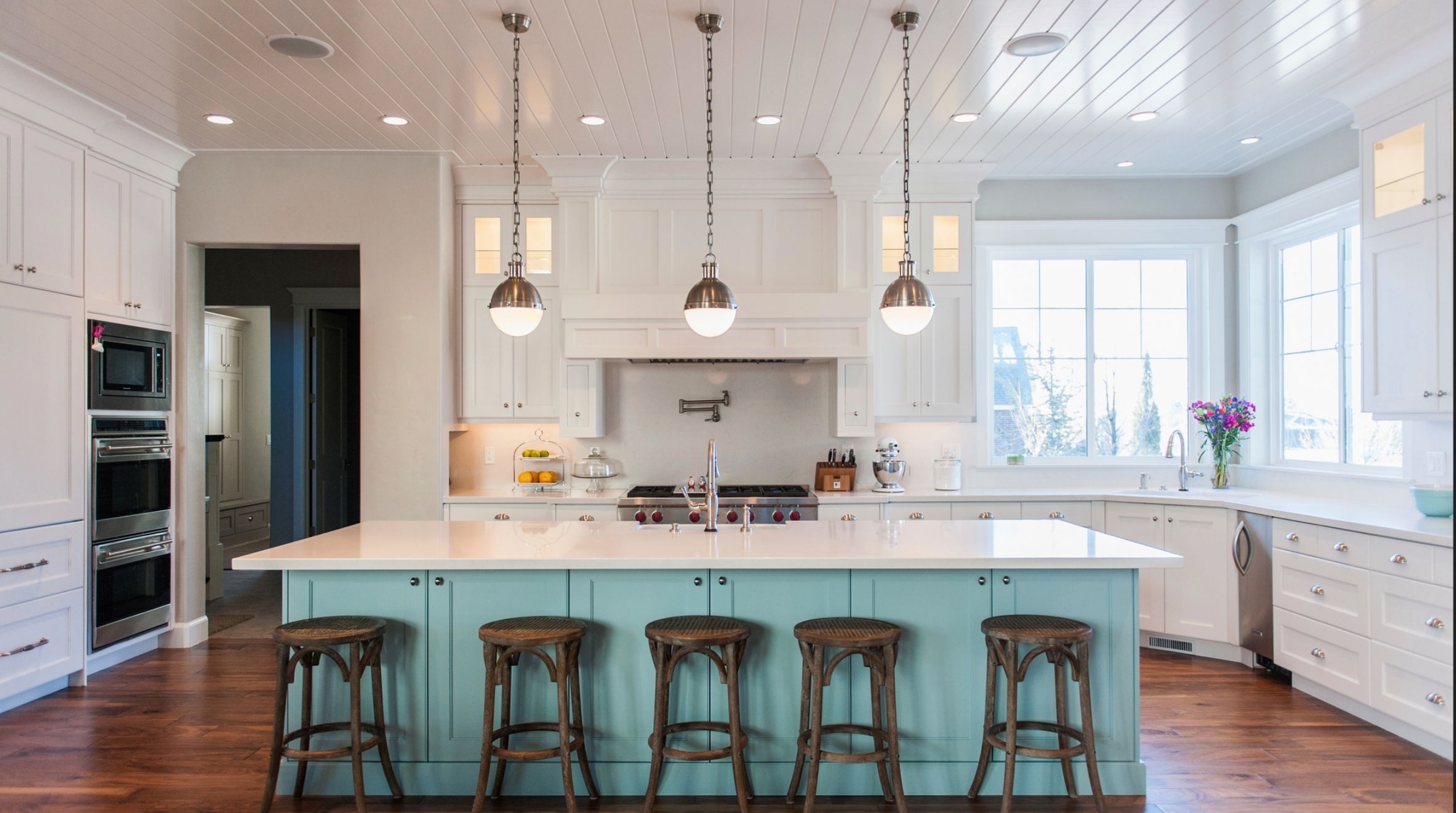
After hanging out at home over the last few months, you may be thinking it is time to make some changes. Are your wall colours too bland? Do you dream of taking down a wall to open up a space? Many of us will seek outside help when it comes to making these decisions, but the jargon surrounding home improvement can be confusing — does your project need an interior designer or an interior decorator? The two professions certainly have similarities, but both offer different skills that will benefit your finished project.

What’s the difference?

Surely with a name so similar, they must be interchangeable, right?

The answer is ‘no’.

An interior decorator focuses mainly on the aesthetics of a space — a personal stylist for your home! Interior decorators have an abundance of creative vision and artistic taste, and while no formal schooling is required, many do have extra training. They concentrate on colour palettes, furnishings, and create beautiful livability using the space you already have. “Interior decorators look after everything from the drywall out!” say Anita Puls and Kim Giancaterino from Burlington Design Studio.

An interior designer, on the other hand, is someone licensed with accredited post-secondary training in all aspects of home remodeling, and this usually includes an apprenticeship with a designer. Much of their education is spent on drawing, space planning, design, building code, and architecture. An interior designer is proficient at drawing up floor plans and they will work hand-in-hand with your contractor or architect to ensure they can achieve your dream — even if it means reworking the walls and layout of your home.

Who should you hire for the job?

Before you decide which person is right for the job, you need to evaluate the scope of your project. Are you planning to add or remove walls and windows or are you mainly focused on reworking the esthetics of your space?

Tamara Grant, a local interior decorator and stager, feels it is essential to know the needs of the client beforehand. “It’s important to know your style and preferences since it is being decorated for you to stay and enjoy,” she says. “I like to start by coming up with a colour palette or theme to draw from.” While many clients may feel overwhelmed with the endless choices, Tamara knows that it’s important to take your time. “Do it in layers, start with furniture, add curtains, then pop in the colour with art and pillows, and finish off with tabletop décor.” Another added bonus to hiring a professional decorator is the shopping advantage. Tamara notes, “It helps to have somebody with a keen eye for design and who also knows the best places to shop for furniture and accessories,” she says. Definitely a bonus!

If your renovation involves structural work, you should enlist the help of an interior designer. They aim to improve the functionality of your space, not just the décor and feel of the room. Their expertise in drawing up floor plans, troubleshooting structural issues, and acquiring building permits is a necessity for large projects. A designer offers a trained eye that can really impact the plans of your changing space.

Whichever you choose, make sure their vision is aligned with yours. “Designing and decorating a home requires many considerations like style, functionality, architectural details, and space planning,” Anita and Kim advise, “A professionally trained eye can pull all these elements together to create a cohesive space with a timeless design that will last for many years to come.”

Tips from the professionals

Make your space liveable by keeping it bright and refreshed. Tamara Grant knows lighting is key, “Light is major! Whether it’s natural sunlight, overhead lighting, or task lighting — big and bright is the goal.”

Include natural elements in a space to create a warm and inviting home during the fall and winter months. “Using live plants and fresh greenery, and also including textured fabrics such as velvets, mohair, and wools on accent pillows and throw blankets, really help to cozy up a space during the cold months,” suggests Anita Puls. Warm colour hues such as cinnamon, caramel, cognac, and deep earthy greens immediately add a warm, intimate vibe.
Written By: Kristen Sanchioni

LOCAL LINKS

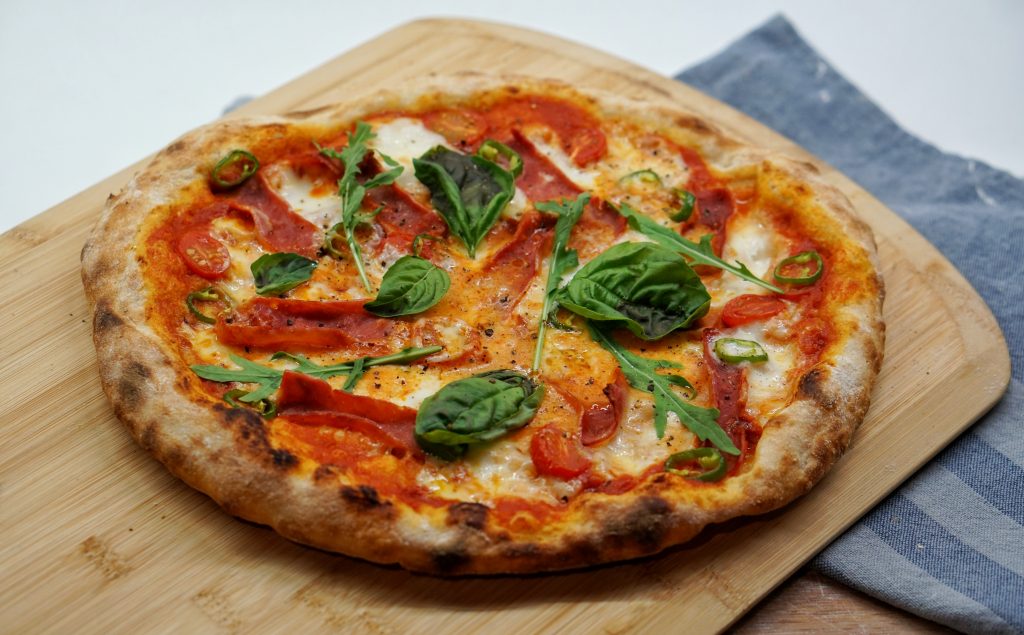
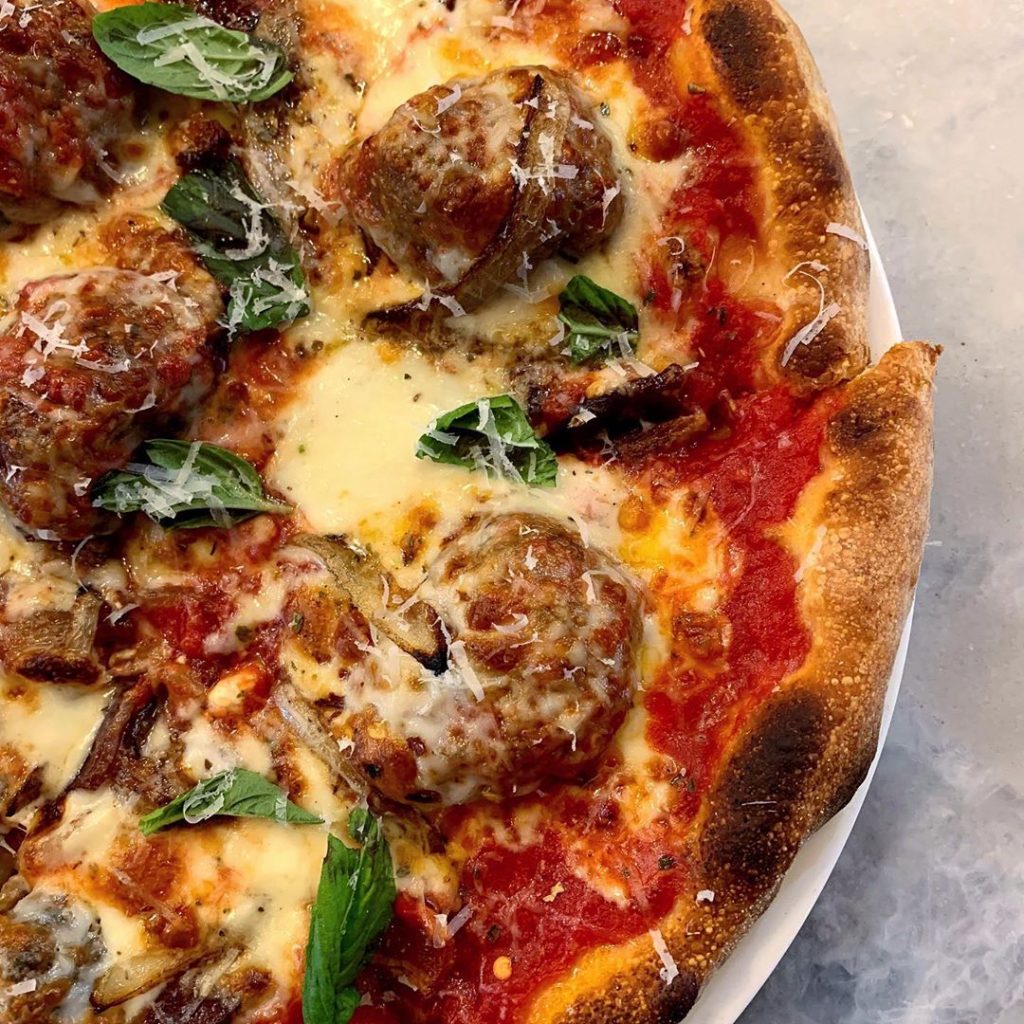
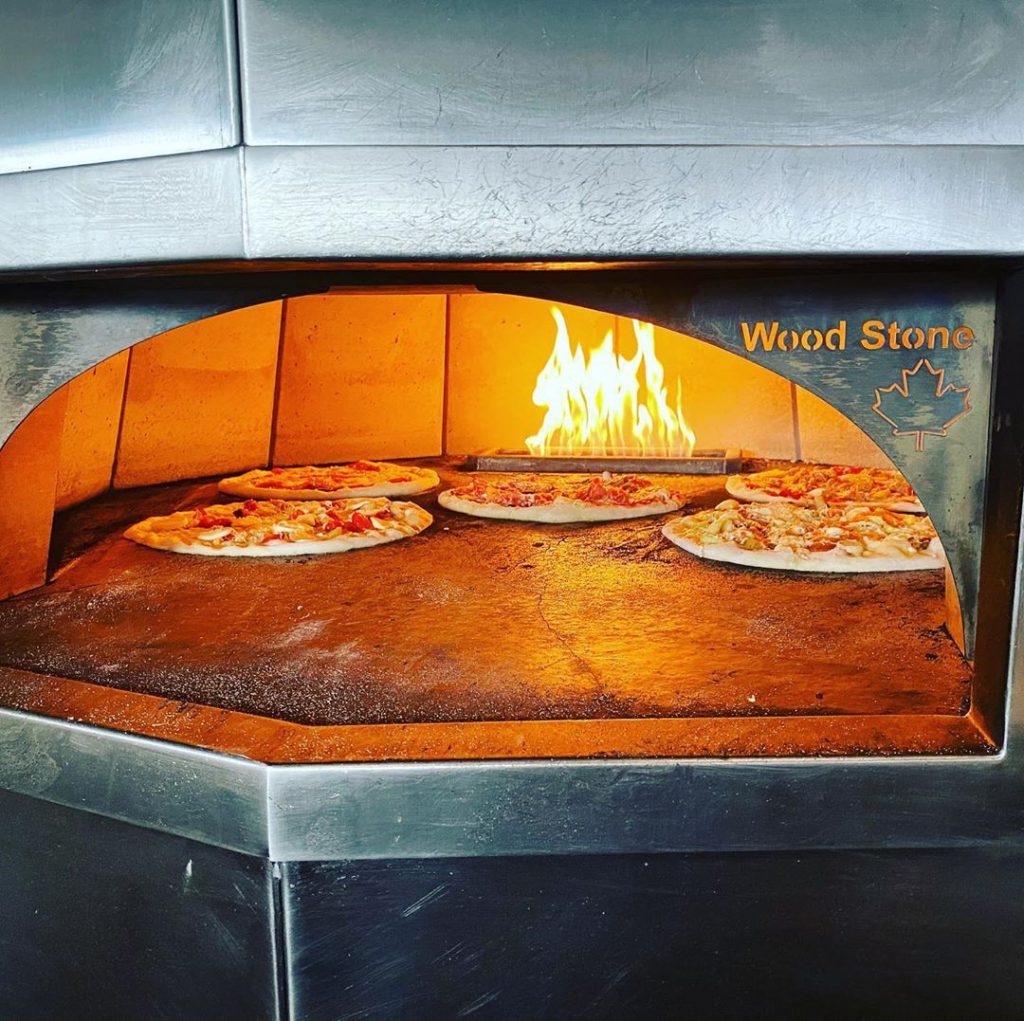
What is it that makes wood-fired pizza so delicious?  When a pizza has been ‘wood-fired’, it means the pizza was cooked in a wood-fired oven. Wood is burned to heat the oven which reaches extremely high temperatures, often upwards of 800 degrees Fahrenheit.  A current provided by the smoke leads to a steady air stream that ensures even cooking and a unique smoky flavour. This means that it will take only a few minutes to cook a pizza, ensuring a crispy base and bubbly cheesy top.

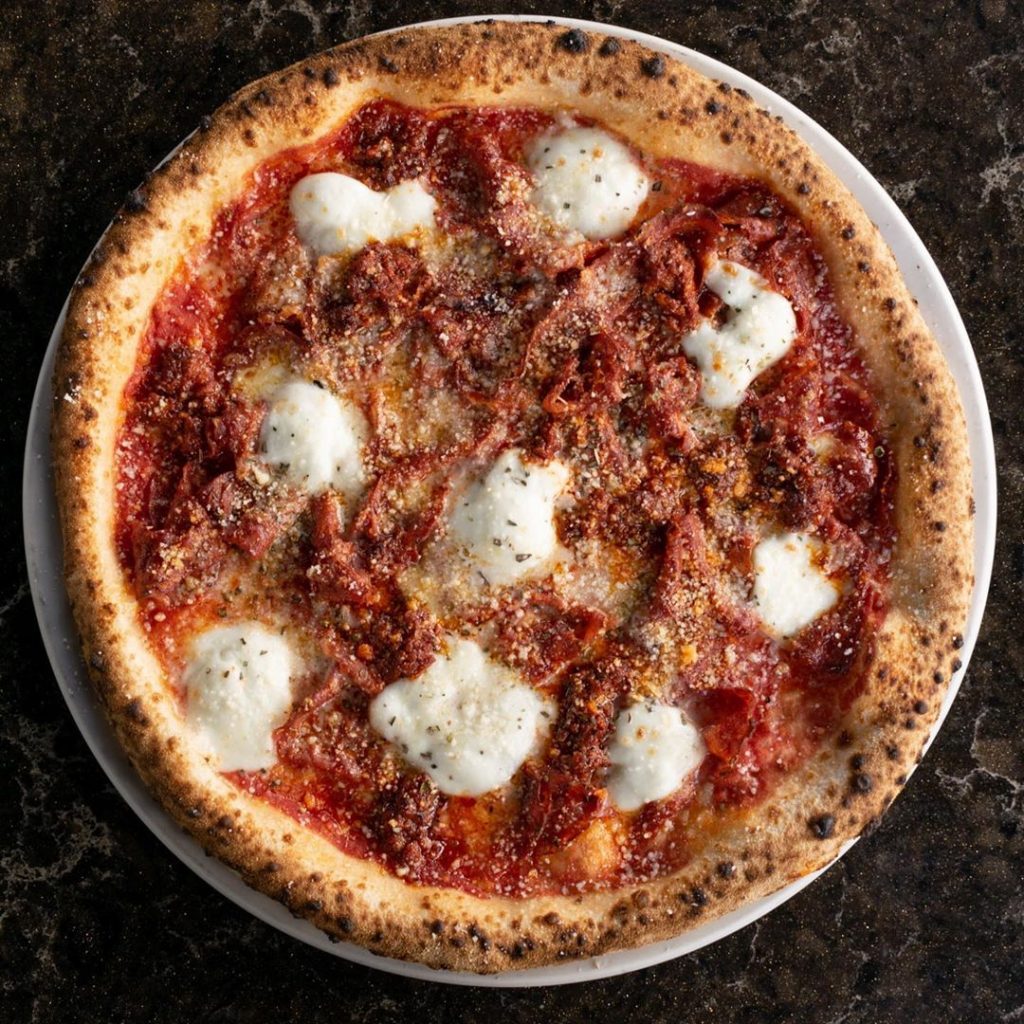
It’s fairly easy to identify a wood-fired pizza because of its visual imperfections: large bubbles on the crust or in the centre – this is because of the fast cooking and high heat.

The crust also has the appearance of being slightly charred on the outside but inside it is chewy. In a cooler oven, the crust will lose its chewiness and become dense and dry. The fast cooking method also allows the toppings to retain their freshness without drying out.

Son of a Peach in Burlington is a specialty wood-fired pizza place that uses only the best ingredients: whole milk and virgin mozzarella, fresh basil, and 30-month aged Parmigiana Reggiano.  The dough is made in-house (96-hour cold-fermented) with locally milled flour, kosher salt, and extra virgin olive oil. 

The restaurant offers a patio and take-out, and there is a wine list offering local and international wines.  Executive chef Diana Macri offers many pizza variations, the spicy salami and wild honey being a favourite.

Piazza Bistro on the Town Square in Oakville is run by a family team of Rob and Kirsten with their daughter Sam. It is a chic spot for Italian fare offering take-out as well as a patio.  They also offer half-price bottles of wine on Tuesdays along with classic pizzas, such as the Funghi: Fiore di Latte, roasted mushrooms, shaved Parmigiana Reggiano, and truffle oil. (see the recipe for this pizza by clicking here)

7 Enoteca, also on the Town Square, pairs a modern aesthetic style with a traditional enoteca.  They import exclusive Italian wines for their list, and the wines are only available through the restaurant. The Pizza Salsicce is memorable with toppings of house-made wild boar sausage with roasted red peppers, shaved red onion, Manchego and goats’ cheese.

Kerr Street in Oakville has its fair share of great pizza places.  Fantastico was established in 2007 and has been producing delicious food ever since.  They have a wide array of pizza options – more than 18 – with comfort food offerings like the Bacon Cheeseburger Pizza: cheddar, mozzarella, ground beef, bacon strips, and onion.  Or the Bellissimo, with olive oil, goats’ cheese, Brie, figs, caramelized onions, fresh arugula, Prosciutto, and balsamic glaze.

The Boot Social Pizzeria, still on Kerr, has a wide selection as well. You can make your own pizza with the base pizza being only $15, before adding the toppings.  They also have the option to turn any pizza into a calzone (folded over), stromboli (rolled), or panzerotti (smaller folded over pizza).

The Boot also offers pizza dipping sauces and the hot aïoli is very popular.  A smart offering in these times where we spend more time at home is the Make at Home Pizza Package, which offers you the dough, pizza sauce, mozzarella, and flour, plus your toppings and instructions for stretching and baking the pie.

Lastly, on Kerr is Justino’s Wood Oven Pizza and Bar which offers Roma style pizza, as well as white pizza (no tomato sauce), and calzone. The Pescatore with shrimp, peppers, mozzarella, and olive is superb in its simplicity.

Industria Pizzeria and Bar on Appleby Line in Burlington also offers both rossa and bianca pizza. Their signature Pizza Bianca Industria is laden with beef, yellow cheddar, iceberg lettuce, pickles, onion, sesame seeds, and Industria sauce.

Nonna’s Oven on Rebecca in Oakville offers both pizza and panzerotti styles.  Their classic Quattro Stagione with ham, artichoke, fresh mushroom, and sliced black olive is outstanding, or ask for the Calabrese with hot soppressata, roasted sweet peppers, sliced black olives, and hot chili oil.

Scaddabush Italian Kitchen and Bar on Winston Park Drive in Oakville specializes in hand-stretched pizza with gourmet offerings such as the Pear and Squash: Pecorino Alfredo sauce, roasted squash, pear, kale, caramelized onion, mozzarella, toasted hazelnuts, and sage.

And for something a little different, Mickey’s Pizza in Clarkson makes Chicago style deep dish pies.  One of the signature pies is the Philly Cheese Steak with slow-roasted steak, homemade meatballs, caramelized onion, a cheese blend, and barbecue sauce.

With the weather turning cooler, comfort food is calling, so head to your favourite pizza store and enjoy the many flavours available.

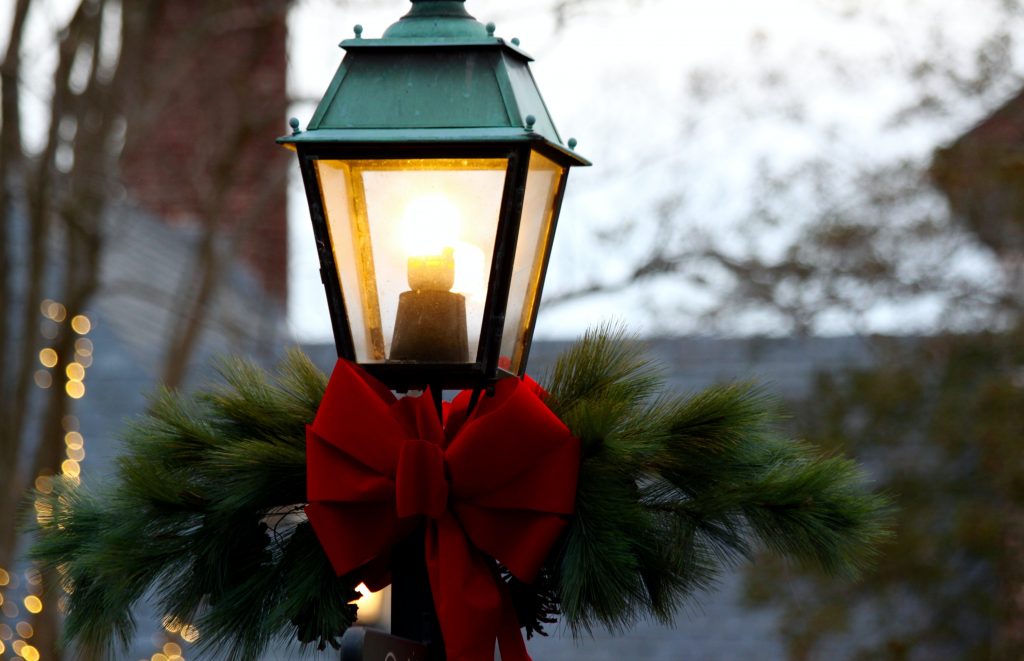
At this time of year, you would typically find our events section overflowing with news of upcoming holiday cheer. From tree lightings to Santa Claus parades, our BIAs know how to deliver on holiday favourites. Many of these events have become longstanding traditions in our families and communities. While we don’t have to remind you that this year will be different, we do want to remind you that the holidays are still a special time – and worthy of making new traditions.

Bronte Village

Bronte’s official kick-off to summer usually begins with At Home in Bronte – an annual event where 60 local organizations, artists, businesses, and families are invited to paint a Muskoka chair. These chairs are installed for public viewing and enjoyment in Bronte Village on Canada Day for the duration of the summer. This summer, the event was cancelled due to COVID-19 – but Bronte BIA is excited to announce a winter instalment of this event. This winter, visitors to Bronte Village will find dozens of professionally painted Muskoka chairs along sidewalks and the waterfront. There will be hidden icons on the chairs, designed to get families outside and to encourage them to participate in a winter scavenger hunt.

The Village has also designed new banners and plans to line the streets with lit snowflakes and decorations for the holiday season. While there won’t be a Christmas Tree or official lighting, Bronte offers exquisite views and scenery, the waterfront an obvious one.

Downtown Oakville

You’re invited to Downtown Oakville’s Hometown Holiday festivities! Stroll safely along the brand new, extra-wide sidewalks and support your local specialty stores, services and restaurants throughout the holiday season.

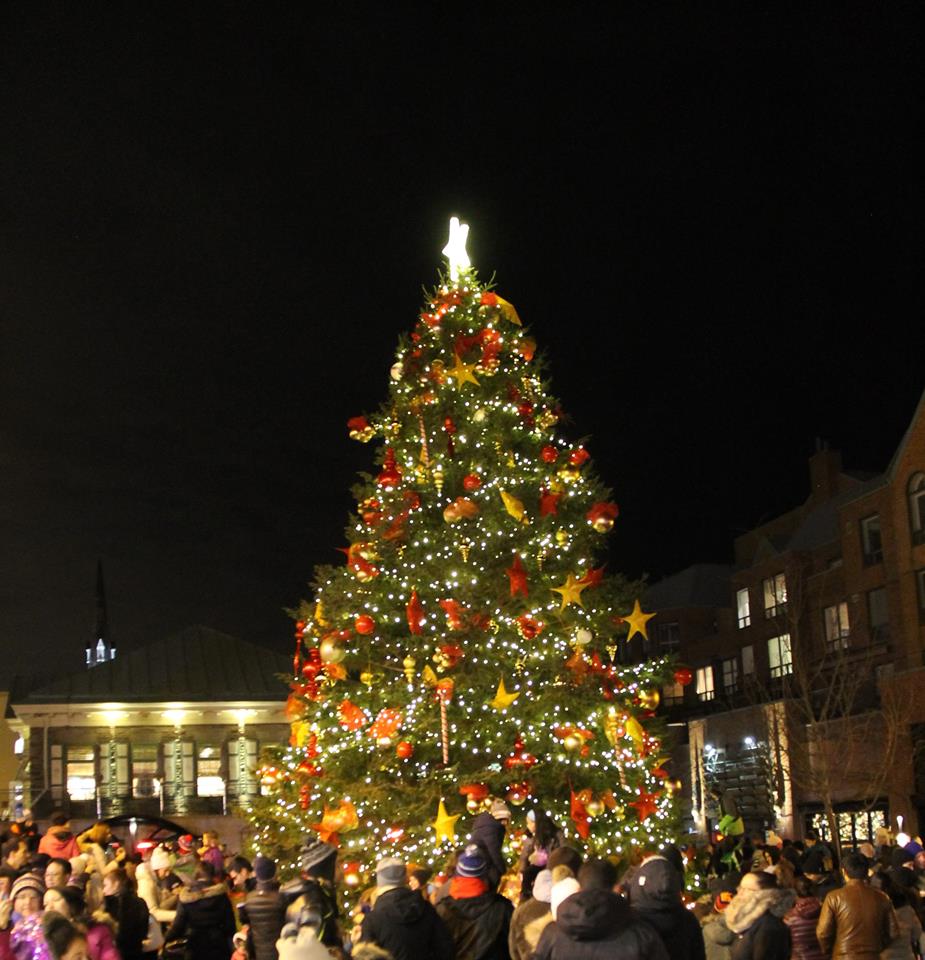
The highlight of Hometown Holiday will be the spectacular 30 foot Instagram worthy ribbon tree of lights, being installed in Towne Square on November 28.  Be sure to come and visit, take a photo with family and friends, and enjoy the extraordinary lighting installations in Centennial Square as well as throughout the Downtown core. Follow @oakvilledowntown (on FB or Instagram) for the details.

Don’t miss out on the best gifts of the holiday season. Subscribe to the Downtown Oakville e-newsletter to gain early access to the NEW Virtual Gift Guide here: http://explore.oakvilledowntown.com/

Downtown Burlington 

Santa will not be parading in Downtown Burlington this year. The annual tree lighting and candle-lit stroll have also been cancelled. But – some wonderful things have been planned in exchange.

Celebrating 25 years of magic, the Burlington Lakeside Festival of Lights will be returning. Sixty magical lighting displays will be set up at Spencer Smith Park from November 27th, 2020 to January 8th, 2021.

The lights will turn on at 4 p.m. every day and run until midnight – with exceptions on Christmas Eve, Christmas Day, Orthodox Christmas, and New Year’s Eve, where the lights will be lit all day and night. This outdoor event is a perfect way to experience the holidays in Burlington and also grab some fresh air.

In addition to the Festival of Lights, Downtown Burlington has invested in a unique plug n’ play technology that transforms traditional lighting displays into interactive experiences. The display is powered by a real-time sound-to-light mapping system called Aurora. Located next to Scrivener’s along the Elgin Promenade, visitors can interact with the lighting in real-time by singing, clapping, or yelling. There will also be a canopy of lights in other areas of the promenade.

Waterdown Village

Waterdown has become a holiday hot-spot thanks to their annual evening Santa Claus parade. The parade, which typically begins at 6 p.m. lights up beautiful Downtown Waterdown with floats decked out in lights. Unfortunately, this year’s parade, along with their ‘Made for You’ market and Christmas Tree lighting have been cancelled. However, there are plans to host a virtual tree lighting via Facebook and Instagram, with special guests to be announced. Follow @waterdownbia (on FB or Instagram) for details closer to the event.

While many aspects of these events are changing week-to-week, one thing is for certain: all of the BIAs want to ensure the holidays bring magic!

Stay tuned for merchant sales. And word on the street – there’s talk of winter patios. It doesn’t get more Canadian than that, eh?

Written By: Anneliese Lawton 

LOCAL LINKS

Seventy-three years ago (in 1947), a group of young Burlington musicians came together out of a shared love of music – they called themselves the Burlington Boys and Girls Band.

While the Band played locally, they were such a hit that within two years they began to travel outside of Canada. Their first international performance was at a football game in Ohio.

No one could have guessed that all these years later, this small band from Burlington, Ontario, would be world-renowned – and the oldest and largest youth marching band in Canada.

Much of that credit goes to founder Elgin Corlett who was the Band’s first music director. In 1965, under Corlett’s leadership, the group’s name was changed to the Burlington Teen Tour Band.

Since then, there have been many changes. In 1968, the City of Burlington took over the operations and Eric Ford was appointed music director. From 1977 to 1998, Don Allan was the assistant director, eventually becoming the music director, and in 1998, Rob Bennett was appointed the Band’s managing director.

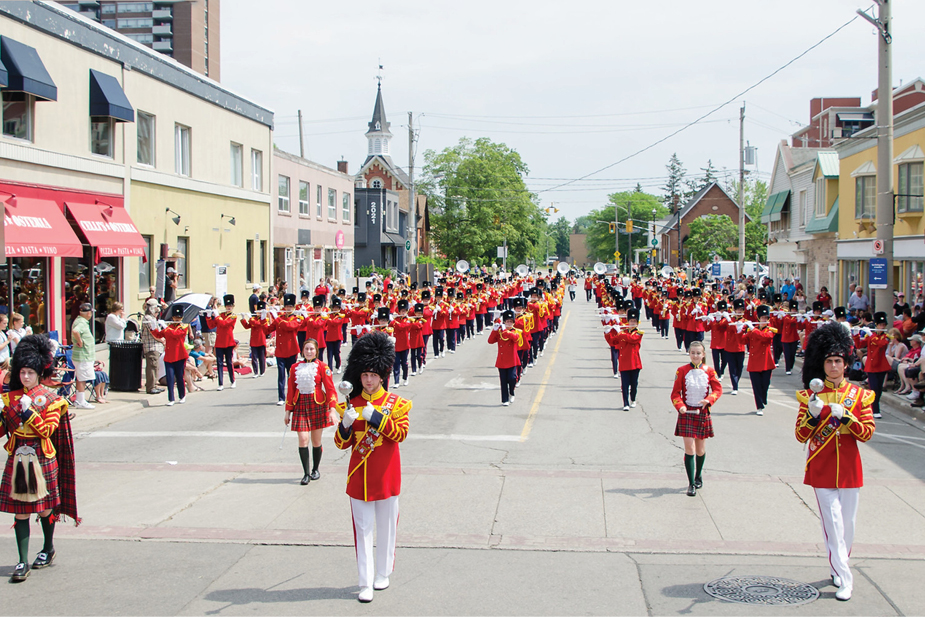
The Band has grown to about 220 members who are between the ages of 13 and 21. Each band member plays several instruments, including the flute, saxophone, trombone, drums, and cymbals. There are also flag carriers and majorettes, all of whom practice twice a week.

Over the last seventy-three years, the Band has been in popular demand, representing Burlington all over the world. From England, France, Japan, and The Netherlands, to Belgium and Germany, the Burlington Teen Tour Band has a lengthy list of performances. They’ve been honoured to play for Heads of State and Royalty, graced the Grey Cup and Calgary Stampede, and they even paraded down the Main Street USA Parade in Disneyland.

However, true honour came with their performances at the 60th VE-Day Anniversary Celebrations in Holland, the 60th D-Day Anniversary Celebrations in France, and the 70th Anniversary of Pearl Harbour.

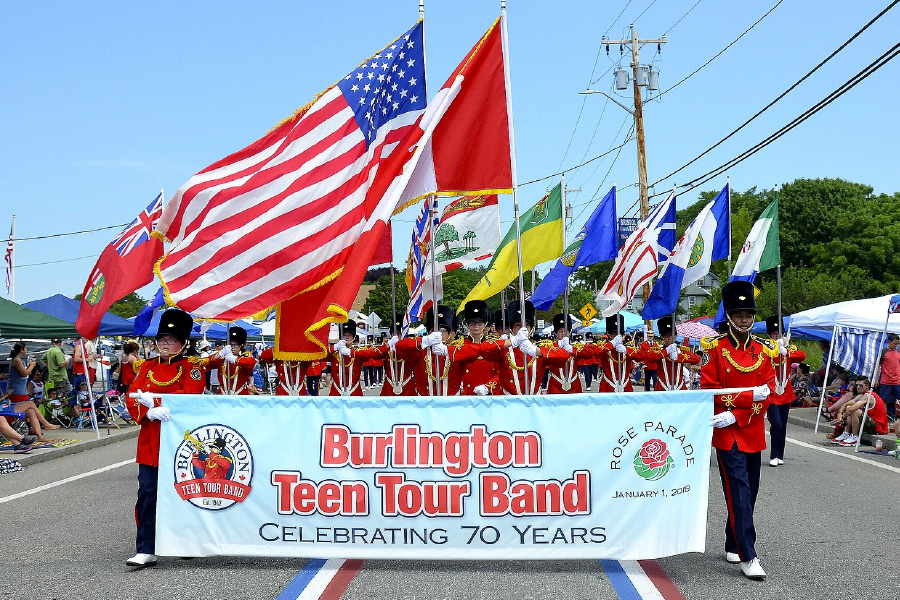
One of their biggest highlights was when they were chosen as one of 20 marching bands to participate in the 2018 New Year’s Day Tournament of Roses Parade in Pasadena, California. The parade is known as the granddaddy of all parades. As the first foreign band to lead the parade and the only Canadian band that year, it was truly a humbling experience.

In a documentary made about the trip called Band Geeks, one band member described being part of the parade as a “once in a lifetime experience.”

Their hard work and many successes have not gone unnoticed, and in 2017, Mayor Rick Goldring officially proclaimed July 3 to 9 as Burlington Teen Tour Band Week.

The Band also earned high praise from such luminaries as the late Hon. Lincoln Alexander who described them as “the best of the best”, while Major General Richard Rohmer called them “one of the greatest success stories in the history of Canadian municipalities.”

True to form, the Band hasn’t let COVID-19 stop them. They’ve resumed their practices at Central Park, although now they’re following social distancing rules, and have given virtual performances.

While all of the accolades and awards over the years have been nice, the driving force that pushes them to try their best has always been the personal connections they draw from each other. As one member said in the documentary, “We’re not just a band, we’re family.”

Written By: Denise Davy

Local Link:

Burlington Teen Tour Band – Teentourband.org

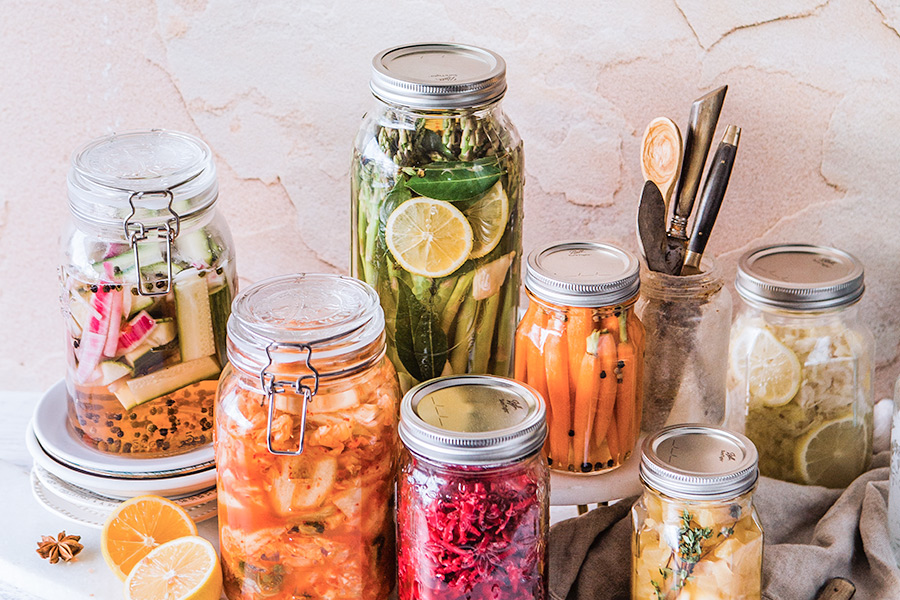
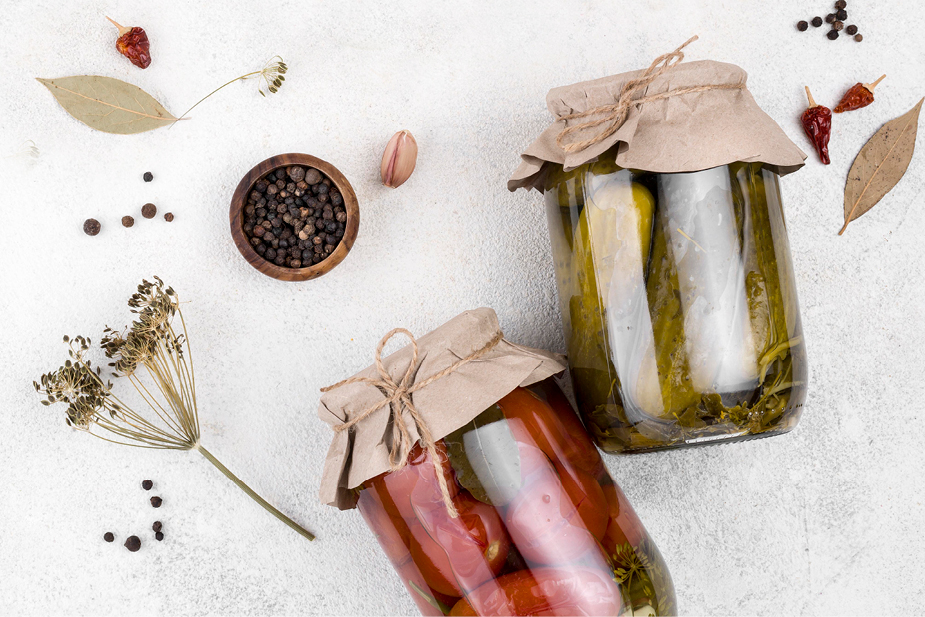
Preserving food is making a comeback. Perhaps it is the nostalgia of watching a parent or grandparent begin the cathartic process in the fall.  Or the benefits of being able to eat local produce year-round and the cost savings. Not to mention, in these crazy times, limiting visits to the grocery store.

In ancient times, when humans had to hunt and gather food, there was no way of storing or preserving it to prevent it from going bad, so methods were designed to harness nature.

Food preservation has permeated every culture at nearly every moment in time, from freezing meat on the ice in cold climates to drying food in the sun in warmer ones, enabling humans to stay in one place for a longer time and form a community. With these tactics, immediate food consumption was no longer necessary as food could be preserved and stored for later use – preserving the local food sources using the same basic methods which are still in use today.

DRYING

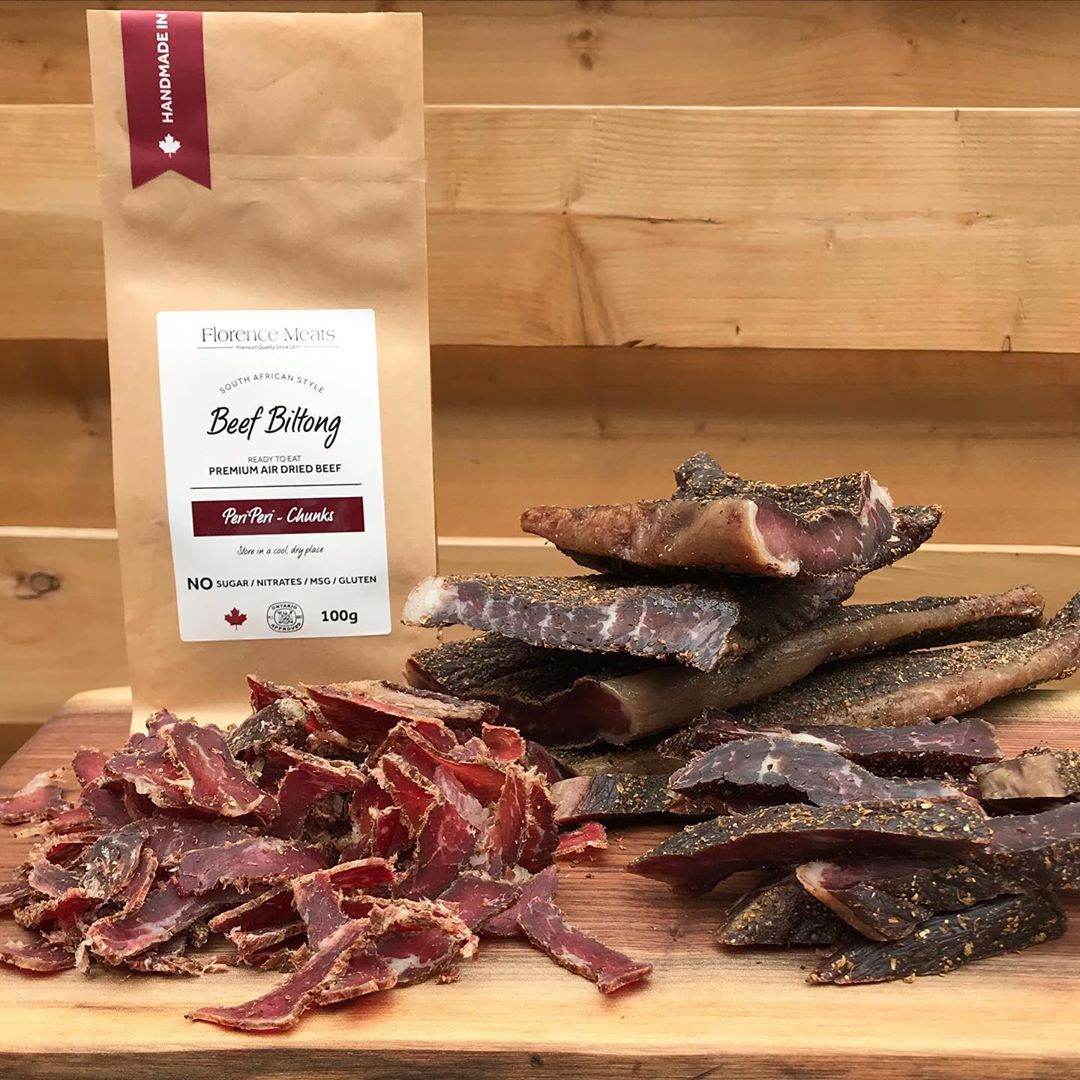
Drying is the oldest and simplest way to preserve food, dating as far back as 12,000 BC.

This method, which is particularly good for meats, fish, fruits, and vegetables, was achieved in ancient times by simply leaving food out in the sun to dry. Dried fruit is a popular and healthy modern-day snack, another example being beef jerky.  Florence Meats in Oakville specializes in a South African style of dried meat called Biltong, which is covered in spices and coriander seeds and eaten as a snack.

FREEZING

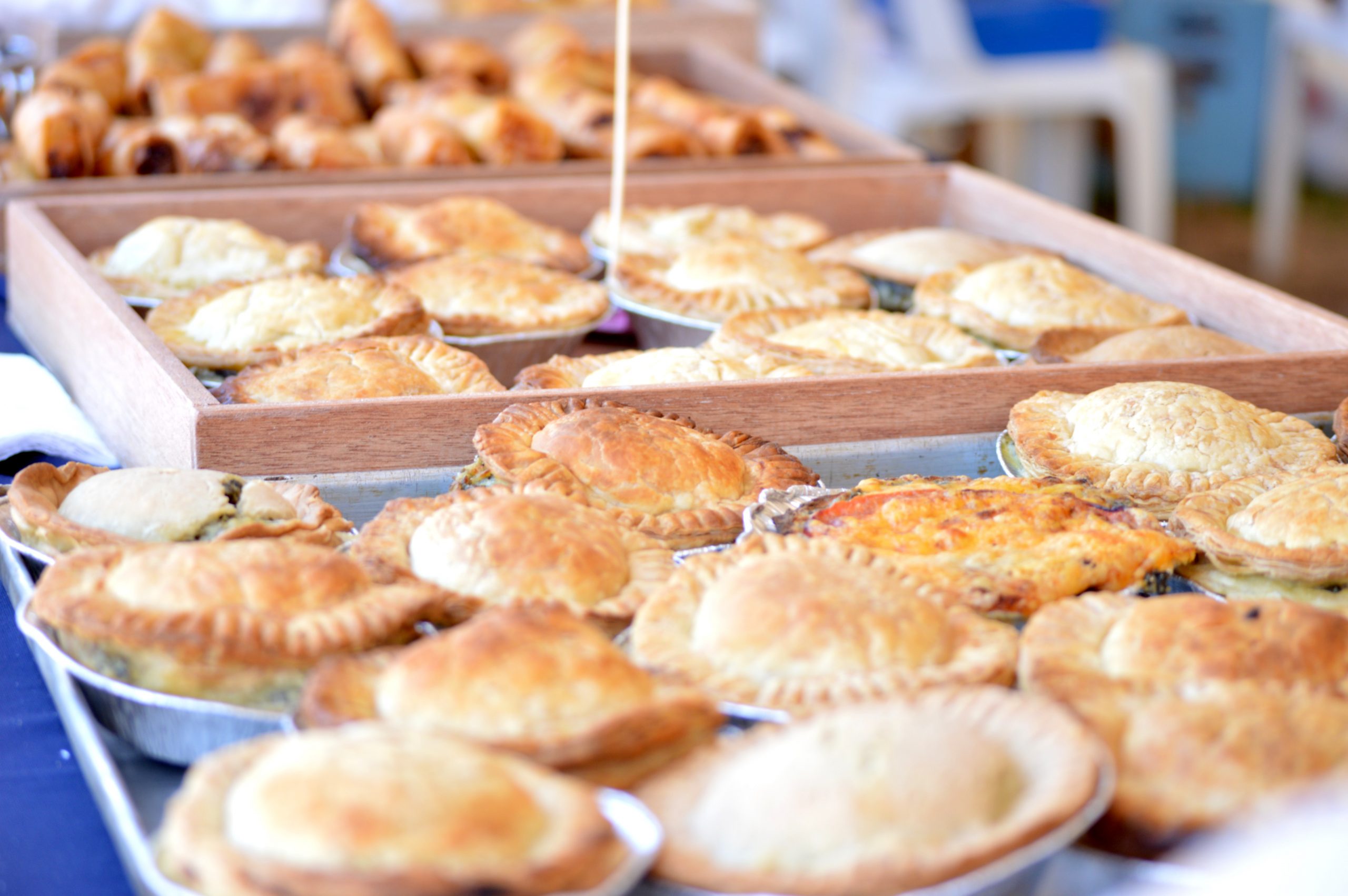
Freezing was an obvious preservation method in the correct climates. Even less-than-freezing temperatures could be used to prolong storage times, often by using cellars and caves to maintain a low temperature.

Some homes had icehouses built to store ice and food on ice. Soon the ‘icehouse’ became an ‘icebox’. In the 1740s, William Cullen, a Scottish scientist, invented the first form of artificial refrigeration.

Kerr Street Cafe in Oakville has gourmet frozen meals that can be whipped out to impress in no time.  Familia Fine Foods in Burlington and Monastery Bakery in Oakville also have good offerings, or try That Pie Place in Burlington.

SMOKING

Smoking food is another preservation technique and was probably discovered by early cavemen burning fires in their caves without chimneys, causing the cave to fill with smoke and thus exposing food to smoke and unknowingly preserving it. Over time, pretreating the food with salt before smoking made smoking even more effective. Today, smoking is mainly used to flavour food rather than merely preserve it.

FERMENTATION

Fermentation, discovered by accident, was a valuable preservation method dating back to 10,000 BC. It not only preserved foods but increased nutritional properties and was used to create more palatable foods from less than desirable ingredients.
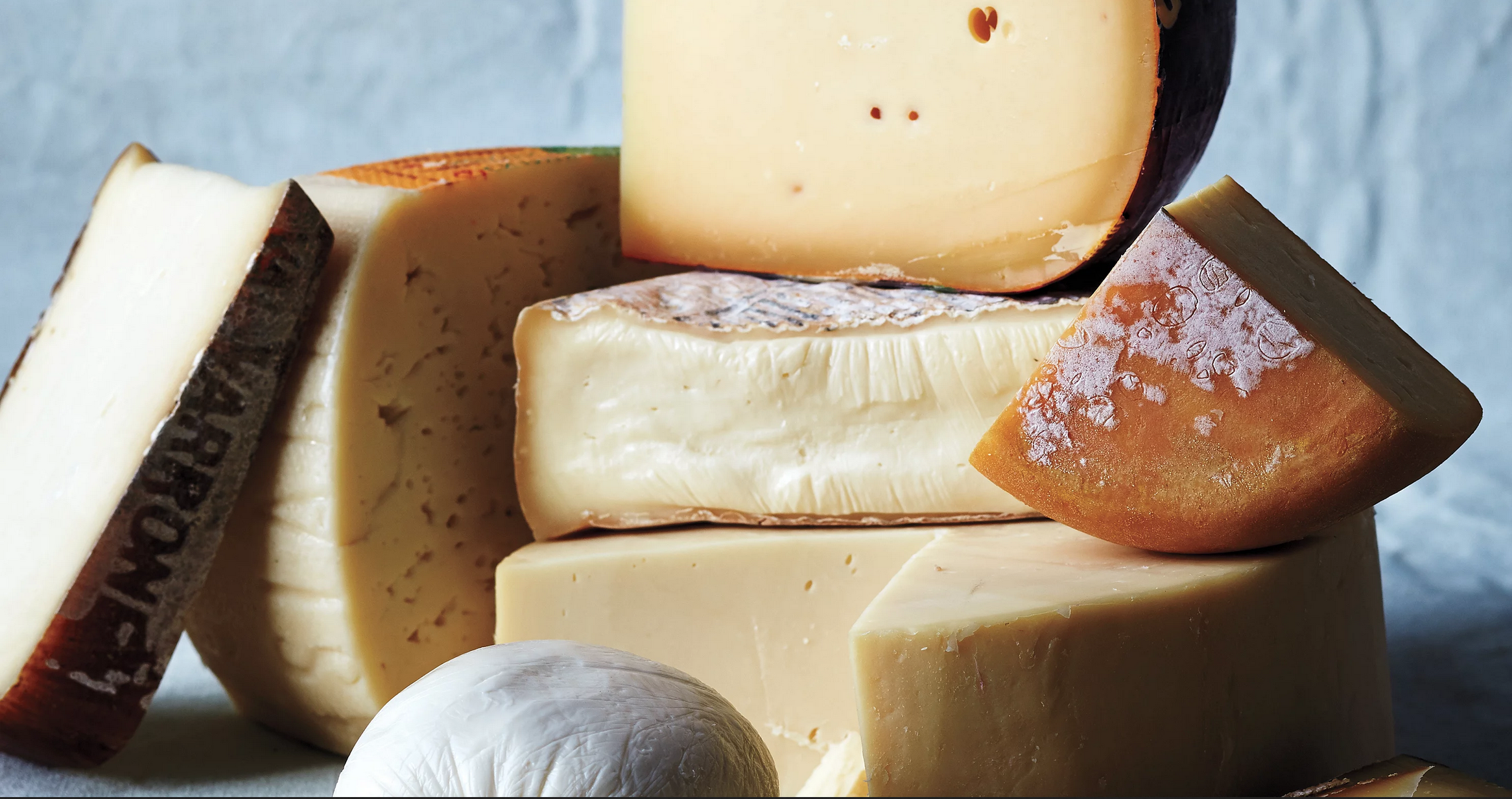
Micro-organisms responsible for fermentation can produce vitamins as they ferment, producing a more nutritious result from the ingredients. Sauerkraut and Kimchi are popular for their gut health benefits.  Cheese is another example, where milk is fermented to enhance its storage capabilities.

A wide array of interesting cheese is available at Farmhouse Artisan Cheese on Kerr Street in Oakville.

CANNING

Canning is the process by which foods are placed in jars or cans and heated to a temperature that destroys microorganisms. The heating and cooling of the cans form a vacuum seal.

Canning is the newest of the food preservation methods and was pioneered in the 1790s when a French confectioner, Nicolas Appert, discovered that the application of heat to food in sealed glass bottles preserved the food from deterioration. Nowadays, many people do their own canning at home. Fresh peaches and apricots; tomatoes and marinara sauce; there is no limit to what can be preserved, and there are so many websites that offer recipes for beginners!

PICKLING

Pickling may have originated when food was placed in wine or beer to preserve it since both have a low pH. Perhaps the wine or beer went sour and the taste of the food in it was appealing. Spices were added to these pickling sauces to make interesting recipes.

Chutneys, relishes, piccalillis, mustards, and ketchup soon became common accompaniments. Worcester sauce was an accident from a forgotten barrel of special relish. It aged for many years in the basement of the Lea and Perrins Chemist shop and was first sold in 1837.

JARRING

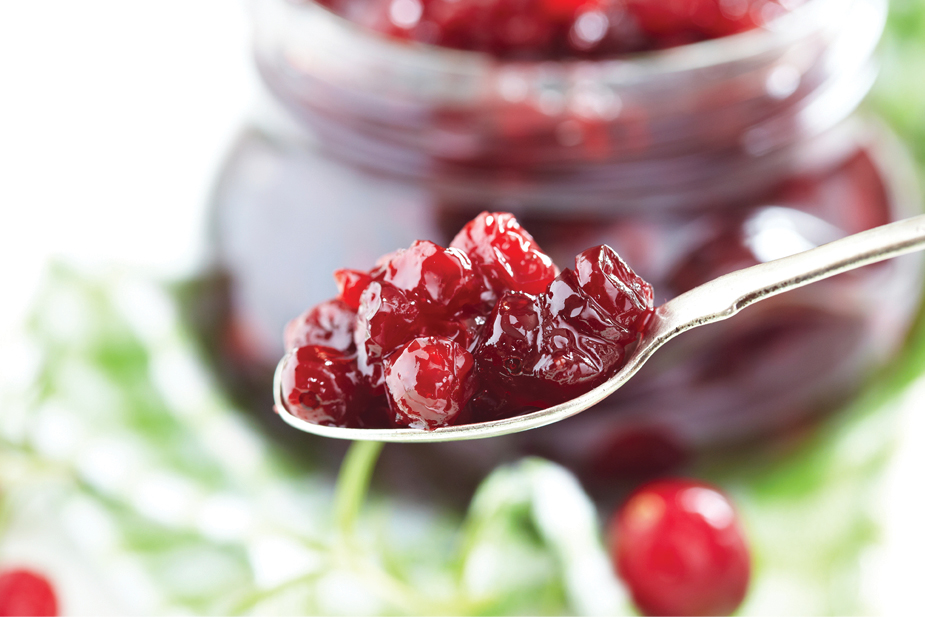
Jams, jellies, and preserves use honey or sugar to preserve fruits. In ancient Greece, quince was mixed with honey, dried, and packed tightly into jars. Springridge Farm, near Milton, has been turning their harvest into preserves for over 35 years.  Their recipes are steeped in tradition being passed down from Grandma Hughes.  Their signature items are strawberry jam, chili sauce, and red pepper jelly. They also do specialty limited edition products like the Royal Wedding Jam in 2011 and the Canada 150 Jam in 2017.  Their seasonal Christmas Marmalade is also very popular.

TK Preserves (@tkpreserves) make a special preserve of wildflower honey and spiced nuts that is the perfect accompaniment to cheese or try their Niagara peach ginger preserve on a slice of buttered toast.

Cranberry sauce or jelly is a popular preserved item as we approach Thanksgiving. Traditional cranberry sauce – stewing cranberries in water and sugar – dates back to the 1630s.

In the 1800s cranberries were farmed and were dry harvested or picked by hand. It was time-consuming and hard work but this process is still used to pick the fresh cranberries you see in stores.

In the early 1900s, farmers realized that flooding the bogs where cranberries grew loosens the berries from the vines until they fall off and float to the surface. Known as wet harvesting, this is far quicker and easier – these cranberries are used in juices and preserves.

With summer drawing to an end it is time stock up your pantry this fall with your favourite goodies.

The fruits of your labour will also make great gifts, sure to impress your friends and family!

Written By: Jenny Ratcliffe-Wright

LOCAL LINKS

Florence Meats, Oakville
Florencemeats.com

Springridge Farm, Milton
Springridgefarm.com

Farmhouse Artisan Cheese, Oakville
Farmhouseartisancheese.com

TK Preserves
@TKpreserves

Kerr Street Café, Oakville
Kerrstreetcafe.com

Familia Fine Foods, Burlington
Familiafinefoods.com

Monastery Bakery, Oakville
Monasterybakery.com

That Pie Place, Burlington
Thatpieplace.com

Written By: Kristen Psihogios

Silvia Plath had it right: “There must be quite a few things a long hot bath won’t cure, but I don’t know many of them.” From ancient bathhouses to modern-day tubs, a warm bath has always been the ultimate way to relax after a long day.  

If you’re looking to update your bathroom, the right bathtub could be a showstopper in your renovation. Bathrooms are quickly becoming an in-home design statement, no longer designed solely on function. By selecting the perfect tub, you can transform your bathroom into a meditative, spa-like retreat – the perfect escape from day-to-day stress.

Types of Tubs

Determining which bathtub to use depends largely on your space. Finding a style that suits your needs and works with the footprint of your bathroom can be difficult.

An acrylic alcove tub and shower combination (with three sides enclosed by a wall) is the most common type of bathtub — primarily because it makes use of compact bathroom space. They’re also a great choice for people that need assistance getting in and out of a tub (since it offers the option of a safety handrail). Typically, in the past, this type of tub was shorter and shallower. Thankfully, if you still want a luxurious bath experience but need to work within tight quarters, many bath producers are beginning to make deeper, longer soaker tubs in an alcove style.

Drop-in tubs are usually acrylic baths that are literally “dropped in” a framework and hidden by a built-in surround (which is then covered in tile or cabinetry). This surround is usually custom-made, so bear that in mind when factoring in cost. Drop-ins offer the luxury of a freestanding bathtub but are more space-efficient and easier to clean. An under-mount is also a drop-in style tub but is usually placed at floor level. These often have many luxurious features such as built-in therapeutic lighting or jets, which truly add to that spa-like atmosphere. 

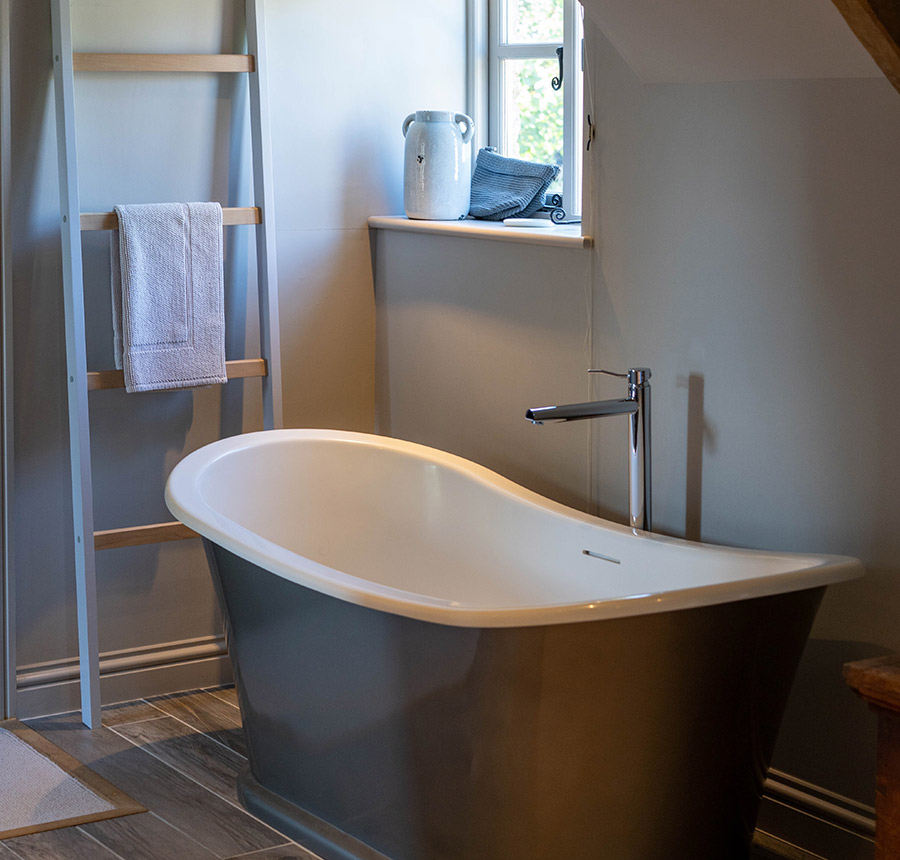
Freestanding tubs, while less practical, are extremely popular, especially in master bedrooms. They are the epitome of extravagance in a bathroom since they take up so much space. Their elegant shape allows them to be placed anywhere in the room without being an eyesore, and their modern sleek lines look good with all finishes. Freestanding clawfoot tubs add an air of tradition and a bit of vintage romanticism. Like all freestanding baths, they can be positioned beneath a window for a soak with a view. Another bonus of freestanding tubs: you can place the faucet in the middle of the tub if you intend on sharing the space. One word of caution, however: clawfoot tubs are often made of cast iron and are extremely heavy. Also, they can lose heat more quickly than an acrylic tub. Consult an engineer before tub selection and installation.

Fixtures

While the bathtub is the main event, fixtures and hardware can amplify your design. Whether you save or splurge, it’s always a good idea to visit a showroom to explore your options and speak with a professional. 

 “There is a definite interest in gold and brass materials, as well as matte black hardware,” says Gene Duterte from Muti Kitchen and Bath in Oakville. “Minimal design is one trend we are seeing in the modern bathroom aesthetic, and a lot of the hardware — no matter the material — reflects that with their clean shapes.” While there is a resurgence toward the gold and brass of the ‘90s, Duterte insists that chrome and brushed nickel will always be on-trend since their finishes are so versatile and timeless. 

In an alcove bathtub, using exposed hardware to accentuate the bathtub and shower tiles gives it a bold elegance. With freestanding bathtubs, you can choose between wall-mounted or freestanding fixtures. Choose a style of faucet that mirrors the tub style, for instance, a clawfoot tub would look beautiful with a vintage style faucet and shower spray handle. 

With so much variety in all budgets, fixtures can be the finishing touch on your bathtub design.

Local Links:

Written by: Celina Ip

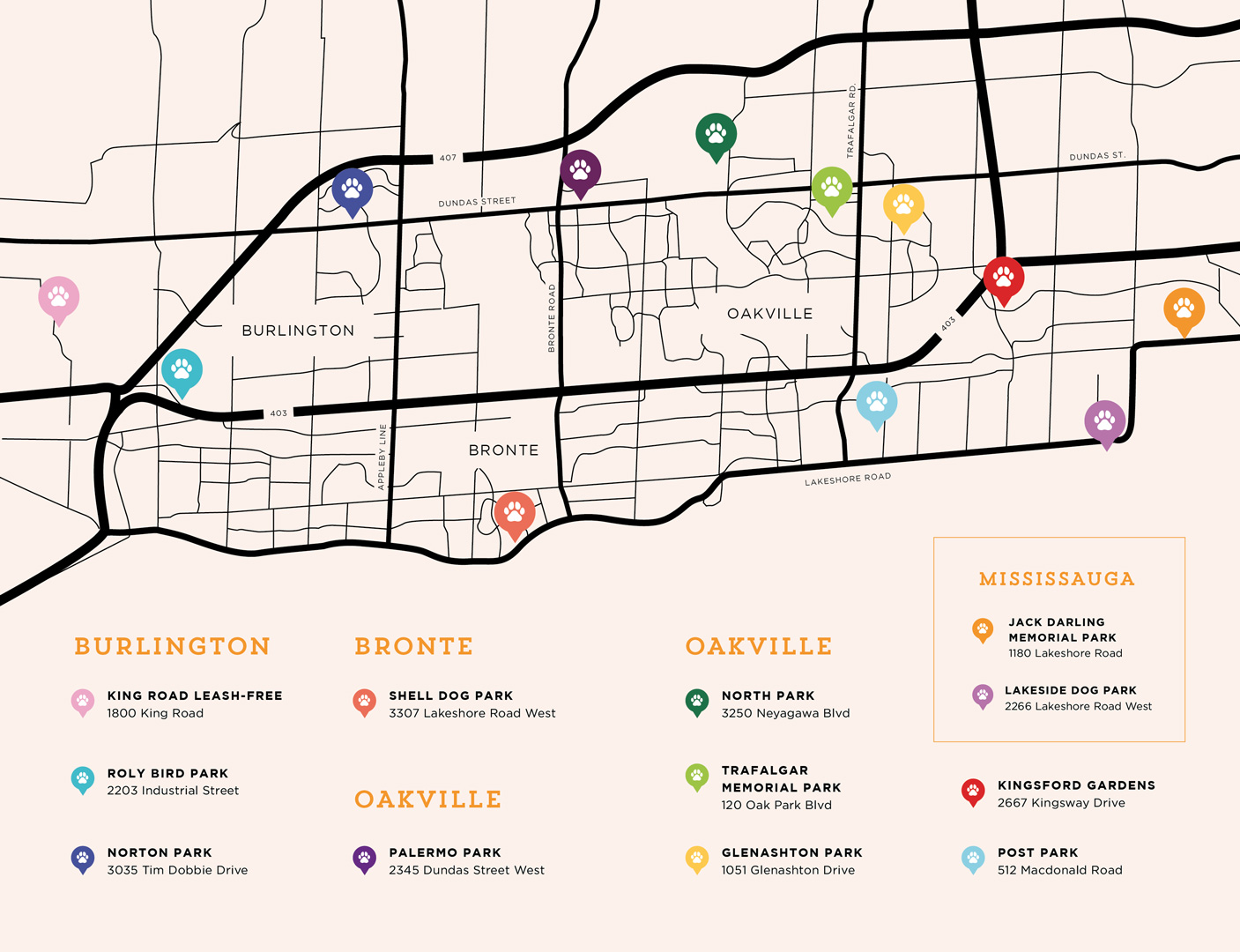
Every puppy parent knows the word ‘walk’ is not one to throw around lightly. After all, it’s a promise that must be kept. A simple utterance of the word sends tails wagging – and while a walk around the block might suffice, dogs live for adventure. They like to sniff, they like to run, and just like their humans, they like to socialize. Oakville and Burlington are dog-friendly cities with a vast selection of off-leash parks. For dogs big and small, these areas of wonder are just the place to run until their heart’s content: 

Oakville

Kingsford Gardens (2667 Kingsway Dr)

  • Smaller fenced-in, off-leash dog park 
  • Located in Kingsford Gardens (well-maintained and beautiful garden lot)
  • Close to many walking trails
  • Open seven days a week, 8 am until 11 pm

Lakeside Dog Park (2266 Lakeshore Rd W.)

  • Fenced-in, leash-free dog park
  • Chain-link perimeter fencing keeps all sizes and breeds in the zone
  • Dual in-and-out gates and wheelchair accessibility
  • Watering station available in warmer months
  • Year-round restroom facilities and ample parking
  • Garbage bins in the area
  • Provides a beautiful view of Lake Ontario
  • Next-door to Lakeside Park splash pad, a playground, and picnic tables
  • Open seven days a week, 5:30 am until midnight

Glenashton Park (1051 Glenashton Dr)

  • Smaller off-leash, fenced-in dog park
  • Many picnic table on-site, and a wheelchair-accessible entrance 
  • A short walk away from other parks and trails: Postridge Park, Nena Woods Park, Bayshire Woods Park
  • Next-door to a children’s playground, splash pad, and fields for soccer & baseball
  • Open weekdays from 9 am to 9 pm, Saturday from 9 am to 6 pm, and Sunday from 10 am to 5 pm

Post Park (512 Macdonald Rd)

  • Fenced-in, leash-free dog park
  • Surrounded by trees (making it shady and cool) and a nice walking trail
  • Watering station on site
  • Garbage bins available 
  • Plenty of parking available 
  • Next-door to a small children’s playground and a soccer field 
  • Open seven days a week, 8 am until 11 pm 

Trafalgar Memorial Park (120 Oak Park Blvd)

  • Consists of two fenced-in lots: one for larger dogs (over 25lbs), another for smaller breeds (under 25lbs)
  • The larger area also features two big ponds, an active playground, and a community area
  • New trees have been planted
  • One picnic table in each lot 
  • Open seven days a week, 24 hours a day

North Park (3250 Neyagawa Blvd)

  • A medium-sized fenced-in park that welcomes dogs of all sizes 
  • Plenty of parking available
  • A short walk to Lions Valley Park (features hiking trails and a beautiful creek)
  • Open seven days a week, 8 am until 11 pm

Palermo Park (2345 Dundas St W.)

  • Large fenced-in dog park
  • Features a nice walking trail surrounding the park
  • No watering station on-site, so owners should bring a portable bowl and water for their dog
  • Open seven days a week, 8 am until 11 pm

Bronte

Shell Dog Park (3307 Lakeshore Rd W.)

  • Fenced-in, leash-free dog park
  • Many picnic tables
  • Watering station and doggie bags available on site
  • Many garbage bins right outside the leash-free area
  • Clean and well-maintained
  • Next-door to a tennis court, kids park, Shell Skateboard Park, and walking trails
  • Open seven days a week, 8 am until 11 pm

Burlington

King Road Leash-Free, at Bayview Park (1800 King Rd.)

  • This medium-sized fenced-in dog park welcomes dogs of all breeds and sizes
  • The location provides beautiful views of Burlington and Burlington Bridge
  • Located in Bayview Park, along with a baseball diamond 
  • Open seven days a week, from 8 am until 8 pm

Roly Bird Park (2203 Industrial St.)

  • Smaller fenced-in dog park, perfect for smaller dogs 
  • Shaded by many large trees
  • Picnic tables on site
  • Plenty of parking available
  • Next-door to a baseball diamond, two sports fields, and a children’s playground
  • Open seven days a week, 24 hours a day

Norton Park (3035 Tim Dobbie Dr.)

  • Fenced-in dog park divided into two lots, one for larger dogs and the other for smaller dogs
  • Watering stations and garbage bins on site 
  • Next-door to two artificial turf fields, a basketball court, skateboard park, and a children’s playground with splash pad
  • Plenty of parking available 
  • Open seven days a week, 7 am until 10 pm

Mississauga

Jack Darling Memorial Park (1180 Lakeshore Rd. West)

  • One of the largest fully fenced off-leash dog parks in Ontario (22 acres for dogs to freely run around and play)
  • Chain link fence surrounds the perimeter
  • Shade provided by trees
  • A fully-functioning water station for dogs to cool down 
  • Many hills for dogs to get some exercise
  • A couple picnic tables to rest and relax
  • Complimentary doggy bags at the entrance
  • Located along Lakeshore Road, the park provides a beautiful view of Lake Ontario
  • The broader Jack Darling Park includes hiking trails, picnic areas, a children’s playground, bathrooms, and splash pad 

Written by: Anneliese Lawton

Walk down any beer aisle at the LCBO or your grocery store, and you’ll find an assortment of carefully crafted, small-batch local beer. Infused with seasonal flavours and influenced by local ingredients, craft beer has been gaining in popularity since the boom of the microbrewery in the 1990s. 

While Canada has a longstanding history in the beer industry, we also have a “spirited” past dating back nearly 250 years. Legend has it that a fellow named James Grant started making rum in the first legal distillery in Quebec City. Over centuries, Canada has forged a reputation for its high-quality whisky and inspired a growing scene of craft distilleries, which produce everything from tequila and gin to vodka, rum, and, of course, whisky.  

On the rocks? Neat? Sitting with a cigar in a wingback chair? With craft distilleries popping up right in our own backyard, it’s easy to sip your way through the GTHA.   

Forty Creek Whisky | Grimsby 

Fortycreekwhisky.com

A fixture in Grimsby since 1992, Forty Creek Whisky has been instrumental in ushering what would eventually become the craft spirits movement. Founded by John K. Hall, a winemaker with over four decades of experience in the industry, Forty Creek has largely been responsible for putting Canadian whisky back on the map. 

Their flagship whisky, Barrel Select, is a blend of rye, corn, and barley. Warm gold in colour, it offers complex aromas and flavours of apricots, caramel, spice, vanilla, ginger, and toasted oak, ending in a long smooth finish.

Coming this fall are two limited-edition whiskies, along with Forty Creek’s 14th annual Whisky Weekend – although, this years’ event will be a virtual celebration. 

Dillons | Beamsville 

Dillons.ca 

Founded by in-law duo Geoff Dillon and Gary Huggins, Dillon’s broke into the spirit industry with one goal: to create new spirits from old ideas and to make them with unparalleled quality, handcrafted, one small batch at a time. 

Distilled the traditional way – using a copper pot – Dillon’s gin, rye, vodka, and bitters has impressed palates across North America. Using only local Niagara botanicals, and the freshest produce, flavours of their spirits vary according to what’s in season. For example, strawberries sourced in Jordan, Ontario are distilled to create their strawberry gin. This fruity spirit, perfect for cocktails, brings summer to life any time of year. They also have a cherry gin, rose gin, black walnut amaro, absinthe, peach schnapps, vodka, and rye. 

Collective Arts Brewing | Hamilton

Collectiveartsbewing.com 

An active player in the craft beer scene since 2013, Collective Arts fuses the creativity of craft beer with the inspired talents of emerging artists and musicians. With a successful and diverse beer line-up established, Collective Arts expanded their mixology in 2019 with their flagship Artisanal Dry Gin. Crafted in small batches with juniper berries and their unique, house-made botanical blend, the artisanal gin offers flavours and aromas of fresh lemon, lime, and orange peel.

As of August 2020, Collective Arts has three varieties of gin – Artisanal Dry, Rhubarb and Hibiscus, and their current seasonal blend: Plum and Blackthorn. They also launched a new line of canned Sparkling Gin Cocktails in April 2020 and a line of Sparkling Hard Teas (mango and pineapple, peach and orange, and blueberry and elderberry). All spirits feature their signature creative arts and are available through delivery or pickup at the brewery – although, many of their products are available at the LCBO. 

SilverFox Distillery | Arthur (Wellington County)

silverfoxdistillery.ca

Open for business in February 2020, SilverFox Distillery is just breaking ground in the craft spirit industry. Mark Townsend, the master distiller for SilverFox, has been busy renovating a 3,100 square ft. facility since January 2019. With COVID restrictions in phase 3, Mark is ready to share his craft. Their signature multiple grain FoxShine White Lightning is made in a traditional Canadian fashion. Corn, oats, and wheat all harmonize to make this 100-proof spirit. For this Fall, try their Apple Pie Moonshine, featuring a blend of mulling spices to create an ole time experience.

Written by: Jenny Ratcliffe-Wright

Pasta is one of the world’s most accessible and ancient foods, dating back to the 1st century AD. Nearly every country has its own, unique version of this popular, inexpensive staple. In Germany and Hungary, there is spätzle. In Greece, orzo. In Poland, the pocket-like pierogi. Ashkenazi Jewish families make kreplach dumplings. And in America, pasta is prepared and served similarly to the way it is found in Italy– except for the all-American spaghetti and meatballs. 

In fact, when many of us think of pasta, we think of Italian food and most people believe it originated there. It is estimated that Italians eat over 60-pounds of pasta per person each year, while the average American only consumes 20-pounds per-person each year.

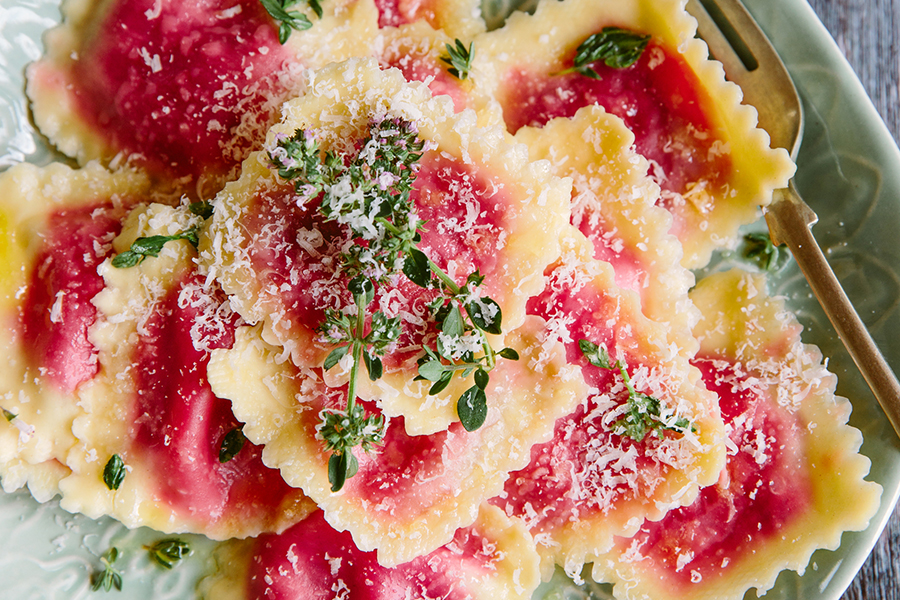
Pasta is divided into two categories: dried pasta (pasta secca) which can be produced commercially via an extrusion process and fresh pasta (pasta fresca) which is traditionally produced by hand. Between the two styles, there are over 300 styles of pasta that come with over 1,300 different names.

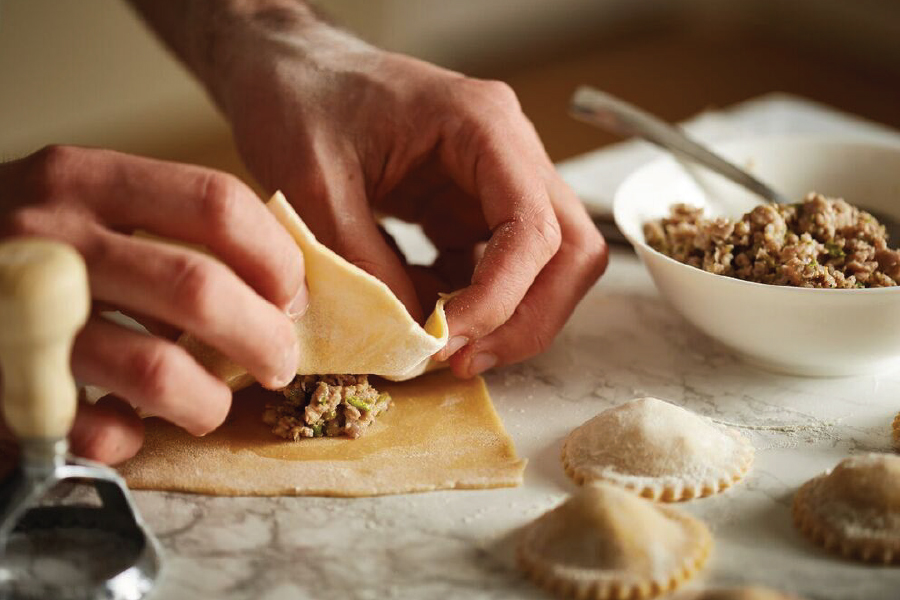
Fresh filled pasta is the focus of this story, as it’s impossible to cover the entire world of pasta in a few short words. Fresh filled pasta is easy to make at home, especially if you have a pasta rolling machine. Rolling pasta by hand is an option but incredibly time-consuming. You also run the risk of pasta sheets being uneven.

For six servings of pasta, mix three cups of all-purpose flour (or Italian 00 flour) with four eggs. Form a ball and knead it well, then let it rest. Roll out the pasta on your pasta machine and shape it into the multitude of pasta shapes available. Your next decision will be your filling, then your sauce. It is interesting to note, fresh pasta cooks much faster than dried pasta, so anticipate only 1-2 minutes in boiling water. Don’t forget to add some salt! When the pasta rises to the surface of the water, it is cooked.

Tortellini are small filled pasta dumplings, approximately the size of a marble. Any filling can be placed inside from spinach and ricotta to beef.  Tortelloni are bigger than tortellini, the size of a walnut, and therefore they hold more filling.

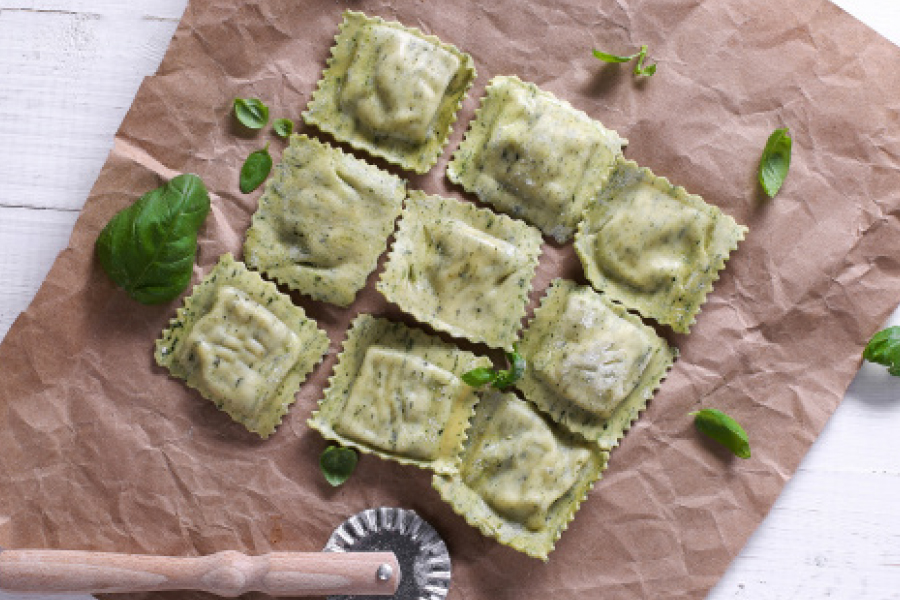
Mezzelune is a half-moon shaped pasta, sealed with a crimped border. Then there is Ravioli, one of the most well-known pasta types, which can come in small or large sizes. 

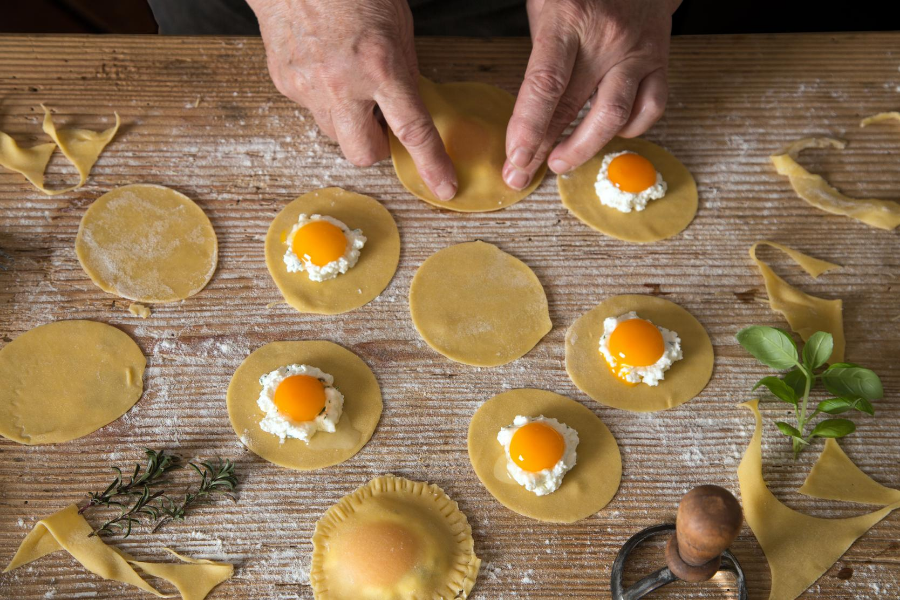
A famous dish in Northern Italy, Raviolo al’ Uovo, is two fresh pasta squares that are sealed with a raw egg yolk inside it. When the ravioli is delicately boiled, the egg cooks slightly and when you cut into your pasta, a rich sauce is formed by the egg. This is usually covered in freshly shaved truffle and is quite sensational.

Apart from the filling differences such as porcini mushroom to four cheese, the sauce also varies and can play a main part in flavouring the dish. Alfredo, a rich sauce of cream, butter, and Parmesan cheese is a popular choice. Another favourite is Carbonara with crispy bacon and eggs. Al vongole is often served at the seaside in Italy and contains fresh clams, white wine, and olive oil.

Palma Pasta in Oakville is a pasta specialist and can provide catered trays of pasta for large gatherings. Their lasagne is quite excellent as is their rolled pasta, which is filled. Their stuffed tortellini are popular and they also make sweet potato gnocchi with basil for the more adventurous.

Nonna’s Oven, on the border of Oakville and Burlington, is known for its homemade gnocchi – but don’t visit without trying their spinach and ricotta lasagne that comes with rave reviews. 

Then there’s Monastery Bakery. Their selection of handmade pasta is second to none and always freshly made from the very simple to the gourmet. Their spinach and cheese cannelloni is a firm favourite, along with their four cheese and meat lasagne.

PastaCo (Factory Outlet) in Burlington has a large range of pasta and sauces from all-natural and fresh ingredients. They have the kinds of pasta you take home and claim as your own – without your guests knowing a thing! And rest assured, there are no additives or preservatives – so, it’s just as good as making it yourself.

The world of pasta is wide open, whether you make it at home or order in. It is always a well-loved meal and guaranteed to please your audience (and your belly). 

Local Links:

Palma Pasta, Oakville
Palmapasta.com

Nonna’s Oven, Oakville
Nonnasoven.com

PastaCo (Factory Outlet), Burlington
Pastaco.ca

Monastery Bakery, Oakville
Monasterybakery.com

Written by: Denise Davy

As parents come to terms with the new reality that COVID-19 will be a long-term fixture in our lives, they are having to make a tough decision about whether to homeschool some or all of their kids. 

Even if schools take the necessary precautions, many parents are concerned about their child’s close contact with others, especially if their child is immune-compromised. Joni Bowman is the owner of the Learning Tree Educational Store in Burlington and has worked with many new and seasoned homeschoolers. She is also a former teacher and mother of four, so she understands how difficult the decision is.

“I always say to my customers that you, as the parent, know your child the best,” said Bowman. “Homeschooling is an incredibly rewarding experience and a wonderful opportunity to spend quality time with your child, watching them learn, grow, and flourish.” 

Bowman said one of the main benefits of homeschooling is that parents have access to the Ontario curriculum online. Using this resource, parents can help their children learn at their own pace and can also tailor their teaching to their child’s learning style. That is especially important if their child has special needs. 

The biggest challenge of homeschooling, said Bowman, is that parents have to balance the role of being the parent and teacher plus their child will have less social interaction. There’s also the issue of figuring out which resources or learning materials to use. “It requires knowledge, organization, and patience,” said Bowman. “But if you feel homeschooling your child will enrich, not put a strain on your relationship, then go for it!” 

The good news is that there are tons of resources to make the task easier. When it comes to lesson planning and what to teach, Bowman said The Learning Tree has materials for students in JK to grade 12, including resource books for writing, reading comprehension, grammar/spelling, science and technology, math, and social studies, all based on the Ontario curriculum. “We regularly meet with interested families to walk them through suggested resources, including books, teaching tools, games, etc. that would be appropriate for their children,” said Bowman.

This year, the store will also offer basic and comprehensive homeschool learning kits that will provide a well-balanced collection of learning resources for each grade.

When it comes to social interaction, the Chickadee Kid’s Company can help with that. The toy and book store in north Burlington has a cafe-like space where moms can hang out, plus a small space for children to play. Located on Mountain Grove Avenue, the built-in cafe serves locally roasted coffee and espresso drinks for moms and a special drink for kids called “babyccinos.” 

While moms get together, the kids can colour at the colouring table or browse through the used book section. There’s also a marketplace for young children that features local handmade products that change with the season. 

Chickadee also carries a wide range of educational and developmentally appropriate toys and books for children ages 0 to 6. They include flashcards, learning activity books, and educational toys. They also offer educational programs, including parenting workshops.

The Teacher Supply Outlet in Oakville also carries numerous resources, including classroom decorations, educational games, puzzles, workbooks, flashcards, arts and craft supplies, stationery, and building toys.

Parents new to the issue of homeschooling may find it helpful to contact the Ontario Federation of Teaching Parents (OFTP), which was formed in 1987 to provide homeschooling resources to people seeking support and encouragement. For those concerned about the social interaction component, the OFTP cites studies that show the social development of homeschooled children is the same as that of their public-schooled peers.

Homeschooling may not be an affordable choice for many families, and it may not be right for every child, but it is good to know that there are so many resources available for parents considering this option for the 2020/2021 school year.

Links:

Ontario Federation of Teaching Parents – https://ontariohomeschool.org

The Canadian Homeschooler – https://thecanadianhomeschooler.com

Chickadee Kids Company – Chickadeekidsco.com 

Teacher Supply Outlet – teacherssupplyoutlet.ca 

The Learning Tree Educational Store – learningtreecanada.com